Center for Psychopharmacology, Diakonhjemmet Hospital, Oslo, Norway.
CoE NORMENT, Division of Mental Health and Addiction, Oslo University Hospital, and Institute of Clinical Medicine, University of Oslo, Oslo, Norway.
Transl Psychiatry. 2020 Jun 19;10(1):198. doi: 10.1038/s41398-020-00888-1.
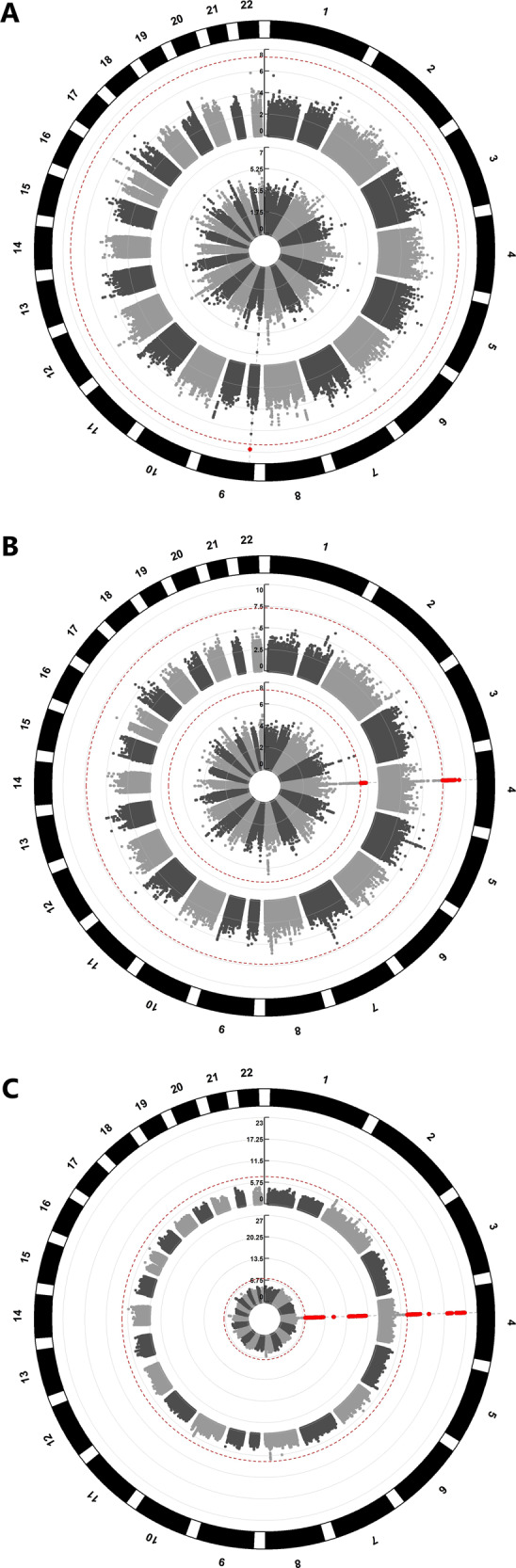
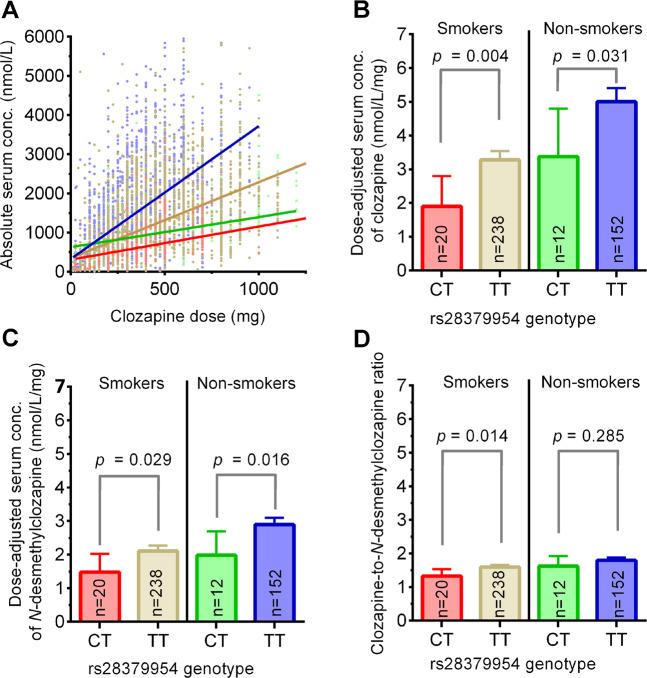
Clozapine (CLZ) is the superior antipsychotic drug for treatment of schizophrenia, but exhibits an extensive interpatient pharmacokinetic variability. Here, we conducted a genome-wide association study (GWAS) of CLZ serum concentration adjusting for known smoking habits, which is a major nongenetic factor reducing CLZ levels. The study included 484 patients with 10,283 steady-state serum concentrations of CLZ and N-desmethylclozapine, prescribed dosing, co-medications and known smoking habits (n = 422; 9284 serum samples) from a therapeutic drug monitoring (TDM) service. The GWAS analyses were performed with and without smoking habits as covariate, where possible hits were assessed in relation to the target CLZ concentration range applied in the TDM service (300-2500 nmol/L). The smoking-independent analysis of N-desmethylclozapine serum concentration and the CLZ-to-N-desmethylclozapine ratio replicated the previously identified locus on chromosome 4. After adjusting for smoking habits in patients confirmed as 'smokers' (61%) or 'nonsmokers' (39%), a novel variant (rs28379954; minor T>C allele frequency 4.1%; 7.6% CT carriers in the population) within the gene encoding the nuclear factor 1 B-type (NFIB) was significantly associated with reduced CLZ serum concentration (p = 1.68 × 10, beta = -0.376; explained variance 7.63%). There was no significant association between rs28379954 and N-desmethylclozapine concentration in the GWAS analysis (p = 5.63 × 10). The fraction of CLZ TDM samples below 300 nmol/L was significantly higher in carriers vs. noncarriers of the rs28379954 minor C allele [12.0% (95% CI: 9.4-14.7) vs. 6.2% (95% CI: 5.7-6.8), p < 0.001]. We identified a novel variant in the NFIB gene associated with reduced CLZ levels and increased risk of subtherapeutic serum concentrations. This warrants testing of clinical relevance of screening for this gene variant, and also experimental studies to investigate the biological mechanisms of NFIB involvement in CLZ pharmacokinetics.
氯氮平(CLZ)是治疗精神分裂症的首选抗精神病药物,但表现出广泛的个体间药代动力学变异性。在这里,我们对 CLZ 血清浓度进行了全基因组关联研究(GWAS),同时调整了已知的吸烟习惯,这是降低 CLZ 水平的主要非遗传因素。该研究包括来自治疗药物监测(TDM)服务的 484 名患者,他们服用了 10283 种稳定的 CLZ 和 N-去甲基氯氮平血清浓度、处方剂量、合并用药和已知的吸烟习惯(n=422;9284 个血清样本)。GWAS 分析在可能存在的情况下进行了吸烟习惯作为协变量,在与 TDM 服务中应用的目标 CLZ 浓度范围(300-2500 nmol/L)相关的情况下评估了可能的命中。对 N-去甲基氯氮平血清浓度和 CLZ 与 N-去甲基氯氮平比值的独立于吸烟的分析复制了先前在染色体 4 上发现的基因座。在对被确定为“吸烟者”(61%)或“非吸烟者”(39%)的患者调整吸烟习惯后,在编码核因子 1 B 型(NFIB)的基因内发现了一个新的变体(rs28379954;次要 T>C 等位基因频率 4.1%;人群中 7.6%的 CT 携带者)与 CLZ 血清浓度降低显著相关(p=1.68×10⁻⁷,β=-0.376;解释方差 7.63%)。在 GWAS 分析中,rs28379954 与 N-去甲基氯氮平浓度之间没有显著关联(p=5.63×10⁻⁸)。在携带 rs28379954 次要 C 等位基因的 CLZ TDM 样本中,低于 300 nmol/L 的样本比例明显高于非携带者[12.0%(95%CI:9.4-14.7)与 6.2%(95%CI:5.7-6.8),p<0.001]。我们在 NFIB 基因中发现了一个与 CLZ 水平降低和治疗性血清浓度降低风险增加相关的新变体。这需要对该基因变异进行临床相关性检测,也需要进行实验研究以探讨 NFIB 参与 CLZ 药代动力学的生物学机制。