Department of Medicine, Oregon Health & Science University, Portland, OR, USA.
Department of Veterans Affairs Evidence Synthesis Program (ESP), VA Portland Healthcare System, Portland, OR, USA.
J Gen Intern Med. 2020 Sep;35(9):2698-2706. doi: 10.1007/s11606-020-05906-y. Epub 2020 Jun 17.
Infection with coronavirus SARS-CoV-2, causing COVID-19 disease, leads to inflammation and a prothrombotic state.
This rapid systematic review aims to synthesize evidence on thromboembolism incidence and outcomes with antithrombotic therapies in COVID-19.
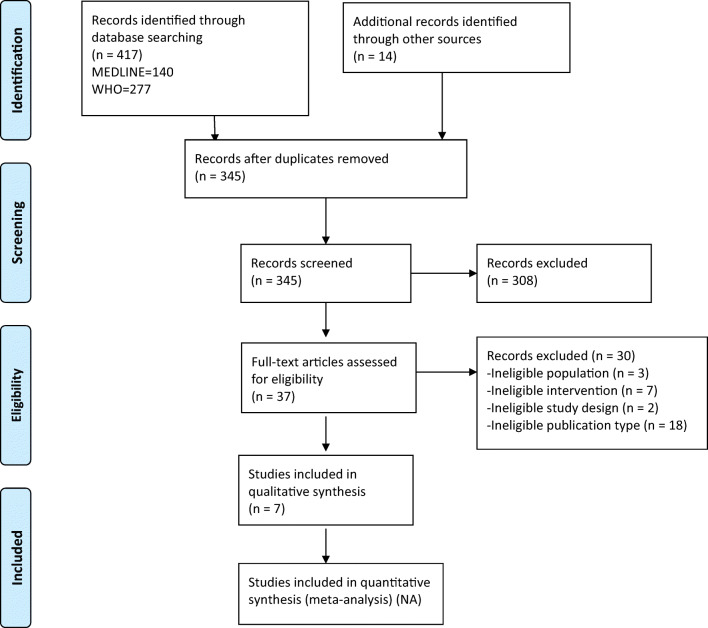
We searched MEDLINE (Ovid), Cochrane Rapid Reviews, PROSPERO, and the WHO COVID-19 Database from January 1, 2003, to April 22, 2020, for studies meeting pre-specified inclusion criteria.
STUDY SELECTION, DATA EXTRACTION, AND SYNTHESIS: One investigator identified articles for inclusion, abstracted data, and performed quality assessment, with second reviewer checking.
Incidence of thromboembolism among hospitalized patients with COVID-19 ranged from 25 to 53% in 4 retrospective series. We identified 3 studies (1 retrospective cohort study, 1 prospective uncontrolled observational study, and 1 case series) examining outcomes among COVID-19 patients who received antithrombotic therapies. These studies all included different interventions (thromboprophylaxis with unfractionated heparin (UFH) or low molecular-weight heparin (LMWH); an intensive thromboprophylaxis protocol with LMWH, antithrombin, and clopidogrel; and salvage therapy with tissue plasminogen activator and heparin). These studies are overall poor quality due to methodological limitations including unclear patient selection protocols, lack of reporting or adjustment for patient baseline characteristics, inadequate duration of follow-up, and partial reporting of outcomes.
New evidence on thromboembolism in COVID-19 does not warrant a change in current guidance on thromboprophylaxis among hospitalized patients. Prospective trials of antithrombotic treatment strategies among patients with COVID-19 are urgently needed.
感染冠状病毒 SARS-CoV-2 会导致 COVID-19 疾病,引发炎症和促血栓形成状态。
本快速系统综述旨在综合评估 COVID-19 患者应用抗血栓治疗的血栓栓塞发生率和结局的证据。
我们检索了 MEDLINE(Ovid)、Cochrane 快速综述、PROSPERO 和世界卫生组织 COVID-19 数据库,检索时间为 2003 年 1 月 1 日至 2020 年 4 月 22 日,以寻找符合预先设定纳入标准的研究。
研究选择、数据提取和综合:一名调查员确定纳入的文章,提取数据,并进行质量评估,由第二名审查员进行核对。
4 项回顾性研究中,住院 COVID-19 患者的血栓栓塞发生率为 25%至 53%。我们发现了 3 项研究(1 项回顾性队列研究、1 项前瞻性非对照观察性研究和 1 项病例系列研究),这些研究均评估了接受抗血栓治疗的 COVID-19 患者的结局。这些研究均纳入了不同的干预措施(普通肝素或低分子肝素的血栓预防;LMWH、抗凝血酶和氯吡格雷的强化血栓预防方案;以及组织型纤溶酶原激活物和肝素的挽救性治疗)。由于方法学方面的局限性,这些研究的整体质量较差,包括患者选择方案不明确、缺乏对患者基线特征的报告或调整、随访时间不足以及部分结局的报告。
COVID-19 患者血栓栓塞方面的新证据尚不能改变目前关于住院患者血栓预防的指南。急需针对 COVID-19 患者的抗血栓治疗策略进行前瞻性试验。