Montecillo-Aguado Mayra, Tirado-Rodriguez Belen, Tong Zhen, Vega Owen M, Morales-Martínez Mario, Abkenari Shaheen, Pedraza-Chaverri José, Huerta-Yepez Sara
Programa de Doctorado en Ciencias Biomédicas, Facultad de Medicina, Universidad Nacional Autónoma de Mexico (UNAM), Mexico City 04510, Mexico.
Hospital Infantil de Mexico, Federico Gomez, Unidad de Investigacion en Enfermedades Oncologicas, Mexico City 06720, Mexico.
Brain Sci. 2020 Jun 17;10(6):381. doi: 10.3390/brainsci10060381.
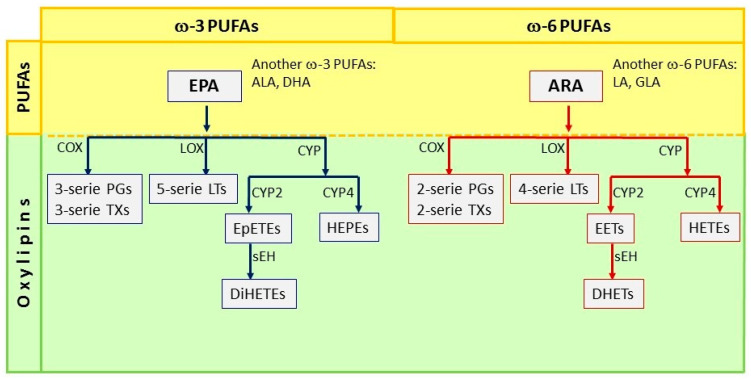
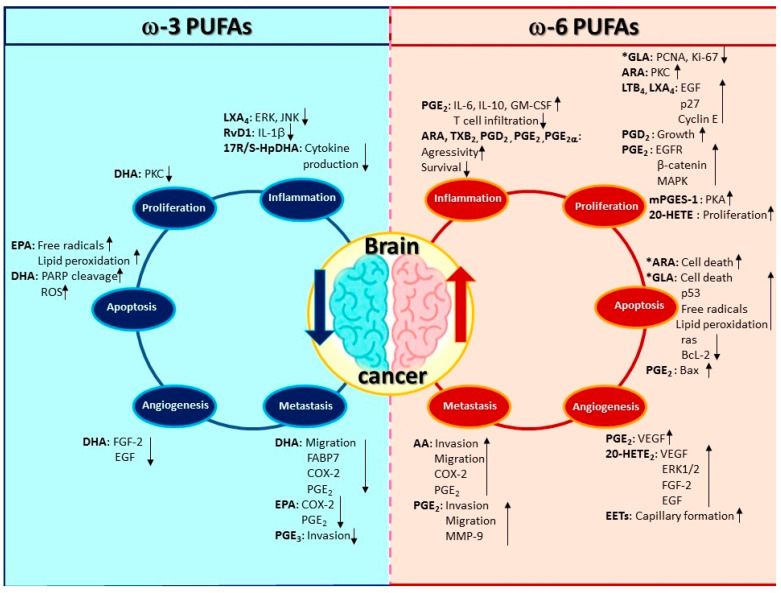
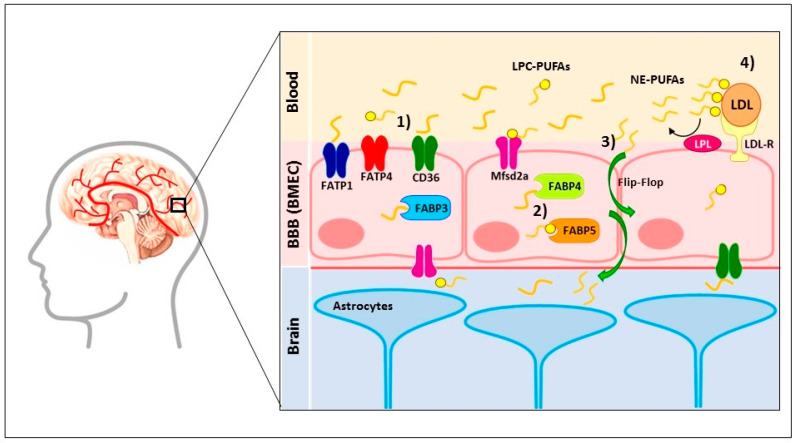
Brain cancer is one of the most malignant types of cancer in both children and adults. Brain cancer patients tend to have a poor prognosis and a high rate of mortality. Additionally, 20-40% of all other types of cancer can develop brain metastasis. Numerous pieces of evidence suggest that omega-3-polyunsaturated fatty acids (ω-PUFAs) could potentially be used in the prevention and therapy of several types of cancer. PUFAs and oxylipins are fundamental in preserving physiological events in the nervous system; it is, therefore, necessary to maintain a certain ratio of ω-3 to ω-6 for normal nervous system function. Alterations in PUFAs signaling are involved in the development of various pathologies of the nervous system, including cancer. It is well established that an omega-6-polyunsaturated fatty acid (ω-6 PUFA)-rich diet has a pro-tumoral effect, whereas the consumption of an ω-3 rich diet has an anti-tumoral effect. This review aims to offer a better understanding of brain cancer and PUFAs and to discuss the role and impact of PUFAs on the development of different types of brain cancer. Considering the difficulty of antitumor drugs in crossing the blood-brain barrier, the therapeutic role of ω-3/ω-6 PUFAs against brain cancer would be a good alternative to consider. We highlight our current understanding of the role of PUFAs and its metabolites (oxylipins) in different brain tumors, proliferation, apoptosis, invasion, angiogenesis, and immunosuppression by focusing on recent research in vitro and in vivo.
脑癌是儿童和成人中最恶性的癌症类型之一。脑癌患者往往预后较差且死亡率较高。此外,所有其他类型癌症中有20% - 40%会发生脑转移。大量证据表明,ω-3多不饱和脂肪酸(ω-PUFAs)可能用于多种癌症的预防和治疗。多不饱和脂肪酸和氧化脂质在维持神经系统的生理活动中至关重要;因此,为了维持正常的神经系统功能,必须保持一定比例的ω-3与ω-6。多不饱和脂肪酸信号传导的改变与包括癌症在内的各种神经系统疾病的发生有关。众所周知,富含ω-6多不饱和脂肪酸(ω-6 PUFA)的饮食具有促肿瘤作用,而食用富含ω-3的饮食则具有抗肿瘤作用。本综述旨在更好地理解脑癌和多不饱和脂肪酸,并讨论多不饱和脂肪酸在不同类型脑癌发生发展中的作用和影响。考虑到抗肿瘤药物难以穿过血脑屏障,ω-3/ω-6多不饱和脂肪酸对脑癌的治疗作用将是一个值得考虑的良好选择。我们通过关注近期的体外和体内研究,重点阐述了我们目前对多不饱和脂肪酸及其代谢产物(氧化脂质)在不同脑肿瘤、增殖、凋亡、侵袭、血管生成和免疫抑制中的作用的理解。