Interdisciplinary Department of Social Sciences, Bar-Ilan University (AS, YH, EB), Ramat Gan, Israel.
Interdisciplinary Department of Social Sciences, Bar-Ilan University (AS, YH, EB), Ramat Gan, Israel.
Am J Geriatr Psychiatry. 2020 Nov;28(11):1200-1204. doi: 10.1016/j.jagp.2020.05.018. Epub 2020 May 27.
The study examined whether subjective age moderated the relationship between loneliness due to the COVID-19 pandemic and psychiatric symptoms.
A convenience sample of older adult Israelis (N = 277, mean age = 69.58 ± 6.72) completed web-based questionnaires comprising loneliness, anxiety, depressive, and peritraumatic distress symptoms. They also reported how old they felt.
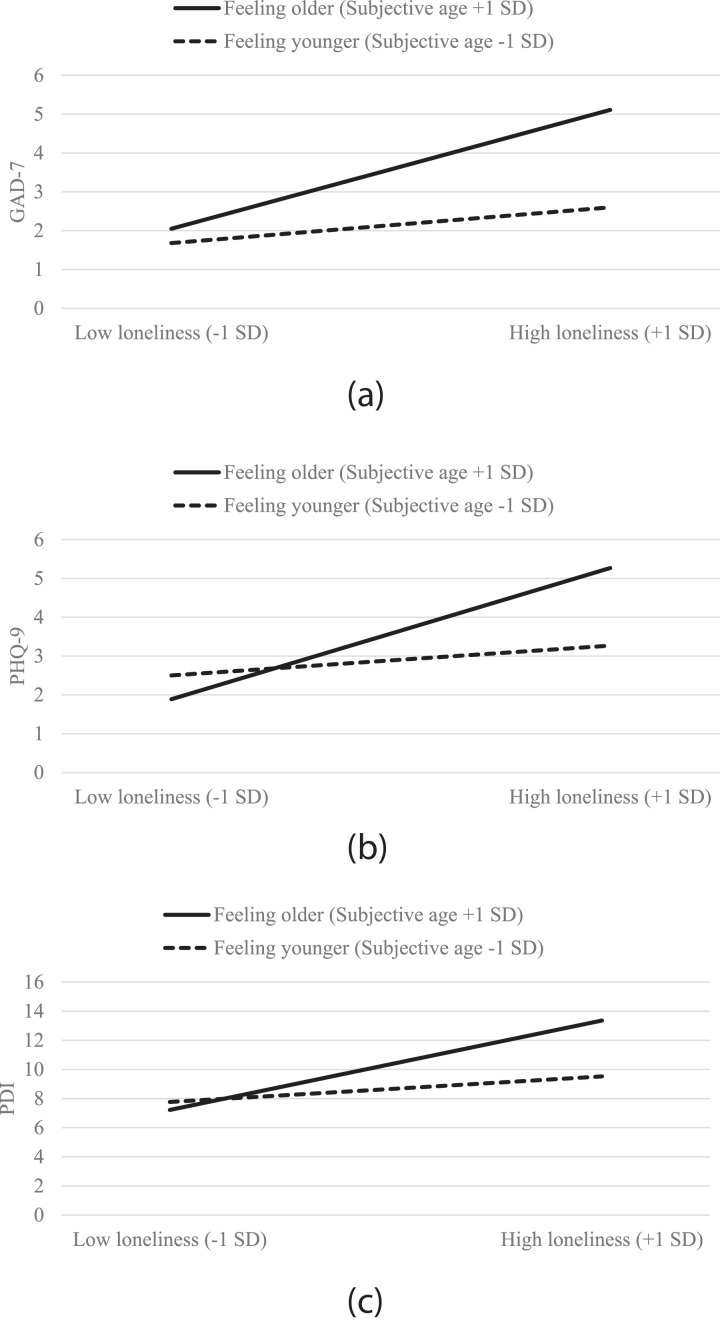
The positive relationship between loneliness due to the COVID-19 pandemic and psychiatric symptoms was weak among those who felt younger than their age while this very same relationship was robust among those feeling older.
Young subjective age may weaken the loneliness-symptom association among older adults during the COVID-19 pandemic. Older adults holding an older age identity are more susceptible to the adverse effects of loneliness. Although preliminary, the findings may inform screening and interventions. Subjective age may help identify those at high risk in suffering from loneliness, and suggest interventions aimed at ameliorating both loneliness and older subjective ages.
本研究考察了主观年龄是否调节了因 COVID-19 大流行而产生的孤独感与精神症状之间的关系。
一项便利的以色列老年成年人样本(N=277,平均年龄=69.58±6.72)完成了在线问卷,包括孤独感、焦虑、抑郁和创伤后应激障碍症状。他们还报告了自己的年龄感。
在那些感觉比实际年龄年轻的人中,COVID-19 大流行导致的孤独感与精神症状之间的正相关关系较弱,而在那些感觉更老的人中,这种关系非常强。
在 COVID-19 大流行期间,年轻的主观年龄可能会削弱老年人的孤独感与症状之间的关联。持有更老的年龄认同的老年人更容易受到孤独感的不良影响。尽管初步研究,但这些发现可能会为筛查和干预提供信息。主观年龄可能有助于识别那些容易感到孤独的高风险人群,并建议采取干预措施,以减轻孤独感和年龄感。