Liu Siying, Sun Renji
Institute of Linguistics, Shanghai International Studies University, Shanghai, China.
School of Business, East China University of Political Science and Law, Shanghai, China.
Front Psychol. 2020 Jun 9;11:1076. doi: 10.3389/fpsyg.2020.01076. eCollection 2020.
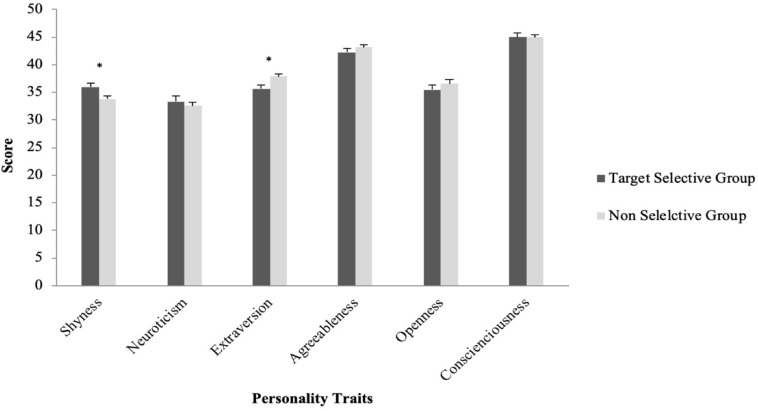
Emojis and stickers are becoming increasingly popular in computer-mediated communications. The present study examined the associations between personality traits and people's reasons and patterns for using both emojis and stickers. Participants ( = 312) completed three online questionnaires assessing shyness, the Big Five personality traits, and why and how they used emojis and stickers. Results revealed that shyness, neuroticism, extraversion, and agreeableness were correlated with different reasons of usage. Moreover, some participants exhibited a tendency to adjust frequency of usage depending on who the target person was and whether they were in a private or group chat. People who showed such tendencies were found to differ in personality with those who did not. Some differences in usage patterns were also observed between emojis and stickers. Together, the present study has produced more insight into how emojis and stickers can help people with different personality traits to achieve different purposes in their daily communication.
表情符号和贴纸在计算机介导的交流中越来越受欢迎。本研究考察了人格特质与人们使用表情符号和贴纸的原因及模式之间的关联。参与者(n = 312)完成了三份在线问卷,评估羞怯、大五人格特质,以及他们使用表情符号和贴纸的原因和方式。结果显示,羞怯、神经质、外向性和宜人性与不同的使用原因相关。此外,一些参与者表现出根据目标对象是谁以及他们是在私聊还是群聊中来调整使用频率的倾向。发现表现出这种倾向的人与没有这种倾向的人在人格上存在差异。在表情符号和贴纸的使用模式上也观察到了一些差异。总体而言,本研究对表情符号和贴纸如何帮助具有不同人格特质的人在日常交流中实现不同目的有了更多的见解。