Hyun Jae-Won, Kwon Young Nam, Kim Sung-Min, Lee Hye Lim, Jeong Woo Kyo, Lee Hye Jung, Kim Byoung Joon, Kim Seung Woo, Shin Ha Young, Shin Hyun-June, Oh Sun-Young, Huh So-Young, Kim Woojun, Park Min Su, Oh Jeeyoung, Jang Hyunmin, Park Na Young, Lee Min Young, Kim Su-Hyun, Kim Ho Jin
Department of Neurology, National Cancer Center, Goyang, South Korea.
Department of Neurology, Seoul National University Hospital, Seoul, South Korea.
Front Neurol. 2020 Jun 4;11:396. doi: 10.3389/fneur.2020.00396. eCollection 2020.
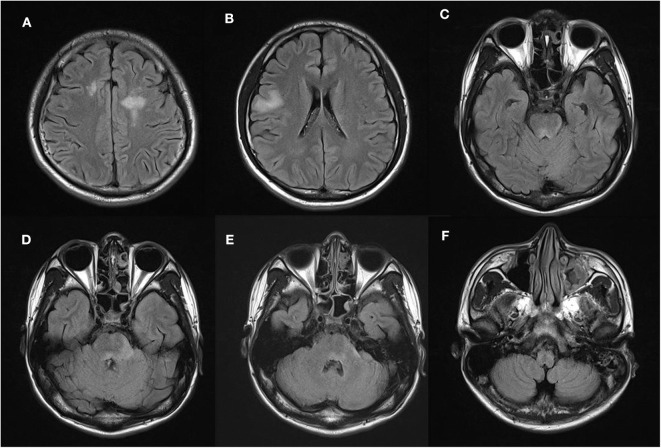
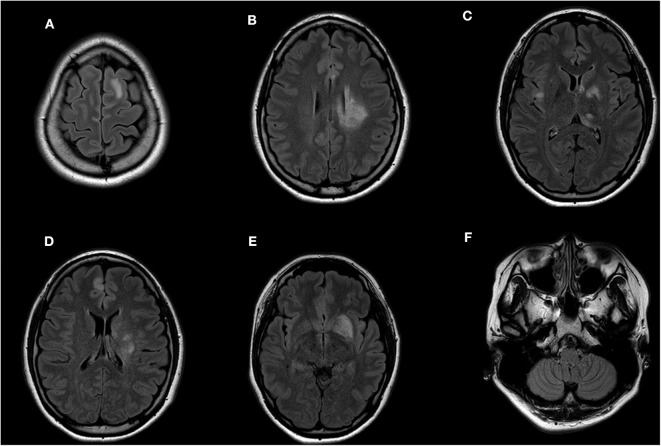
To compare the frequency of area postrema syndrome (APS) in adults with anti-aquaporin-4 (AQP4) and anti-myelin oligodendrocyte glycoprotein (MOG) antibodies. APS is defined as acute or subacute, single or combined, episodic or constant nausea, vomiting, or hiccups, persisting for at least 48 h, which cannot be attributed to any other etiology. The presence of APS was investigated in 274 adults with AQP4 antibodies and 107 adults with MOG antibodies from 10 hospitals. The study population comprised Korean adults (≥18 years). At the time of disease onset, 14.9% (41/274) adults with AQP4 antibodies had APS, while none of the participants with MOG antibodies developed APS ( < 0.001). During the course of the disease, 17.2% (47/274) adults with AQP4 antibodies had APS in contrast to 1.9% (2/107) adults with MOG antibodies with APS ( < 0.001). APS, one of the core clinical characteristics of individuals with AQP4 antibodies, is an extremely rare manifestation in Korean adults with MOG antibodies.
比较抗水通道蛋白4(AQP4)抗体和抗髓鞘少突胶质细胞糖蛋白(MOG)抗体的成年患者中最后区综合征(APS)的发生率。APS定义为急性或亚急性、单发或合并、发作性或持续性恶心、呕吐或呃逆,持续至少48小时,且不能归因于任何其他病因。对来自10家医院的274例抗AQP4抗体成年患者和107例抗MOG抗体成年患者进行了APS存在情况的调查。研究人群包括韩国成年人(≥18岁)。在疾病发作时,14.9%(41/274)的抗AQP4抗体成年患者患有APS,而抗MOG抗体参与者均未发生APS(<0.001)。在疾病过程中,17.2%(47/274)的抗AQP4抗体成年患者患有APS,相比之下,抗MOG抗体成年患者中有1.9%(2/107)患有APS(<0.001)。APS是抗AQP4抗体患者的核心临床特征之一,在韩国抗MOG抗体成年患者中是一种极其罕见的表现。