Steunou Anne Soisig, Durand Anne, Bourbon Marie-Line, Babot Marion, Tambosi Reem, Liotenberg Sylviane, Ouchane Soufian
Université Paris-Saclay, CEA, CNRS, Institute for Integrative Biology of the Cell (I2BC), Gif-sur-Yvette, France.
Front Microbiol. 2020 Jun 3;11:893. doi: 10.3389/fmicb.2020.00893. eCollection 2020.
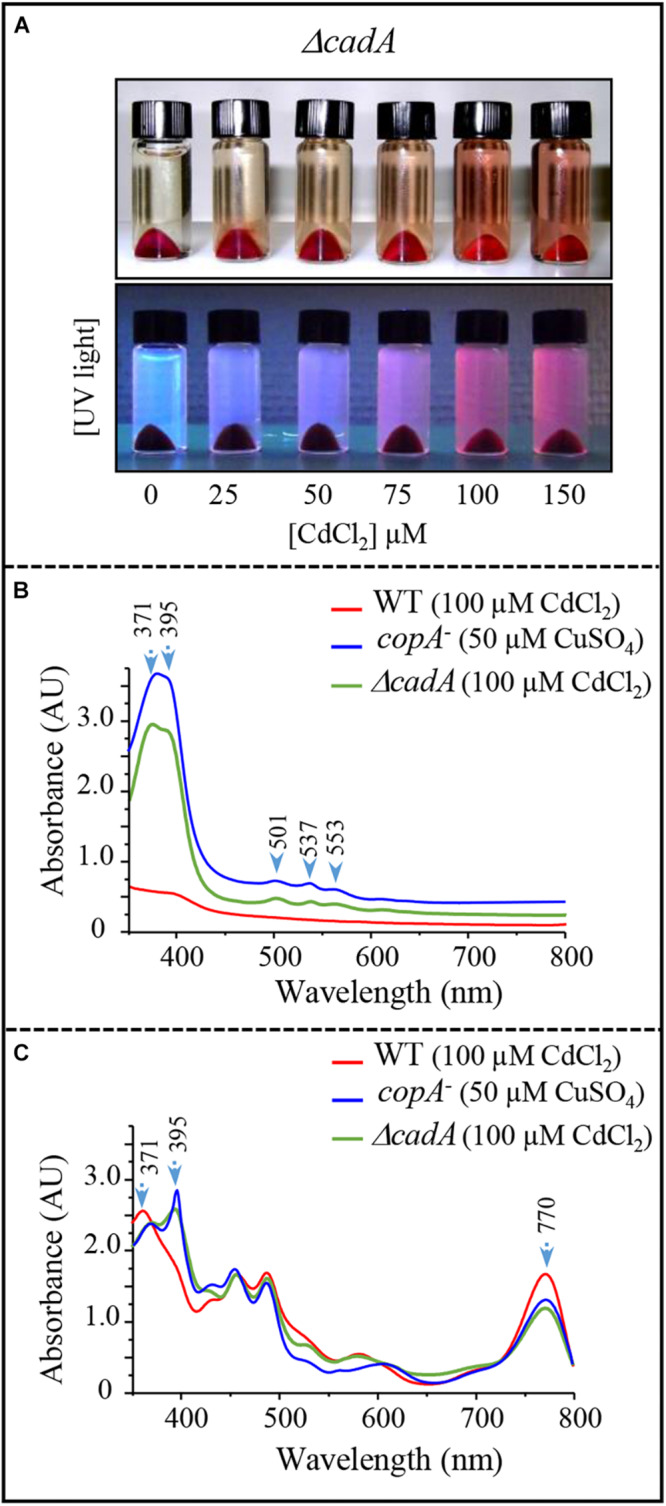
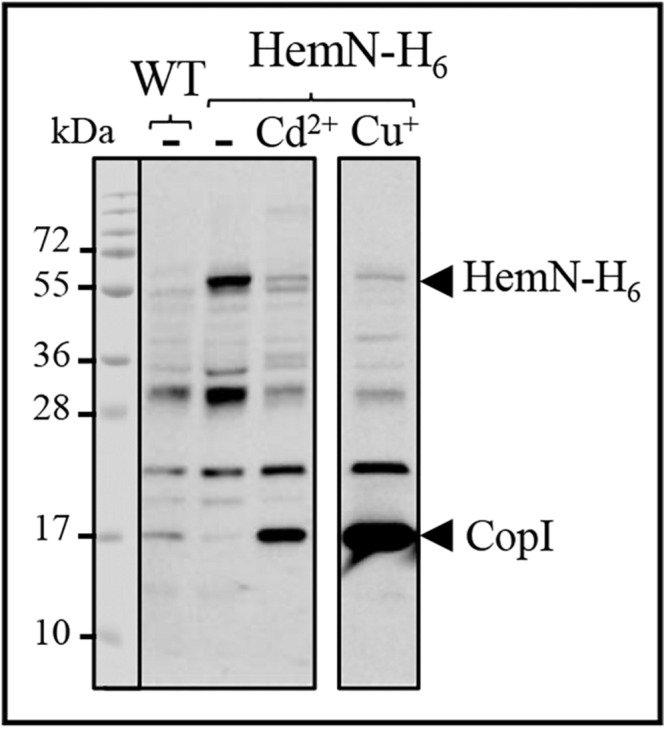
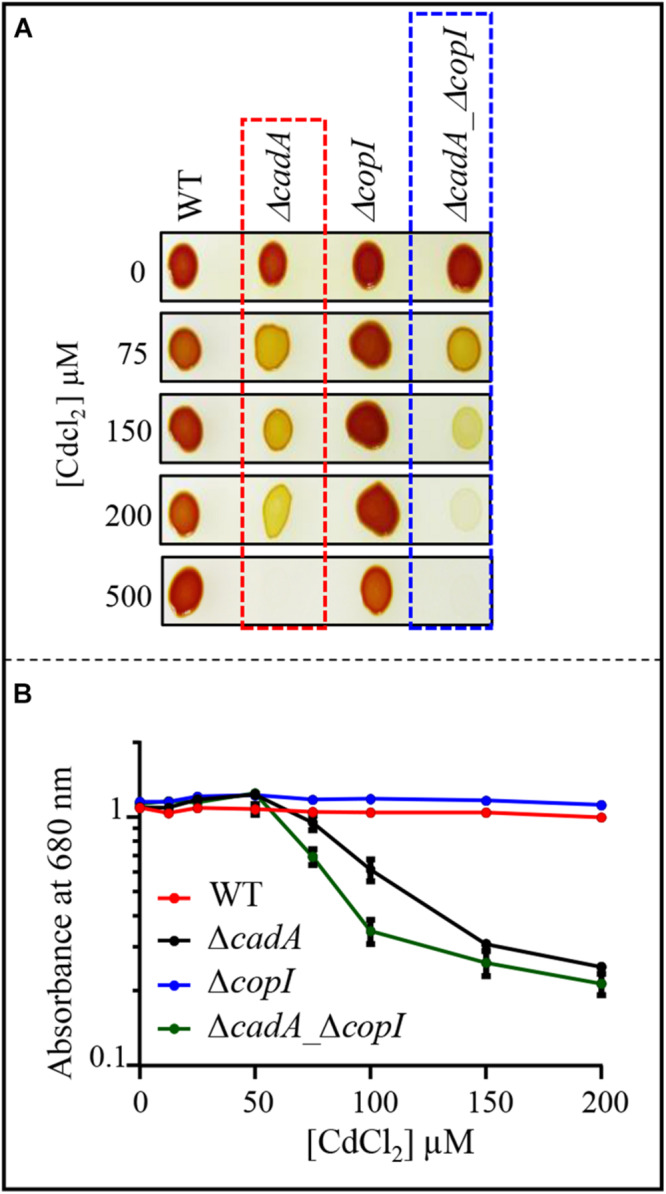
Cadmium, although not redox active is highly toxic. Yet, the underlying mechanisms driving toxicity are still to be characterized. In this study, we took advantage of the purple bacterium strain with defective Cd-efflux system to identify targets of this metal. Exposure of the Δ strain to Cd causes a decrease in the photosystem amount and in the activity of respiratory complexes. As in case of Cu toxicity, the data indicated that Cd targets the porphyrin biosynthesis pathway at the level of HemN, a -adenosylmethionine and CxxxCxxC coordinated [4Fe-4S] containing enzyme. Cd exposure therefore results in a deficiency in heme and chlorophyll dependent proteins and metabolic pathways. Given the importance of porphyrin biosynthesis, HemN represents a key metal target to account for toxicity. In the environment, microorganisms are exposed to mixture of metals. Nevertheless, the biological effects of such mixtures, and the toxicity mechanisms remain poorly addressed. To highlight a potential cross-talk between Cd and Cu -efflux systems, we show (i) that Cd induces the expression of the Cd-efflux pump and the Cu detoxification system CopA and CopI; and (ii) that Cu ions improve tolerance towards Cd, demonstrating thus that metal mixtures could also represent a selective advantage in the environment.
镉虽然没有氧化还原活性,但毒性很强。然而,导致毒性的潜在机制仍有待确定。在本研究中,我们利用镉外排系统有缺陷的紫色细菌菌株来确定这种金属的作用靶点。将Δ菌株暴露于镉会导致光系统数量和呼吸复合体活性降低。与铜毒性情况一样,数据表明镉在HemN水平靶向卟啉生物合成途径,HemN是一种含有与α-腺苷甲硫氨酸和CxxxCxxC配位的[4Fe-4S]的酶。因此,镉暴露会导致血红素和叶绿素依赖性蛋白质及代谢途径缺乏。鉴于卟啉生物合成的重要性,HemN是解释毒性的关键金属靶点。在环境中,微生物会接触到金属混合物。然而,这种混合物的生物学效应和毒性机制仍未得到充分研究。为了突出镉和铜外排系统之间潜在的相互作用,我们表明:(i)镉诱导镉外排泵以及铜解毒系统CopA和CopI的表达;(ii)铜离子提高对镉的耐受性,从而证明金属混合物在环境中也可能代表一种选择优势。