Noor Aziz Ullah, Maqbool Farhana, Bhatti Zulfiqar A, Khan Asmat Ullah
Aziz Ullah Noor, Department of Microbiology, Faculty of Health Sciences, Hazara University, Mansehra, Khyber Pakhtunkhwa, Pakistan.
Farhana Maqbool, Ph.D. Department of Microbiology, Faculty of Health Sciences, Hazara University, Mansehra, Khyber Pakhtunkhwa, Pakistan.
Pak J Med Sci. 2020 May;36(COVID19-S4):S79-S84. doi: 10.12669/pjms.36.COVID19-S4.2660.
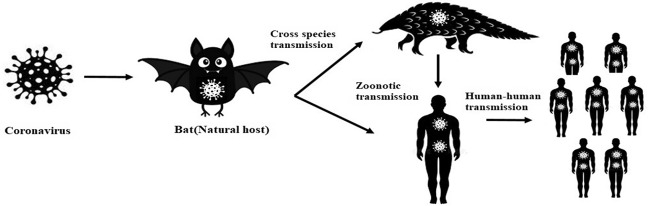
Coronavirus Disease 2019 (CoViD-19) is the third type of coronavirus disease after severe acute respiratory syndrome (SARS) and Middle East respiratory syndrome (MERS) that appears in human population from the past two decades. It is highly contagious and rapidly spread in the human population and compelled global public health institutions on high alert. Due to genetic similarity of this novel coronavirus 2019 with bat virus its emergence from bat to humans is possible. The virus survive in the droplets of coughing and sneezing and spread around the large areas through infected person resulting in its rapid spread among people. Clinical symptoms of CoViD-19 include fever, dry cough, dyspnea, loose stool, nausea and vomiting. The present review discuss the origin of CoViD-19, its rapid spread, mortality rate and recoveries ratio around the world. Since its origin from Wuhan, the CoViD-19 spread very rapidly all across the countries, on April 17, 2020 this disease has affected 210 countries of the globe. The data obtained showed over 2.4 million confirmed cases of CoViD-19. Higher mortality rate was found in Algeria and Belgium as 15% and 13.95%, respectively. Lower mortality rate was found in Qatar 0.17% and Singapore 0.2%. Recovery versus deceased ratio showed that recovery was 68, 59 and 35 times higher than the death in Singapore, Qatar and Thailand respectively. It is concluded that 2019-novel corona virus is a zoonotic pathogen similar to MERS and SARS. Therefore, a barrier should be maintained between and across the human, household and wild animals to avoid such pandemics.
2019冠状病毒病(COVID-19)是过去二十年来在人类群体中出现的继严重急性呼吸综合征(SARS)和中东呼吸综合征(MERS)之后的第三种冠状病毒病。它具有高度传染性,在人群中迅速传播,迫使全球公共卫生机构处于高度戒备状态。由于这种新型2019冠状病毒与蝙蝠病毒在基因上相似,它有可能从蝙蝠传播到人类。该病毒在咳嗽和打喷嚏的飞沫中存活,并通过感染者在大面积区域传播,导致其在人群中迅速传播。COVID-19的临床症状包括发热、干咳、呼吸困难、腹泻、恶心和呕吐。本综述讨论了COVID-19的起源、其迅速传播、全球死亡率和康复率。自起源于武汉以来,COVID-19在各国迅速传播,2020年4月17日,这种疾病已影响到全球210个国家。获得的数据显示,COVID-19确诊病例超过240万例。阿尔及利亚和比利时的死亡率较高,分别为15%和13.95%。卡塔尔的死亡率较低,为0.17%,新加坡为0.2%。康复与死亡比率显示,新加坡、卡塔尔和泰国的康复率分别比死亡率高68倍、59倍和35倍。结论是,2019新型冠状病毒是一种与MERS和SARS类似的人畜共患病原体。因此,应在人类、家畜和野生动物之间及相互之间保持隔离,以避免此类大流行。