Tian Shuxia, Chen Min, Wang Bing, Han Yonglong, Shang Haonan, Chen Junming
Shanghai University of Medicine & Health Sciences Affiliated Zhoupu Hospital, China.
Shanghai Jiao Tong University Affiliated Sixth People's Hospital, China.
Gastroenterol Res Pract. 2020 Jun 10;2020:5346573. doi: 10.1155/2020/5346573. eCollection 2020.
Fibroblast growth factor receptor 4 (FGFR4) is a key mediator that protects the liver from chronic injury. MicroRNA-7 (miR-7) is a tumor suppressor and associated with lipid homeostasis in the liver. This study was designed to examine the role of the miR-7-5p/FGFR4 axis in liver fibrogenesis.
TargetScan was employed to predict microRNAs that targeted FGFR4 on the 3'-untranslated region (3'-UTR). miR-7-5p and FGFR4 expression in pathological liver tissues and LX-2 cells was determined using qRT-PCR and an immunoblotting assay. A dual-luciferase assay was conducted to validate the target prediction. A Cell Counting Lit-8 assay was performed to assess the proliferation ability of LX-2 cells. Hydroxyproline content in LX-2 cells was measured using a hydroxyproline assay. The expression of hepatic stellate cell (HSC) activation markers was examined using qRT-PCR and an immunoblotting assay.
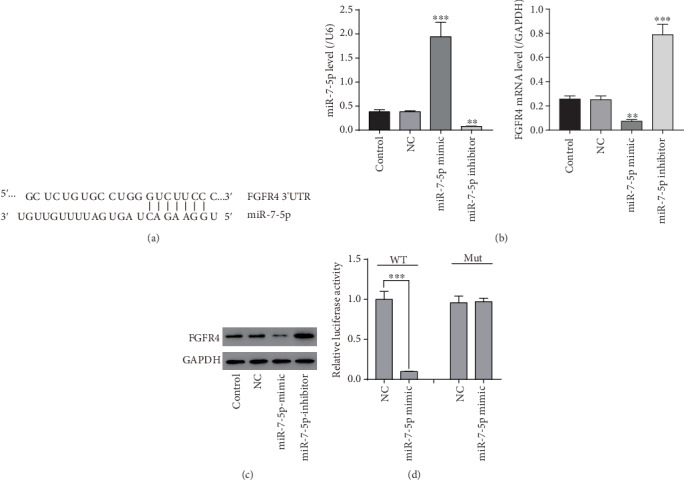
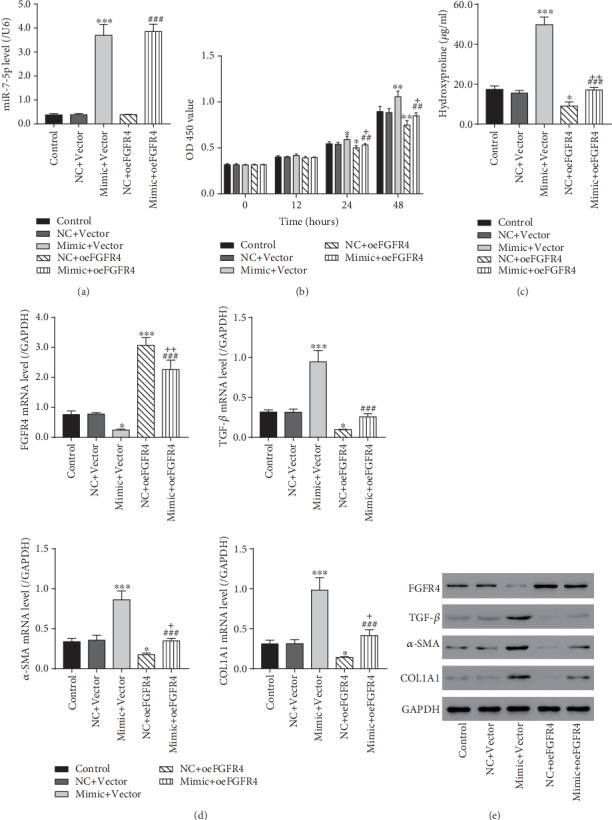
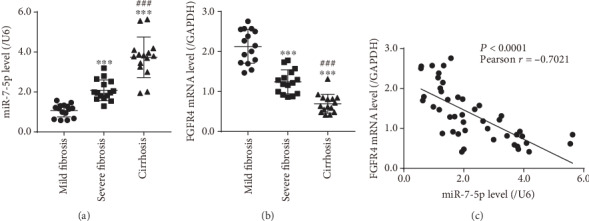
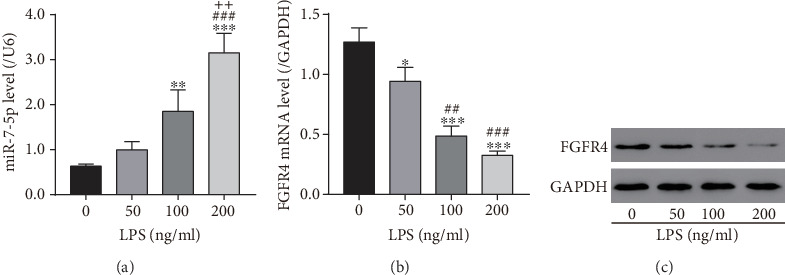
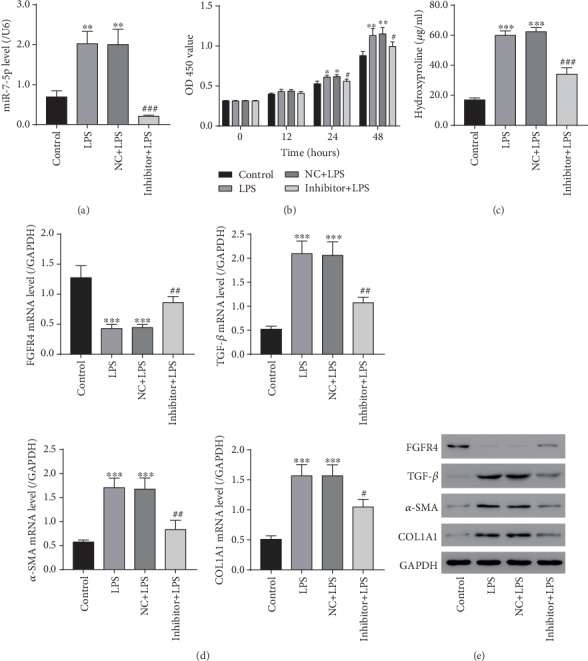
FGFR4 was a putative target of miR-7-5p. In LX-2 cells, miR-7-5p targeted FGFR4 by binding to 3'-UTR. FGFR4 was downregulated, but miR-7-5p was markedly enhanced in the liver samples as the degree of liver fibrosis rose. miR-7-5p was negatively associated with FGFR4 expression in liver tissues. The miR-7-5p inhibitor blocked the lipopolysaccharide-induced proliferation and activation of LX-2 cells, and FGFR4 overexpression inhibited LX-2 cell proliferation and activation triggered by miR-7-5p.
miR-7-5p promotes HSC proliferation and activation by downregulating FGFR4.
成纤维细胞生长因子受体4(FGFR4)是保护肝脏免受慢性损伤的关键介质。微小RNA-7(miR-7)是一种肿瘤抑制因子,与肝脏脂质稳态相关。本研究旨在探讨miR-7-5p/FGFR4轴在肝纤维化中的作用。
利用TargetScan预测靶向FGFR4 3'非翻译区(3'-UTR)的微小RNA。采用qRT-PCR和免疫印迹法检测病理肝脏组织和LX-2细胞中miR-7-5p和FGFR4的表达。进行双荧光素酶测定以验证靶标预测。采用细胞计数试剂盒-8法评估LX-2细胞的增殖能力。使用羟脯氨酸测定法测量LX-2细胞中的羟脯氨酸含量。采用qRT-PCR和免疫印迹法检测肝星状细胞(HSC)激活标志物的表达。
FGFR4是miR-7-5p的假定靶标。在LX-2细胞中,miR-7-5p通过与3'-UTR结合靶向FGFR4。随着肝纤维化程度的增加,肝脏样本中FGFR4表达下调,但miR-7-5p明显增强。miR-7-5p与肝组织中FGFR4的表达呈负相关。miR-7-5p抑制剂可阻断脂多糖诱导的LX-2细胞增殖和激活,FGFR4过表达可抑制miR-7-5p触发的LX-2细胞增殖和激活。
miR-7-5p通过下调FGFR4促进肝星状细胞增殖和激活。