Sanches Priscila Laviola, Geaquinto Luths Raquel de Oliveira, Cruz Rebecca, Schuck Desirée Cigaran, Lorencini Márcio, Granjeiro José Mauro, Ribeiro Ana Rosa Lopes
Postgraduate Program in Translational Biomedicine, University of Grande Rio, Duque de Caxias, Brazil.
Directory of Metrology Applied to Life Sciences, National Institute of Metrology, Quality and Technology, Duque de Caxias, Brazil.
Front Bioeng Biotechnol. 2020 Jun 10;8:575. doi: 10.3389/fbioe.2020.00575. eCollection 2020.
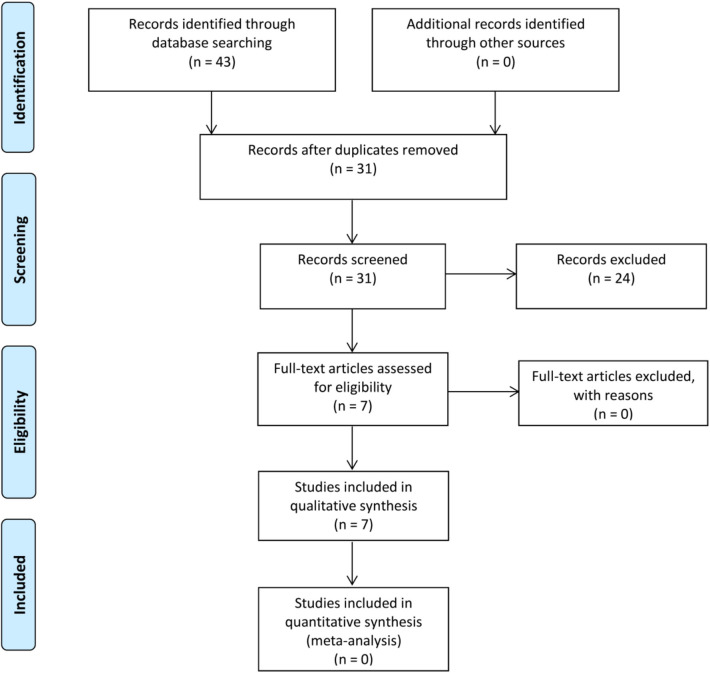
Titanium dioxide nanoparticles (TiO NPs) are regularly used in sunscreens because of their photoprotective capacity. The advantage of using TiO on the nanometer scale is due to its transparency and better UV blocking efficiency. Due to the greater surface area/volume ratio, NPs become more (bio)-reactive giving rise to concerns about their potential toxicity. To evaluate the irritation and corrosion of cosmetics, 3D skin models have been used as an alternative method to animal experimentation. However, it is not known if this model is appropriate to study skin irritation, corrosion and phototoxicity of nanomaterials such as TiO NPs. This systematic review (SR) proposed the following question: Can the toxicity of TiO nanoparticles be evaluated in a 3D skin model? This SR was conducted according to the Preliminary Report on Systematic Review and Meta-Analysis (PRISMA). The protocol was registered in CAMARADES and the ToxRTool evaluation was performed in order to increase the quality and transparency of this search. In this SR, 7 articles were selected, and it was concluded that the 3D skin model has shown to be promising to evaluate the toxicity of TiO NPs. However, most studies have used biological assays that have already been described as interfering with these NPs, demonstrating that misinterpretations can be obtained. This review will focus in the possible efforts that should be done in order to avoid interference of NPs with biological assays applied in 3D culture.
二氧化钛纳米颗粒(TiO NPs)因其光保护能力而经常被用于防晒霜中。在纳米尺度使用TiO的优势在于其透明度和更好的紫外线阻挡效率。由于表面积/体积比更大,纳米颗粒变得更具(生物)反应性,这引发了人们对其潜在毒性的担忧。为了评估化妆品的刺激性和腐蚀性,3D皮肤模型已被用作动物实验的替代方法。然而,尚不清楚该模型是否适合研究纳米材料如TiO NPs的皮肤刺激性、腐蚀性和光毒性。本系统评价(SR)提出了以下问题:能否在3D皮肤模型中评估TiO纳米颗粒的毒性?本SR是根据系统评价和Meta分析初步报告(PRISMA)进行的。该方案已在CAMARADES注册,并进行了ToxRTool评估,以提高本次检索的质量和透明度。在本SR中,筛选出7篇文章,得出的结论是3D皮肤模型在评估TiO NPs的毒性方面已显示出前景。然而,大多数研究使用的生物测定方法已被描述为会干扰这些纳米颗粒,这表明可能会得出错误的解释。本综述将聚焦于为避免纳米颗粒干扰3D培养中应用的生物测定方法而应做出的可能努力。