Renal Research, Gosford, Australia.
Division of Nephrology, Department of Medicine, New York-Presbyterian Queens, New York, NY, USA.
Nephrol Dial Transplant. 2021 Apr 26;36(5):871-883. doi: 10.1093/ndt/gfaa158.
Sodium zirconium cyclosilicate (SZC) binds potassium and ammonium in the gastrointestinal tract. In addition to serum potassium reduction, Phase 2 trial data have shown increased serum bicarbonate with SZC, which may be clinically beneficial because maintaining serum bicarbonate ≥22 mmol/L preserves kidney function. This exploratory analysis examined serum bicarbonate and urea, and urine pH data from three SZC randomized, placebo-controlled Phase 3 studies among patients with hyperkalaemia [ZS-003 (n = 753), HARMONIZE (n = 258) and HARMONIZE-Global (n = 267)].
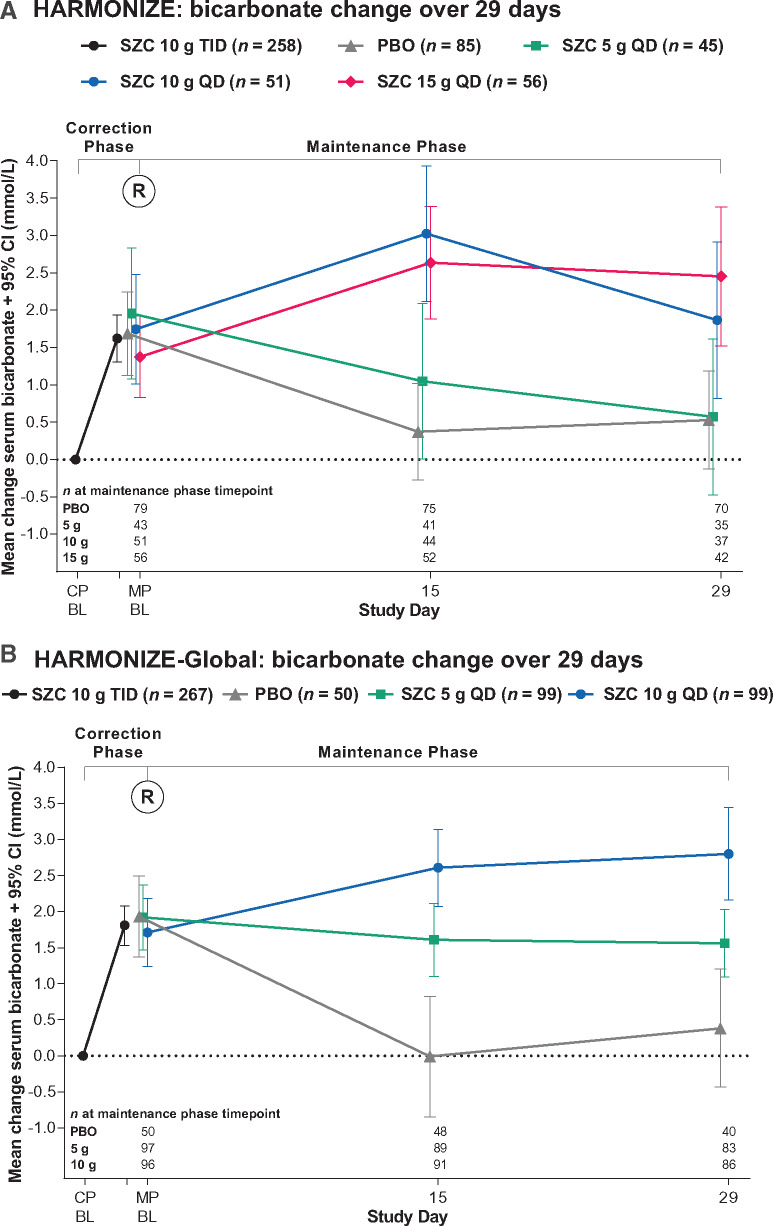
In all studies, patients received ≤10 g SZC 3 times daily (TID) for 48 h to correct hyperkalaemia, followed by randomization to maintenance therapy with SZC once daily (QD) versus placebo for ≤29 days among those achieving normokalaemia.
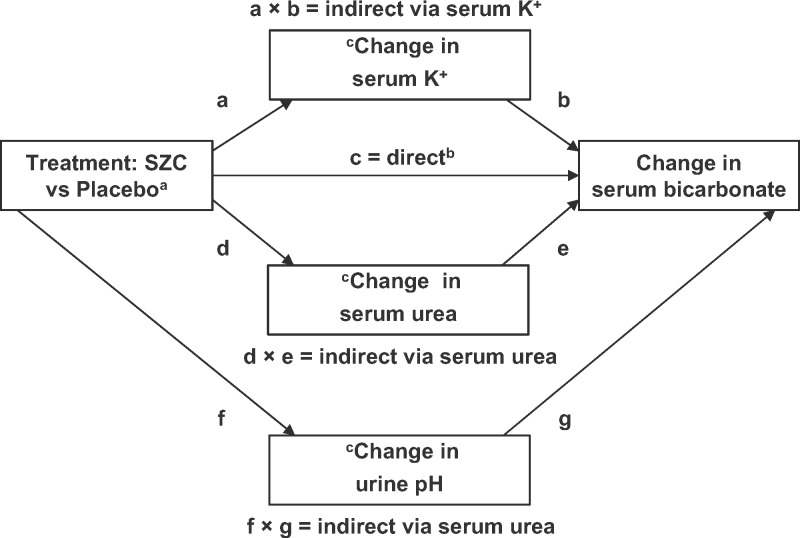
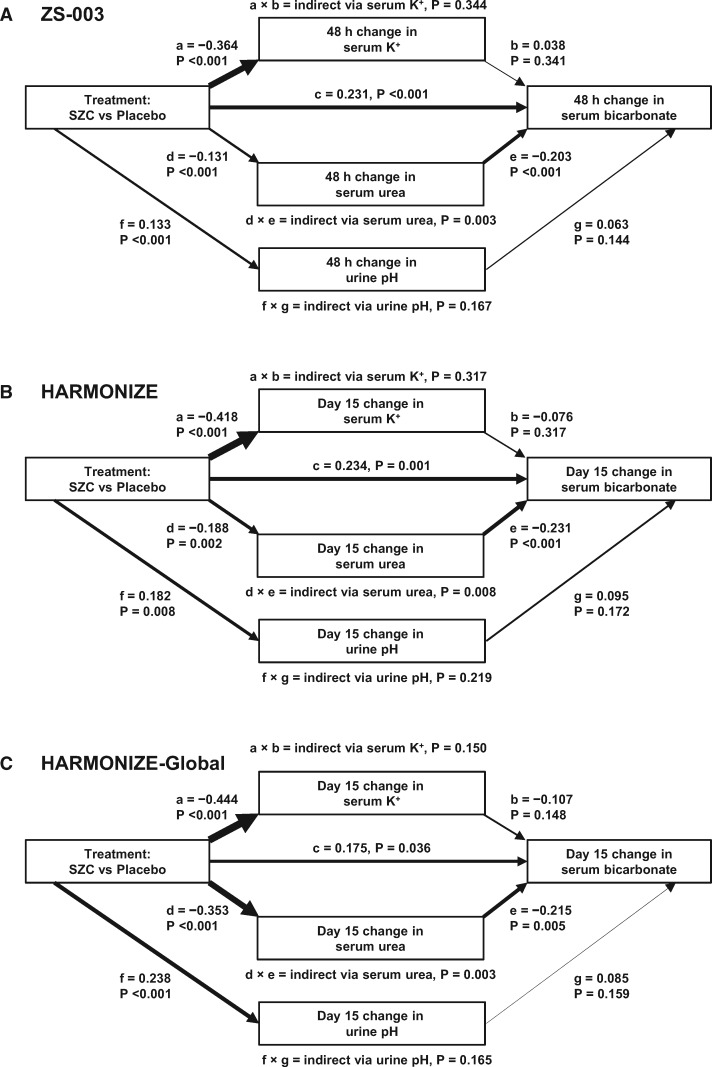
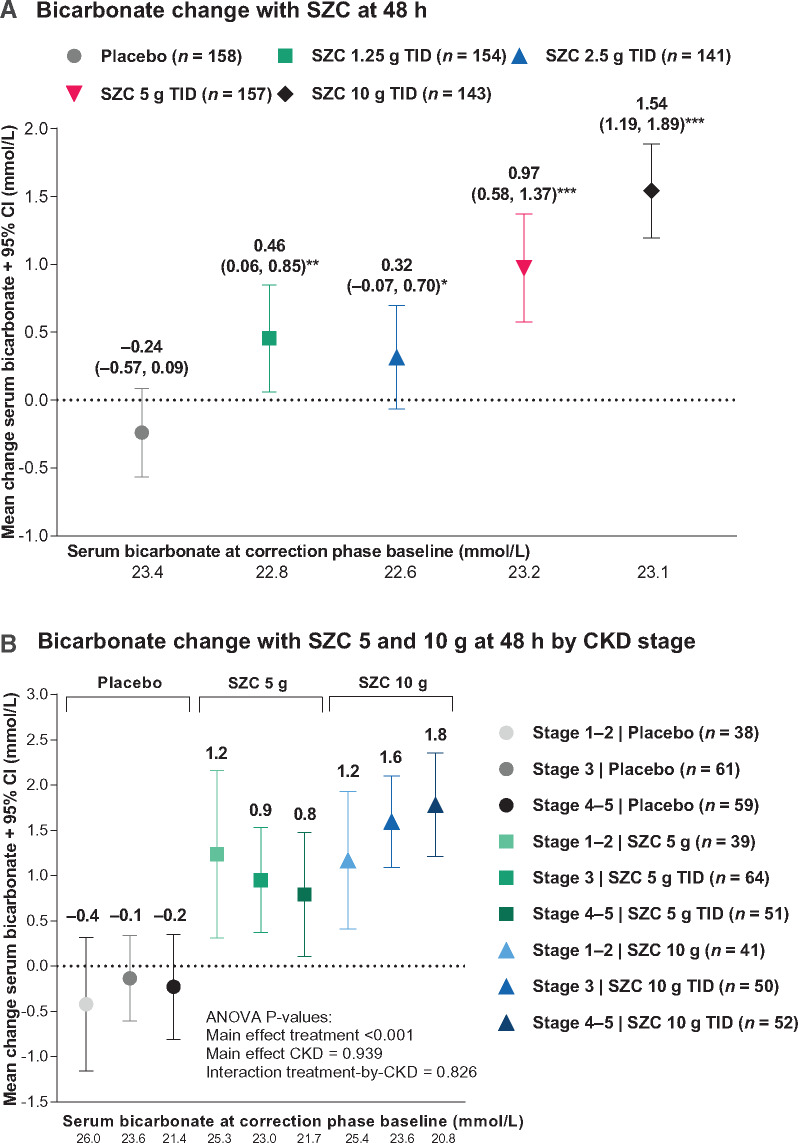
Significant dose-dependent mean serum bicarbonate increases from baseline of 0.3 to 1.5 mmol/L occurred within 48 h of SZC TID in ZS-003 (all P < 0.05), which occurred regardless of chronic kidney disease (CKD) stage. Similar acute increases in HARMONIZE and HARMONIZE-Global were maintained over 29 days. With highest SZC maintenance doses, patient proportions with serum bicarbonate <22 mmol/L fell from 39.4% at baseline to 4.9% at 29 days (P = 0.005) in HARMONIZE and from 87.9% to 70.1%, (P = 0.006) in HARMONIZE-Global. Path analyses demonstrated that serum urea decreases (but not serum potassium or urine pH changes) were associated with SZC effects on serum bicarbonate.
SZC increased serum bicarbonate concentrations and reduced patient proportions with serum bicarbonate <22 mmol/L, likely due to SZC-binding of gastrointestinal ammonium. These SZC-induced serum bicarbonate increases occurred regardless of CKD stage and were sustained during ongoing maintenance therapy.
硅酸锆酸钠(SZC)在胃肠道中结合钾和铵。除了血清钾降低外,第 2 阶段试验数据还显示 SZC 可增加血清碳酸氢盐,这可能具有临床益处,因为维持血清碳酸氢盐≥22mmol/L 可保留肾功能。这项探索性分析检查了 SZC 随机、安慰剂对照的 3 项 3 期研究中的血清碳酸氢盐和尿素以及尿液 pH 数据,这些研究涉及高钾血症患者[ZS-003(n=753)、HARMONIZE(n=258)和 HARMONIZE-Global(n=267)]。
在所有研究中,患者接受 SZC 每日 3 次(TID),每次 10g,共 48 小时,以纠正高钾血症,随后在达到正常血钾的患者中随机接受 SZC 每日 1 次(QD)与安慰剂维持治疗,最长 29 天。
在 ZS-003 中,SZC TID 后 48 小时内,与基线相比,血清碳酸氢盐呈剂量依赖性显著增加,平均增加 0.3 至 1.5mmol/L(所有 P<0.05),无论慢性肾脏病(CKD)阶段如何。在 HARMONIZE 和 HARMONIZE-Global 中,也观察到了类似的急性增加,并持续了 29 天。在最高 SZC 维持剂量下,血清碳酸氢盐<22mmol/L 的患者比例从基线时的 39.4%降至 29 天时的 4.9%(P=0.005),在 HARMONIZE-Global 中从 87.9%降至 70.1%(P=0.006)。路径分析表明,血清尿素降低(但血清钾或尿液 pH 无变化)与 SZC 对血清碳酸氢盐的影响相关。
SZC 增加了血清碳酸氢盐浓度,降低了血清碳酸氢盐<22mmol/L 的患者比例,这可能是由于 SZC 结合了胃肠道中的铵。这些 SZC 诱导的血清碳酸氢盐增加发生在 CKD 阶段无关,并在持续的维持治疗期间持续存在。