Institute of Biopathology and Regenerative Medicine (IBIMER), Biomedical Research Centre (CIBM), University of Granada, Spain.
Department of Medicine, University of Almeria, Spain.
Curr Neuropharmacol. 2021;19(4):513-537. doi: 10.2174/1570159X18666200626204005.
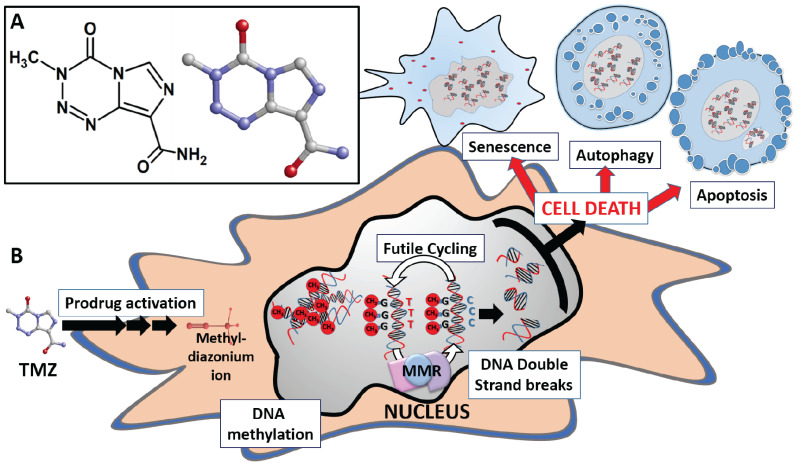
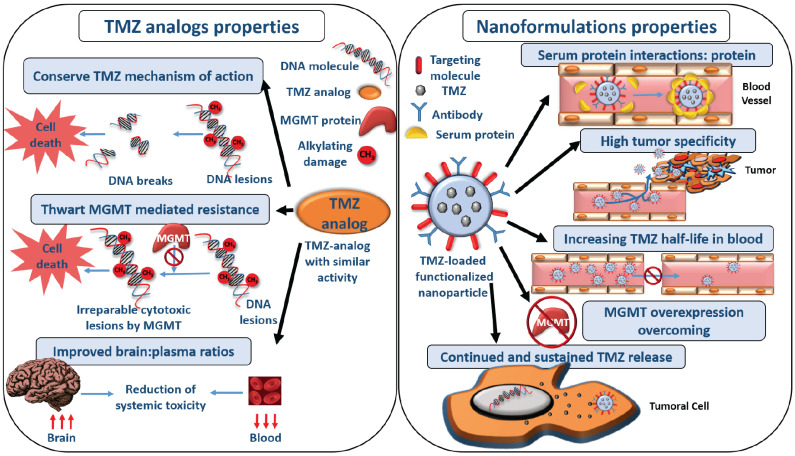
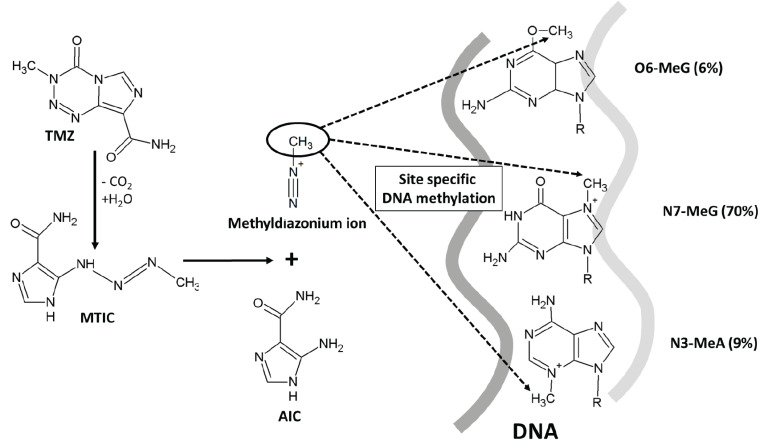
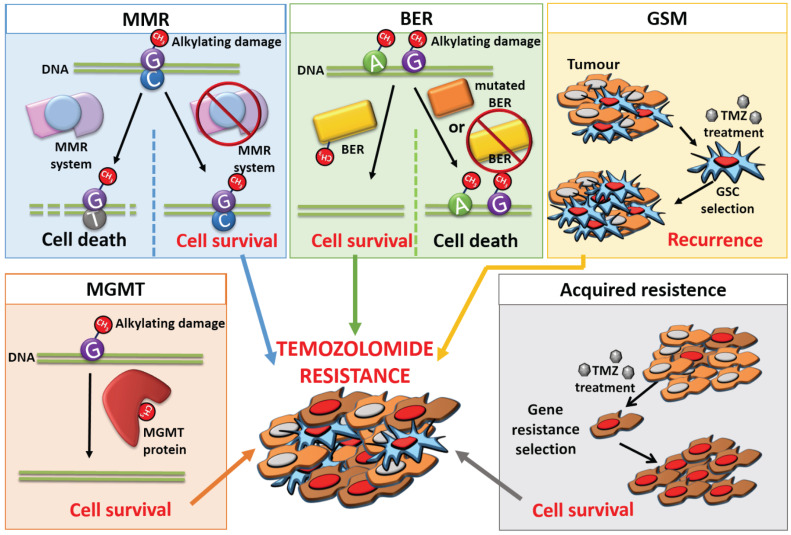
Temozolomide (TMZ), an oral alkylating prodrug which delivers a methyl group to purine bases of DNA (O6-guanine; N7-guanine and N3-adenine), is frequently used together with radiotherapy as part of the first-line treatment of high-grade gliomas. The main advantages are its high oral bioavailability (almost 100% although the concentration found in the cerebrospinal fluid was approximately 20% of the plasma concentration of TMZ), its lipophilic properties, and small size that confer the ability to cross the blood-brain barrier. Furthermore, this agent has demonstrated activity not only in brain tumors but also in a variety of solid tumors. However, conventional therapy using surgery, radiation, and TMZ in glioblastoma results in a median patient survival of 14.6 months. Treatment failure has been associated with tumor drug resistance. This phenomenon has been linked to the expression of O6-methylguanine-DNA methyltransferase, but the mismatch repair system and the presence of cancer stem-like cells in tumors have also been related to TMZ resistance. The understanding of these mechanisms is essential for the development of new therapeutic strategies in the clinical use of TMZ, including the use of nanomaterial delivery systems and the association with other chemotherapy agents. The aim of this review is to summarize the resistance mechanisms of TMZ and the current advances to improve its clinical use.
替莫唑胺(TMZ)是一种口服烷化剂前体药物,可将甲基基团传递给 DNA 的嘌呤碱基(O6-鸟嘌呤;N7-鸟嘌呤和 N3-腺嘌呤),常与放疗联合用于高级别神经胶质瘤的一线治疗。其主要优点是口服生物利用度高(近 100%,尽管脑脊液中的浓度约为 TMZ 血浆浓度的 20%)、亲脂性和较小的分子尺寸,使其能够穿过血脑屏障。此外,该药物不仅在脑肿瘤中具有活性,而且在多种实体肿瘤中也具有活性。然而,胶质母细胞瘤中使用手术、放疗和 TMZ 的常规治疗方法,患者的中位生存期仅为 14.6 个月。治疗失败与肿瘤药物耐药有关。这种现象与 O6-甲基鸟嘌呤-DNA 甲基转移酶的表达有关,但错配修复系统和肿瘤中存在癌症干细胞样细胞也与 TMZ 耐药有关。了解这些机制对于在 TMZ 的临床应用中开发新的治疗策略至关重要,包括使用纳米材料递送系统和与其他化疗药物联合应用。本文综述的目的是总结 TMZ 的耐药机制以及目前提高其临床应用的进展。