Biasioli Anna, Londero Ambrogio P, Orsaria Maria, Scrimin Federica, Mangino Francesco Paolo, Bertozzi Serena, Mariuzzi Laura, Cagnacci Angelo
Clinic of Obstetrics and Gynecology, University Hospital of Udine.
Ennergi Research.
Medicine (Baltimore). 2020 Jun 26;99(26):e20491. doi: 10.1097/MD.0000000000020491.
Atypical polypoid adenomyoma (APA) is a rare uterine tumor typically found in fertile age and associated with infertility. Among young nullipara women, conservative treatment is proposed despite the high recurrence rate and the association with endometrial cancer.Our aim was to assess the risk of recurrence with different conservative treatments in fertile ages and the prevalence of malignant or pre-malignant associated lesions to better address an adequate patient counselling when treatment modalities are discussed.
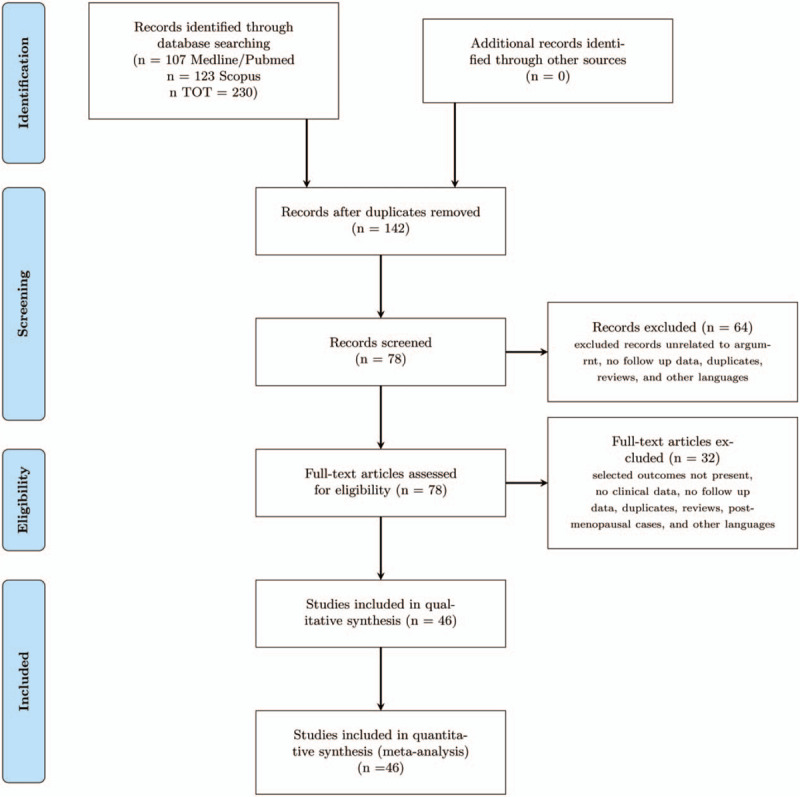
This study is a systematic review and meta-analysis of case reports and case series about APA management and follow-up. A literature search was carried from Medline and Scopus for studies published from January 1, 1980 to December 31, 2018.
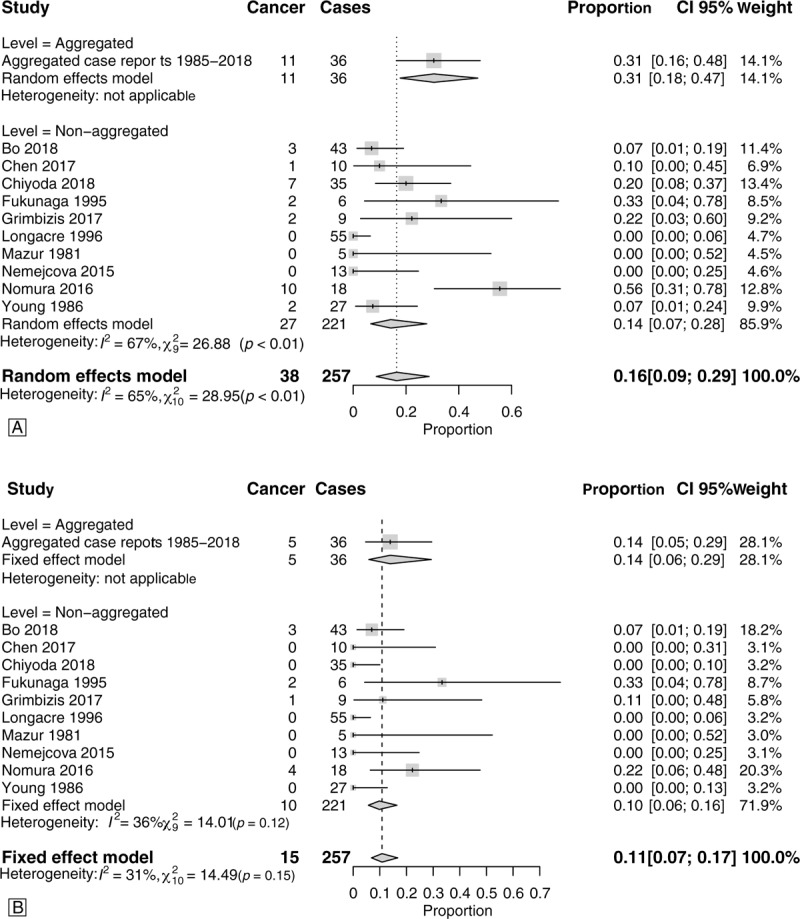
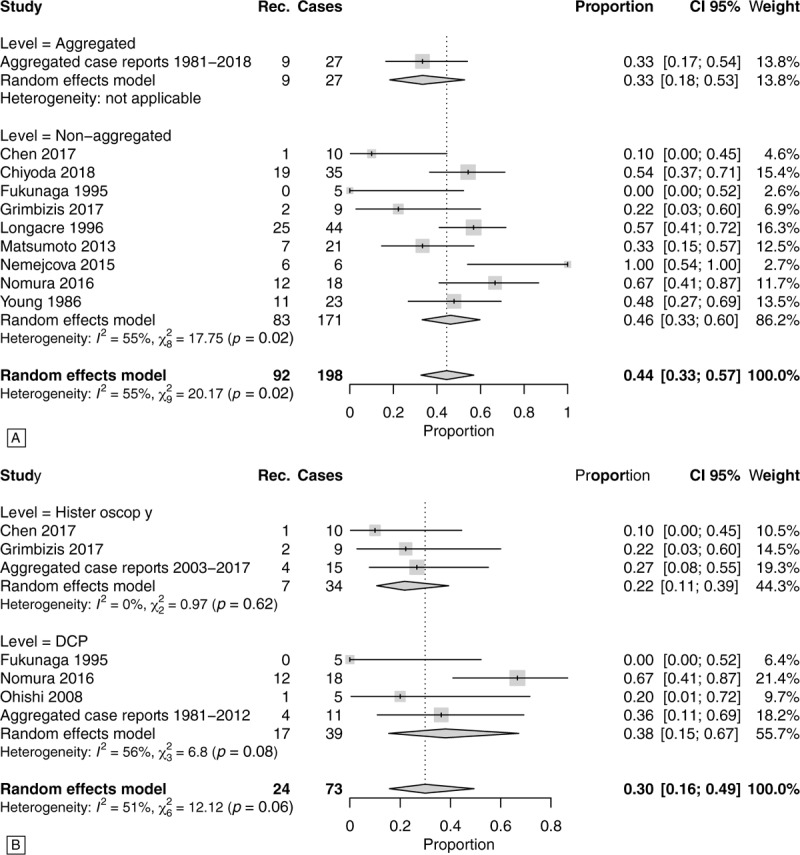
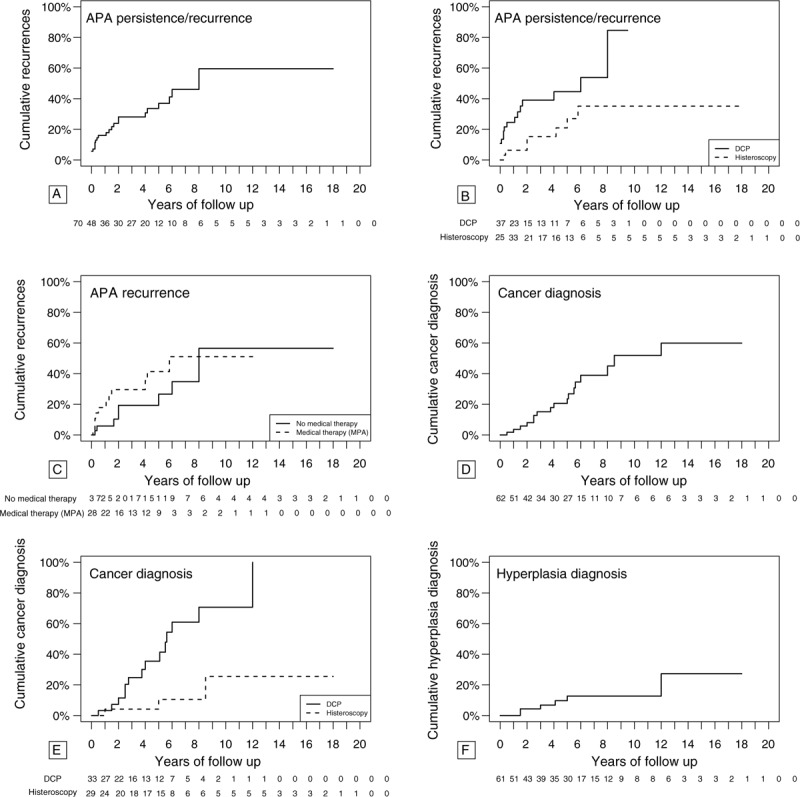
We included 46 observational studies and 296 cases in fertile women. The prevalence of APA relapse was 44% (CI.95 33-57%) and was lower in cases treated with operative hysteroscopy (22%; CI.95 11-39%) than in cases treated with blind curettage and polypectomy (38%; CI.95 15-67%). The prevalence of the concomitant or during the follow-up diagnosis of endometrial carcinoma was 16% (CI.95 9-29%). The risk of cancer development during follow-up was significantly less in cases treated with histeroscopy (10.56% new cumulative diagnosis at 5 years follow up; CI.95 0-23.7%) than blind curettage and polypectomy (35.5% new cumulative diagnosis at 5 years; CI.95 11.65-52.92%; P < .05). Medical treatment with medroxyprogesterone acetate after surgery does not reduce APA recurrence. Pregnancy was observed in 79% cases in which the desire was expressed.
This review suggests that conservative treatment performed by operative hysteroscopy is the optimal choice because it lowers the risk of recurrence, improves the accuracy of concomitant carcinoma or hyperplasia diagnosis, and leaves the possibility of future pregnancies.
非典型息肉样腺肌瘤(APA)是一种罕见的子宫肿瘤,通常发生于育龄期,与不孕相关。对于年轻未育女性,尽管复发率高且与子宫内膜癌有关联,但仍建议采用保守治疗。我们的目的是评估不同保守治疗方法在育龄期的复发风险以及恶性或癌前相关病变的患病率,以便在讨论治疗方式时能更好地为患者提供充分的咨询。
本研究是对关于APA管理和随访的病例报告及病例系列进行的系统评价和荟萃分析。从Medline和Scopus数据库检索1980年1月1日至2018年12月31日发表的研究。
我们纳入了46项观察性研究和296例育龄期女性病例。APA复发率为44%(95%CI 33 - 57%),经宫腔镜手术治疗的病例复发率较低(22%;95%CI 11 - 39%),低于盲目刮宫及息肉切除术治疗的病例(38%;95%CI 15 - 67%)。随访期间子宫内膜癌的伴发率或诊断率为16%(95%CI 9 - 29%)。随访期间宫腔镜手术治疗的病例发生癌症的风险显著低于盲目刮宫及息肉切除术(5年随访时新累积诊断率为10.56%;95%CI 0 - 23.7%)(5年时新累积诊断率为35.5%;95%CI 11.65 - 52.92%;P<0.05)。术后使用醋酸甲羟孕酮进行药物治疗并不能降低APA复发率。有生育意愿的病例中79%成功妊娠。
本综述表明,宫腔镜手术进行的保守治疗是最佳选择,因为它降低了复发风险,提高了伴发癌或增生诊断的准确性,并保留了未来妊娠的可能性。