Department of Medical Biochemistry, School of Medicine, Acibadem Mehmet Ali Aydinlar University, Istanbul, Turkey.
Medical Genetics, Aix Marseille University, Inserm, MMG, Marseille, France.
Cancer Med. 2020 Aug;9(16):5767-5780. doi: 10.1002/cam4.3223. Epub 2020 Jun 26.
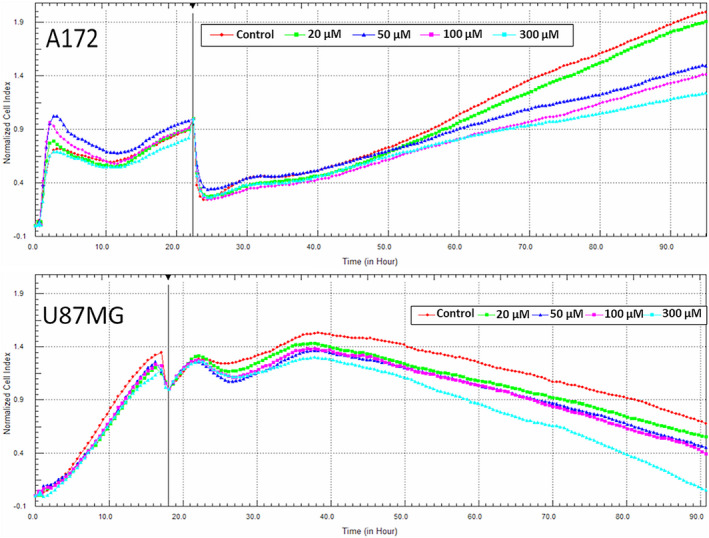
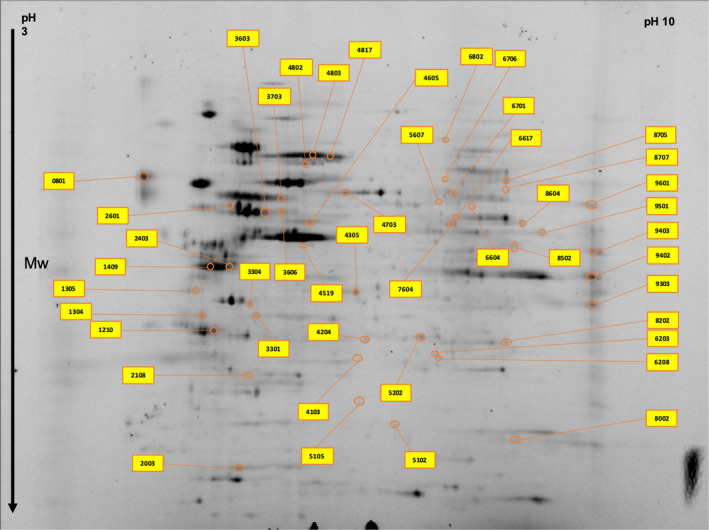
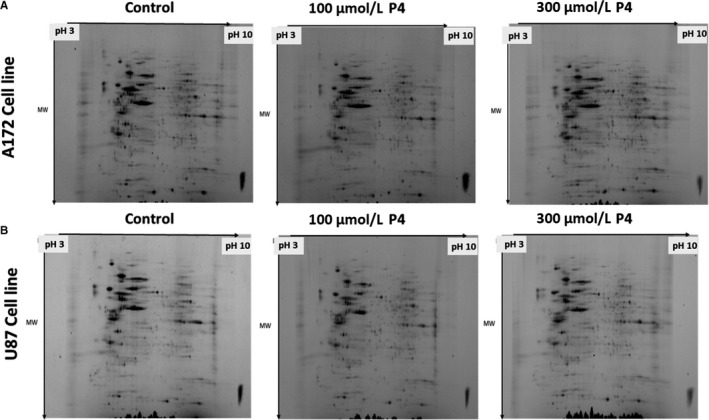
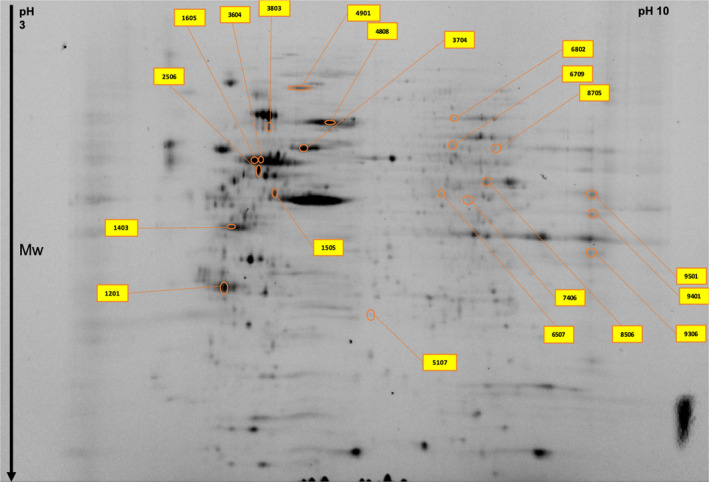
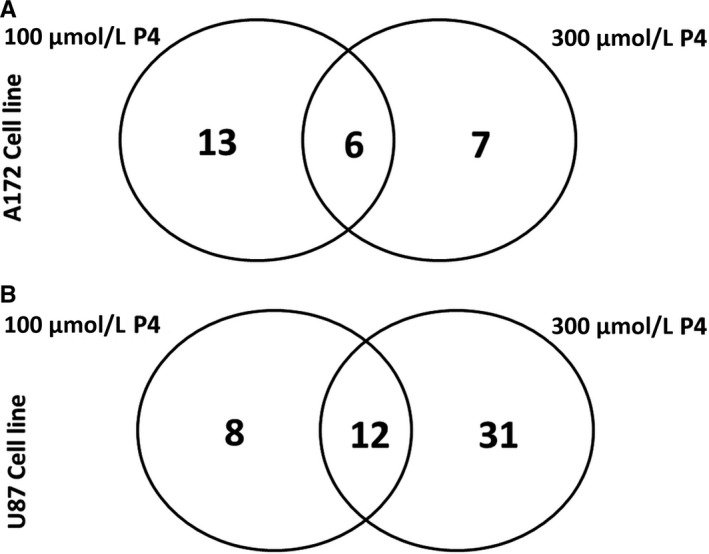
While pregnancy may accelerate glioblastoma multiforme (GBM) growth, parity and progesterone (P4) containing treatments (ie, hormone replacement therapy) reduce the risk of GBM development. In parallel, low and high doses of P4 exert stimulating and inhibitory actions on GBM growth, respectively. The mechanisms behind the high-dose P4-suppression of GBM growth is unknown. In the present study, we assessed the changes in growth and proteomic profiles when high-dose P4 (100 and 300 µM) was administered in human U87 and A172 GBM cell lines. The xCELLigence system was used to examine cell growth when different concentrations of P4 (20, 50, 100, and 300 µM) was administered. The protein profiles were determined by two-dimensional gel electrophoresis in both cell lines when 100 and 300 µM P4 were administered. Finally, the pathways enriched by the differentially expressed proteins were assessed using bioinformatic tools. Increasing doses of P4 blocked the growth of both GBM cells. We identified 26 and 51 differentially expressed proteins (fc > 2) in A172 and U87 cell lines treated with P4, respectively. Only the pro-tumorigenic mitochondrial ornithine aminotransferase and anti-apoptotic mitochondrial 60 kDa heat shock protein were downregulated in A172 cell line and U87 cell line when treated with P4, respectively. Detoxification of reactive oxygen species, cellular response to stress, glucose metabolism, and immunity-related proteins were altered in P4-treated GBM cell lines. The paradox on the effect of low and high doses of P4 on GBM growth is gaining attention. The mechanism related to the high dose of P4 on GBM growth can be explained by the alterations in detoxification mechanisms, stress, and immune response and glucose metabolism. P4 suppresses GBM growth and as it is nontoxic in comparison to classical chemotherapeutics, it can be used as a new strategy in GBM treatment in the future.
虽然妊娠可能会加速多形性胶质母细胞瘤(GBM)的生长,但生育和含有孕激素(P4)的治疗方法(即激素替代疗法)会降低 GBM 发生的风险。同时,低剂量和高剂量的 P4 分别对 GBM 的生长产生刺激和抑制作用。高剂量 P4 抑制 GBM 生长的机制尚不清楚。在本研究中,我们评估了在人 U87 和 A172 GBM 细胞系中给予高剂量 P4(100 和 300μM)时生长和蛋白质组谱的变化。xCELLigence 系统用于检测不同浓度 P4(20、50、100 和 300μM)给药时细胞的生长情况。当给予 100 和 300μM P4 时,通过双向凝胶电泳确定两条细胞系的蛋白质谱。最后,使用生物信息学工具评估差异表达蛋白富集的途径。增加剂量的 P4 阻断了两种 GBM 细胞的生长。我们分别在 A172 和 U87 细胞系中鉴定出 26 和 51 个差异表达蛋白(fc>2)。在用 P4 处理的 A172 细胞系和 U87 细胞系中,只有促肿瘤性线粒体鸟氨酸转氨酶和抗凋亡的线粒体 60kDa 热休克蛋白下调。在用 P4 处理的 GBM 细胞系中,抗氧化应激、细胞应激反应、葡萄糖代谢和免疫相关蛋白的解毒发生改变。低剂量和高剂量 P4 对 GBM 生长的影响的矛盾引起了关注。高剂量 P4 对 GBM 生长的影响机制可以通过解毒机制、应激和免疫反应以及葡萄糖代谢的改变来解释。P4 抑制 GBM 的生长,并且与传统的化学疗法相比,它没有毒性,因此可以在未来用作 GBM 治疗的新策略。