Institute of Immunology and Immunotherapy, College of Medical and Dental Sciences, University of Birmingham, Birmingham B15 2TT, United Kingdom;
Institute of Immunology and Immunotherapy, College of Medical and Dental Sciences, University of Birmingham, Birmingham B15 2TT, United Kingdom.
J Immunol. 2020 Aug 1;205(3):708-719. doi: 10.4049/jimmunol.2000089. Epub 2020 Jun 26.
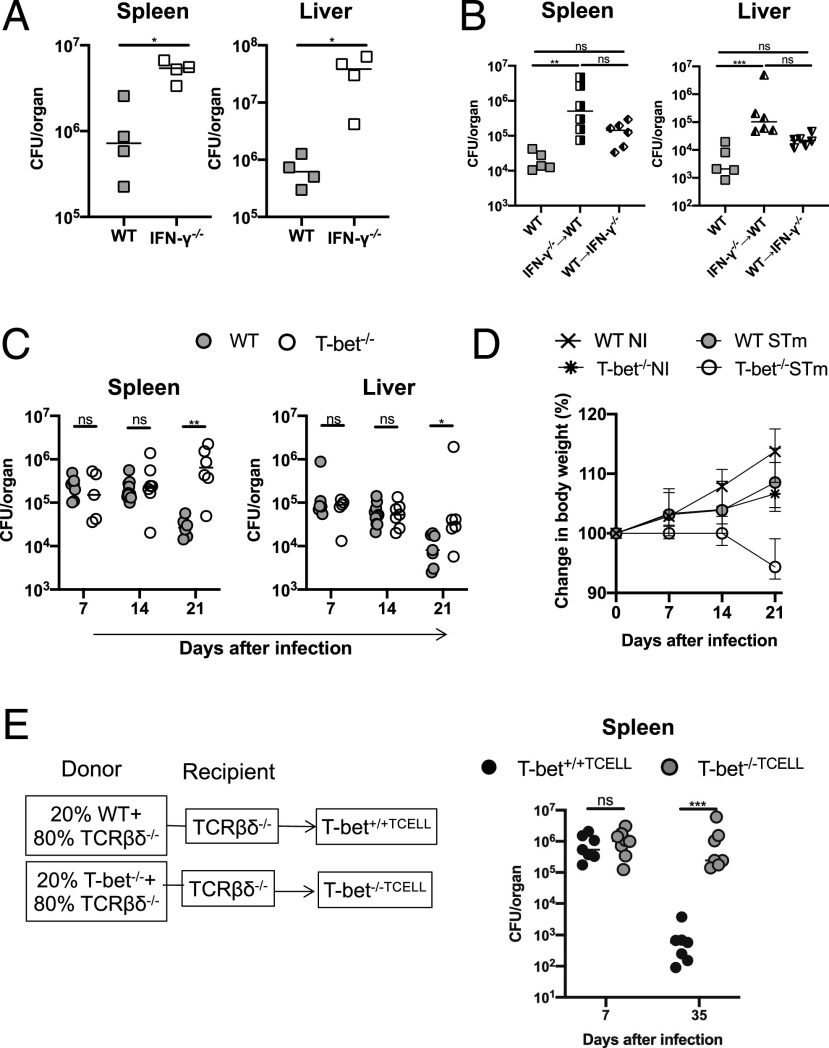
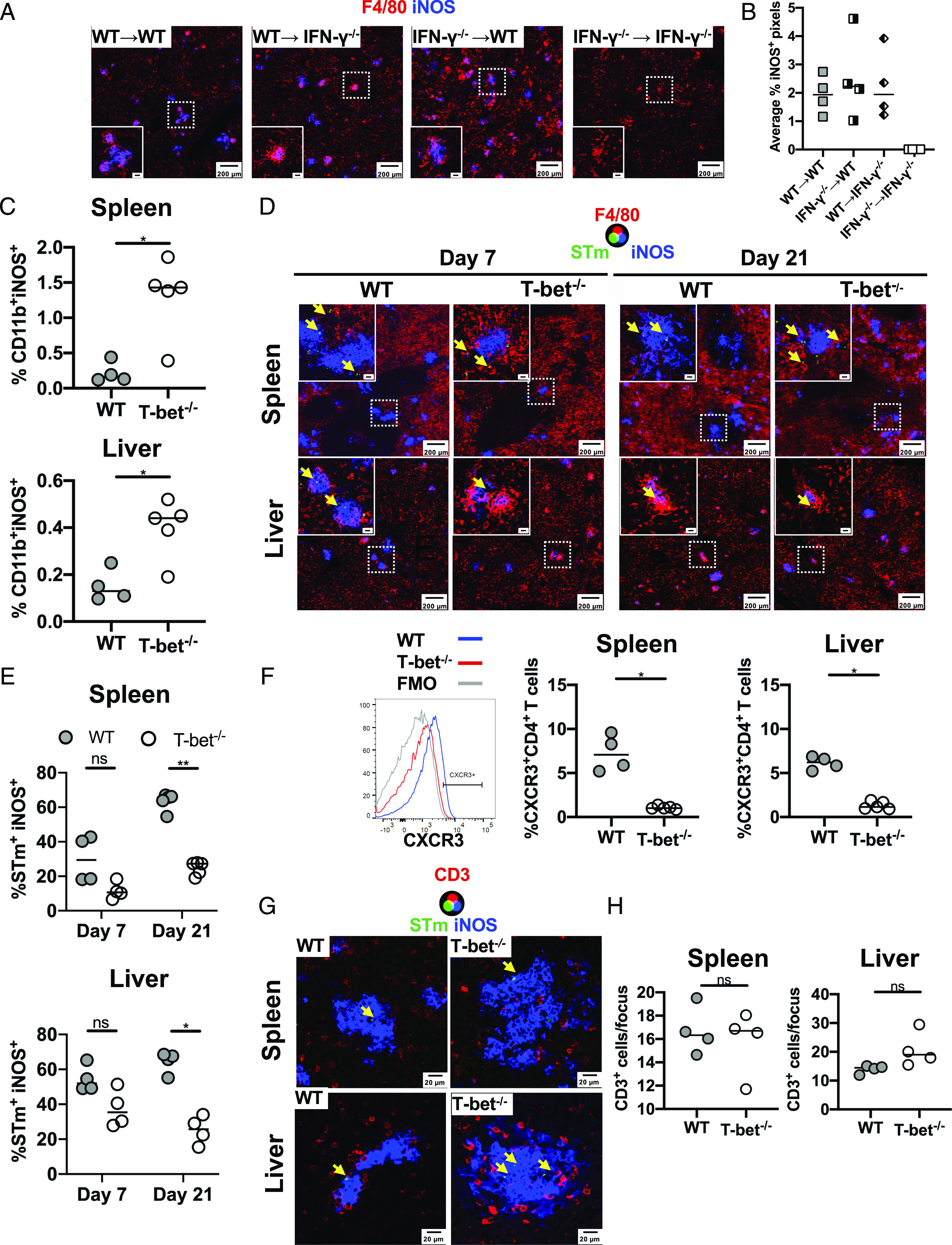
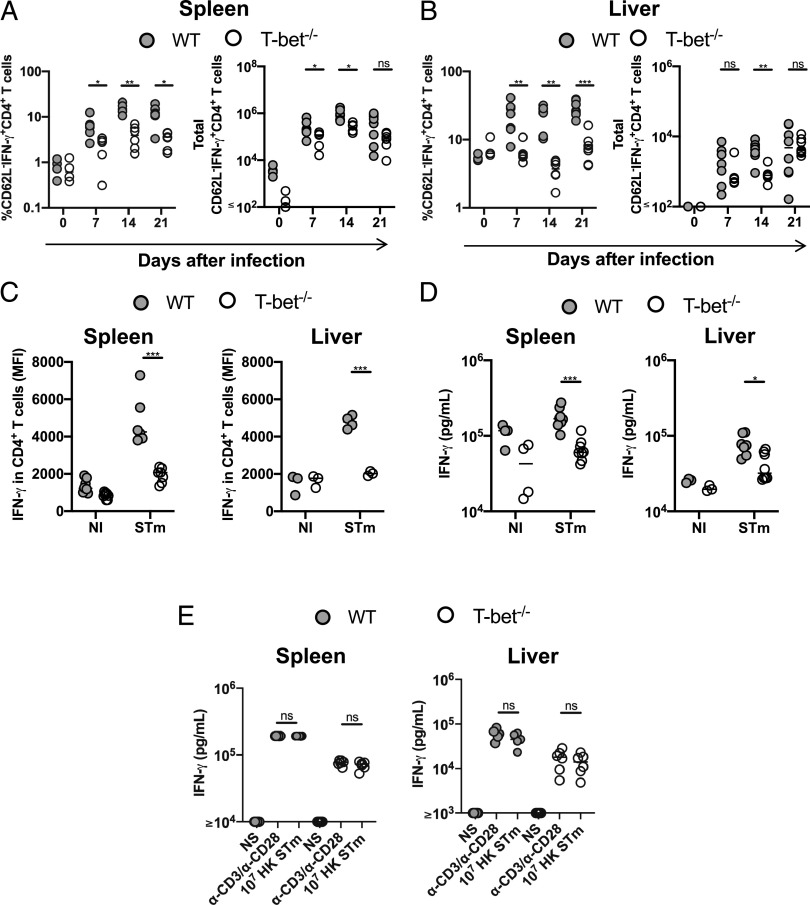
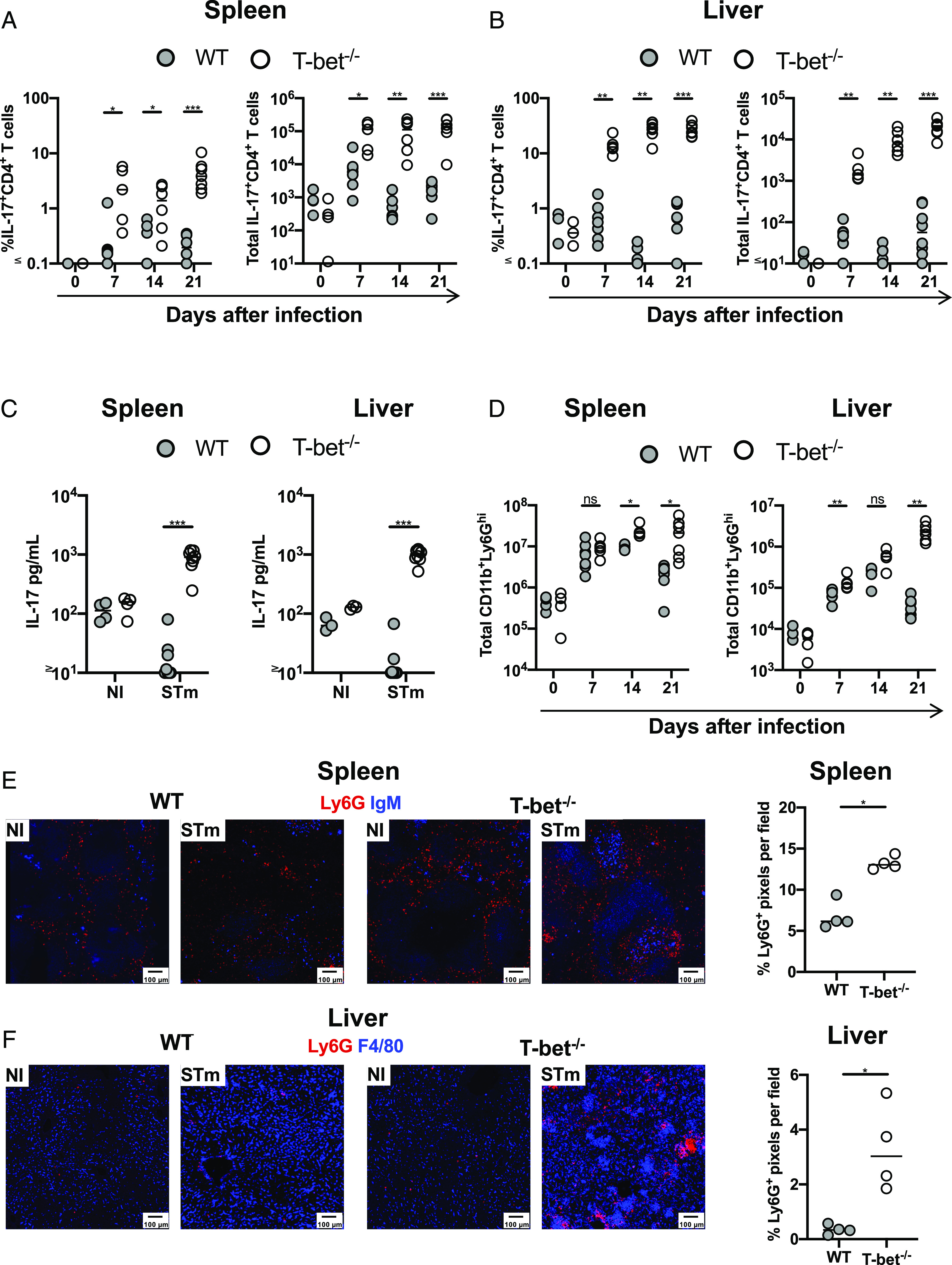
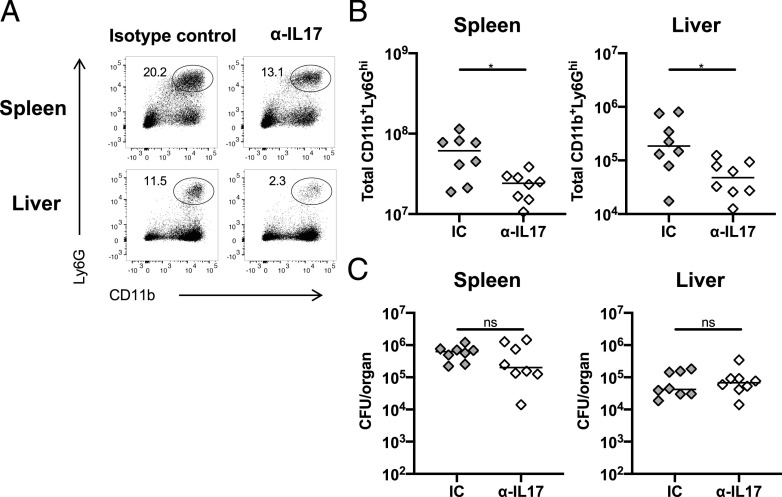
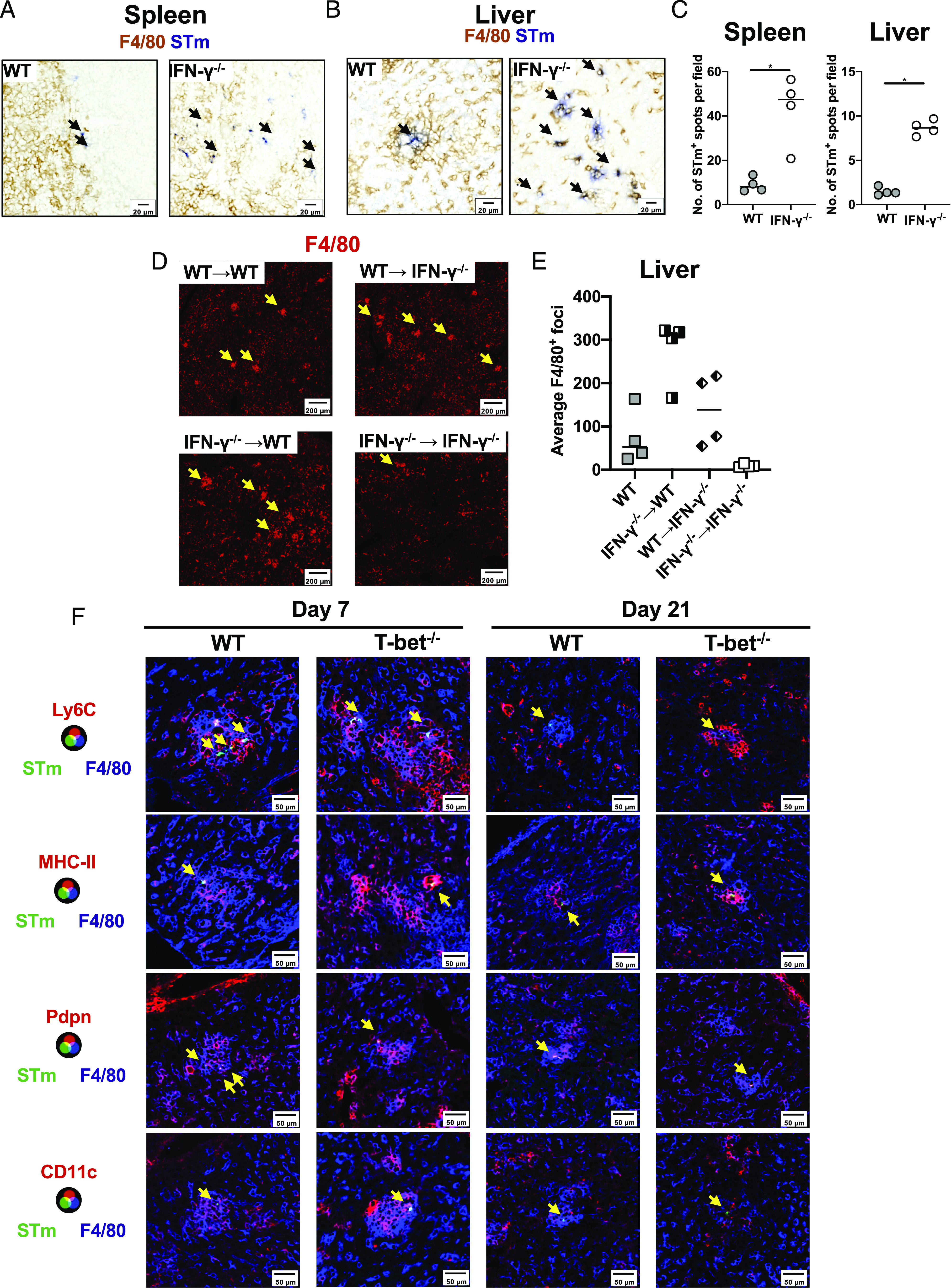
Clearance of intracellular infections caused by Typhimurium (STm) requires IFN-γ and the Th1-associated transcription factor T-bet. Nevertheless, whereas IFN-γ mice succumb rapidly to STm infections, T-bet mice do not. In this study, we assess the anatomy of immune responses and the relationship with bacterial localization in the spleens and livers of STm-infected IFN-γ and T-bet mice. In IFN-γ mice, there is deficient granuloma formation and inducible NO synthase (iNOS) induction, increased dissemination of bacteria throughout the organs, and rapid death. The provision of a source of IFN-γ reverses this, coincident with subsequent granuloma formation and substantially extends survival when compared with mice deficient in all sources of IFN-γ. T-bet mice induce significant levels of IFN-γ after challenge. Moreover, T-bet mice have augmented IL-17 and neutrophil numbers, and neutralizing IL-17 reduces the neutrophilia but does not affect numbers of bacteria detected. Surprisingly, T-bet mice exhibit surprisingly wild-type-like immune cell organization postinfection, including extensive iNOS granuloma formation. In wild-type mice, most bacteria are within iNOS granulomas, but in T-bet mice, most bacteria are outside these sites. Therefore, Th1 cells act to restrict bacteria within IFN-γ-dependent iNOS granulomas and prevent dissemination.
清除鼠伤寒沙门氏菌(STm)引起的细胞内感染需要 IFN-γ 和 Th1 相关转录因子 T-bet。然而,尽管 IFN-γ 小鼠迅速死于 STm 感染,但 T-bet 小鼠不会。在这项研究中,我们评估了免疫反应的解剖结构以及与 STm 感染的 IFN-γ 和 T-bet 小鼠脾脏和肝脏中细菌定位的关系。在 IFN-γ 小鼠中,存在缺陷的肉芽肿形成和诱导型一氧化氮合酶(iNOS)诱导,细菌在整个器官中的传播增加,并且迅速死亡。提供 IFN-γ 的来源可以逆转这种情况,随后伴随着肉芽肿的形成,并与缺乏所有 IFN-γ 来源的小鼠相比,大大延长了生存时间。T-bet 小鼠在受到挑战后会诱导出相当高水平的 IFN-γ。此外,T-bet 小鼠增加了 IL-17 和中性粒细胞的数量,中和 IL-17 减少了中性粒细胞的数量,但不影响检测到的细菌数量。令人惊讶的是,T-bet 小鼠在感染后表现出惊人的类似于野生型的免疫细胞组织,包括广泛的 iNOS 肉芽肿形成。在野生型小鼠中,大多数细菌都在 iNOS 肉芽肿内,但在 T-bet 小鼠中,大多数细菌都在这些部位之外。因此,Th1 细胞的作用是将细菌限制在 IFN-γ 依赖性 iNOS 肉芽肿内,并防止其传播。