Department of Biochemistry, Simmons Comprehensive Cancer Center, The University of Texas Southwestern Medical Center, Dallas, TX, USA.
Department of Molecular Biology, Hamon Center for Regenerative Science and Medicine, The University of Texas Southwestern Medical Center, Dallas, TX, USA.
Nat Commun. 2020 Jun 26;11(1):3232. doi: 10.1038/s41467-020-17029-3.
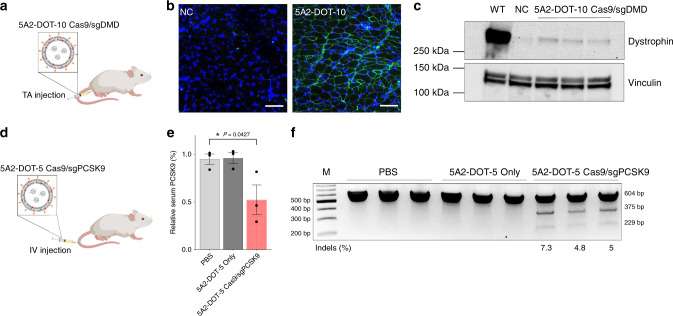
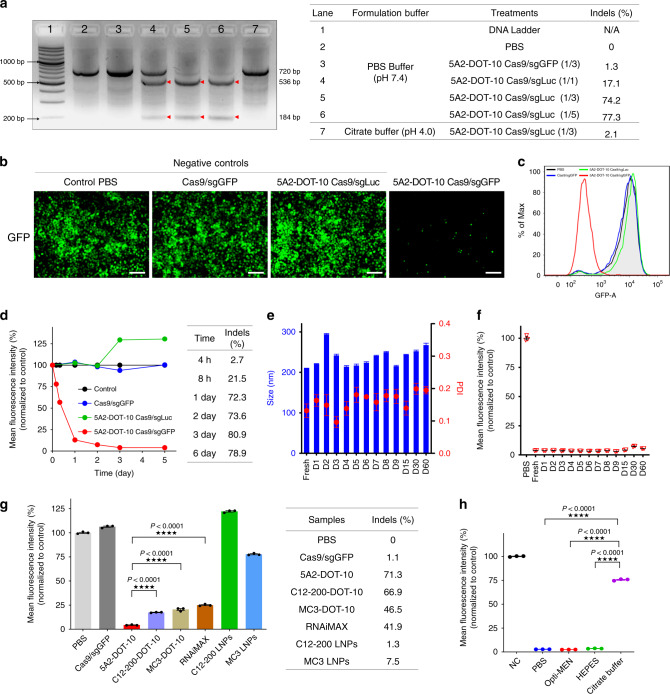
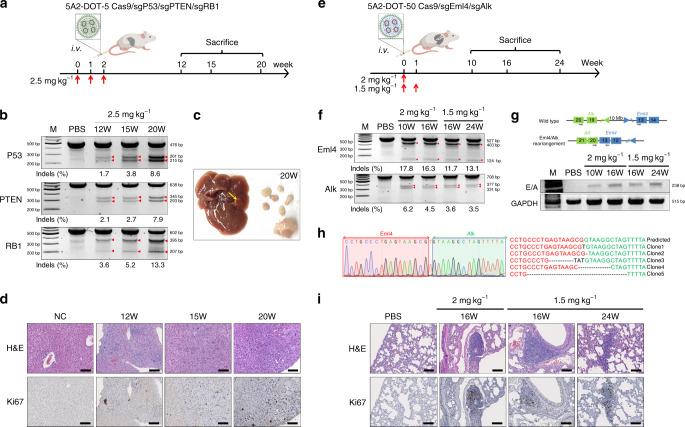
CRISPR-Cas9 has emerged as a powerful technology that relies on Cas9/sgRNA ribonucleoprotein complexes (RNPs) to target and edit DNA. However, many therapeutic targets cannot currently be accessed due to the lack of carriers that can deliver RNPs systemically. Here, we report a generalizable methodology that allows engineering of modified lipid nanoparticles to efficiently deliver RNPs into cells and edit tissues including muscle, brain, liver, and lungs. Intravenous injection facilitated tissue-specific, multiplexed editing of six genes in mouse lungs. High carrier potency was leveraged to create organ-specific cancer models in livers and lungs of mice though facile knockout of multiple genes. The developed carriers were also able to deliver RNPs to restore dystrophin expression in DMD mice and significantly decrease serum PCSK9 level in C57BL/6 mice. Application of this generalizable strategy will facilitate broad nanoparticle development for a variety of disease targets amenable to protein delivery and precise gene correction approaches.
CRISPR-Cas9 技术的出现为靶向和编辑 DNA 提供了一种强大的方法,它依赖于 Cas9/sgRNA 核糖核蛋白复合物(RNP)。然而,由于缺乏能够系统性递送 RNP 的载体,目前许多治疗靶点还无法实现。在这里,我们报告了一种可推广的方法,该方法允许对修饰的脂质纳米颗粒进行工程设计,以有效地将 RNP 递送至包括肌肉、大脑、肝脏和肺部在内的组织中,并进行编辑。静脉注射可促进小鼠肺部六个基因的组织特异性、多重编辑。通过简单地敲除多个基因,利用高载体效力在小鼠肝脏和肺部中创建了具有器官特异性的癌症模型。开发的载体还能够递送 RNP,以恢复 DMD 小鼠中的肌营养不良蛋白表达,并显著降低 C57BL/6 小鼠中的血清 PCSK9 水平。该可推广策略的应用将促进广泛的用于各种疾病靶点的纳米颗粒的开发,这些疾病靶点适合于蛋白质递送来实现精确的基因纠正方法。