Department of Neurology, Neuroscience Institute, Center for Alzheimer's Disease and Related Disorders, Southern Illinois University School of Medicine, Springfield, IL, USA.
Department of Pharmacology, Southern Illinois University School of Medicine, Springfield, IL, USA.
J Alzheimers Dis. 2020;76(4):1179-1198. doi: 10.3233/JAD-200473.
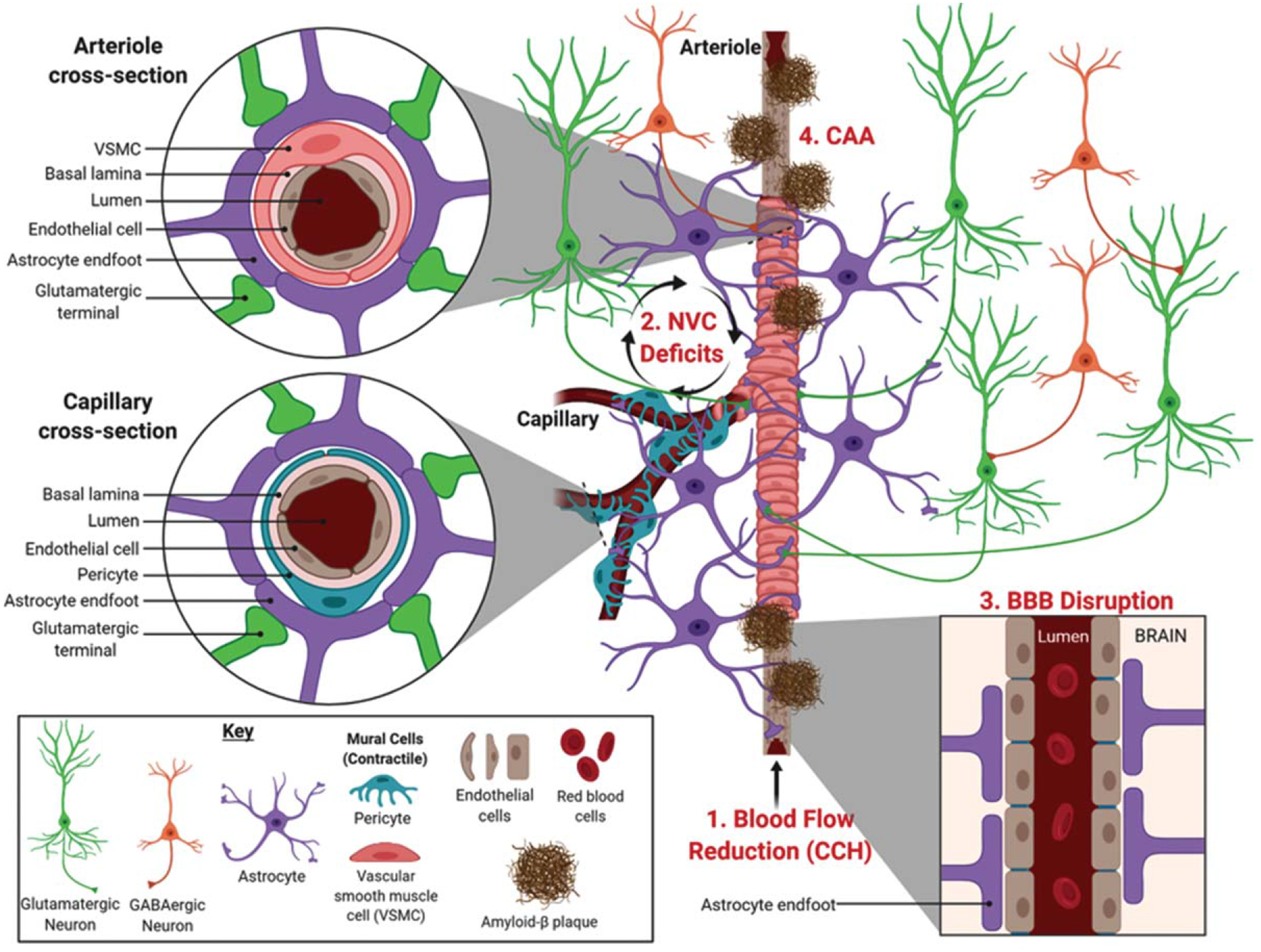
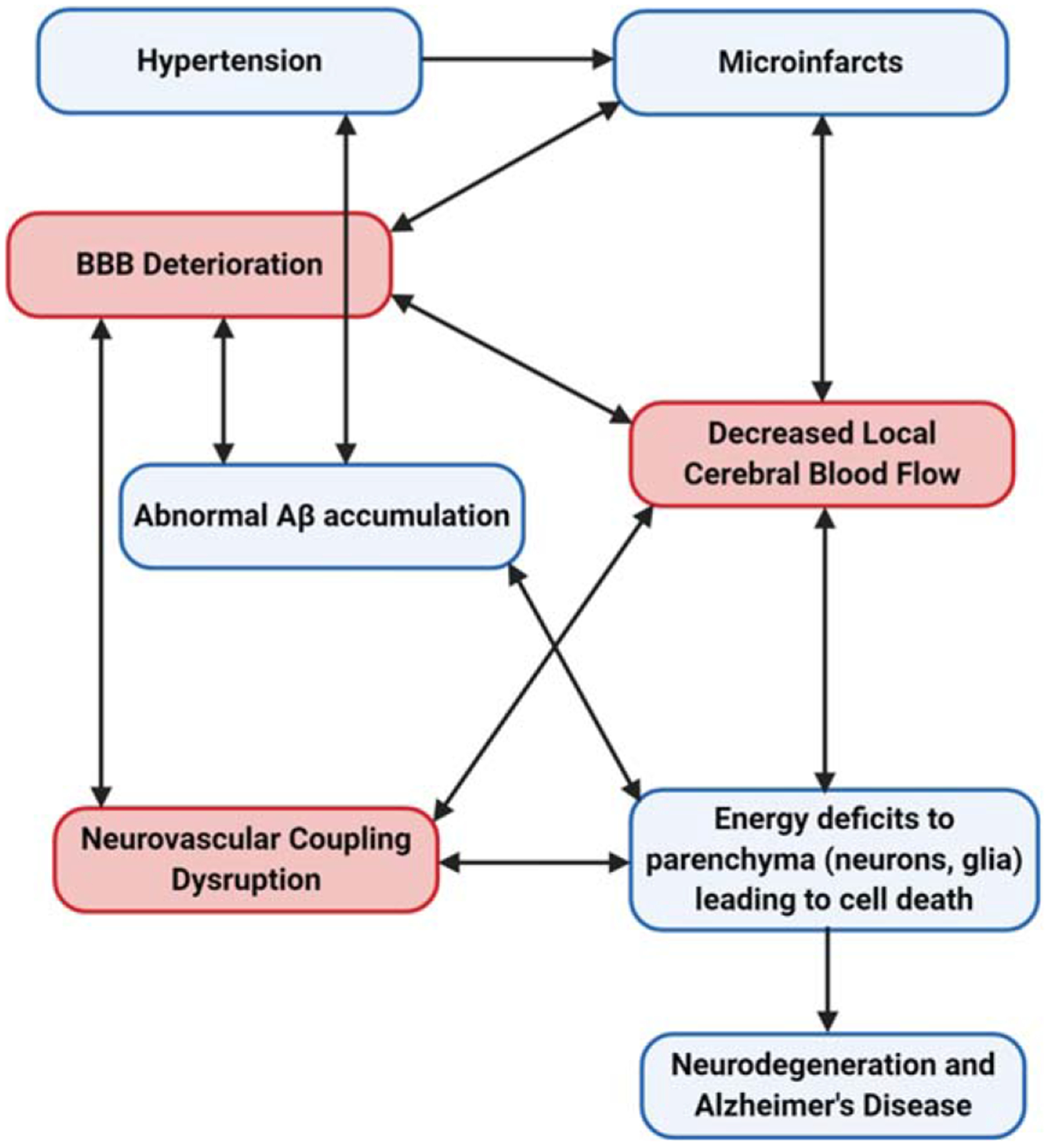
While prevailing evidence supports that the amyloid cascade hypothesis is a key component of Alzheimer's disease (AD) pathology, many recent studies indicate that the vascular system is also a major contributor to disease progression. Vascular dysfunction and reduced cerebral blood flow (CBF) occur prior to the accumulation and aggregation of amyloid-β (Aβ) plaques and hyperphosphorylated tau tangles. Although research has predominantly focused on the cellular processes involved with Aβ-mediated neurodegeneration, effects of Aβ on CBF and neurovascular coupling are becoming more evident. This review will describe AD vascular disturbances as they relate to Aβ, including chronic cerebral hypoperfusion, hypertension, altered neurovascular coupling, and deterioration of the blood-brain barrier. In addition, we will describe recent findings about the relationship between these vascular defects and Aβ accumulation with emphasis on in vivo studies utilizing rodent AD models.
虽然现有的证据支持淀粉样蛋白级联假说(amyloid cascade hypothesis)是阿尔茨海默病(AD)病理的关键组成部分,但许多最近的研究表明,血管系统也是疾病进展的主要贡献者。血管功能障碍和脑血流量(CBF)减少先于淀粉样蛋白-β(Aβ)斑块和过度磷酸化的 tau 缠结的积累和聚集。尽管研究主要集中在涉及 Aβ介导的神经退行性变的细胞过程上,但 Aβ对 CBF 和神经血管偶联的影响变得越来越明显。本综述将描述 AD 血管紊乱与 Aβ的关系,包括慢性脑灌注不足、高血压、神经血管偶联改变和血脑屏障恶化。此外,我们将描述最近关于这些血管缺陷与 Aβ积累之间关系的发现,重点是利用 AD 模型的啮齿动物体内研究。