Emergency Department, Charing Cross Hospital, Imperial College Healthcare NHS Trust, London, United Kingdom.
Am J Case Rep. 2020 Jun 17;21:e924381. doi: 10.12659/AJCR.924381.
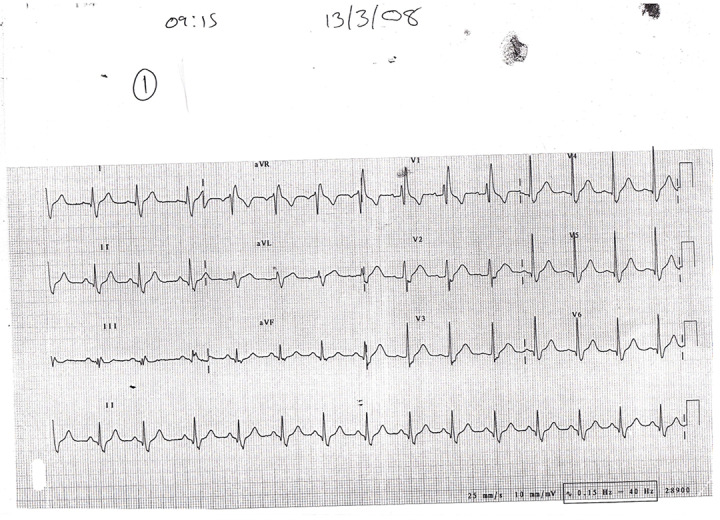
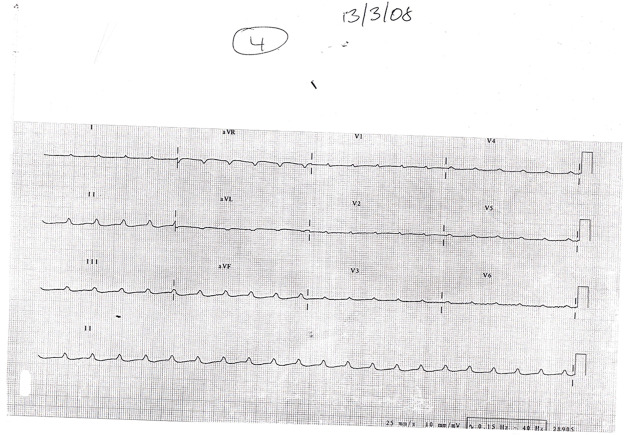
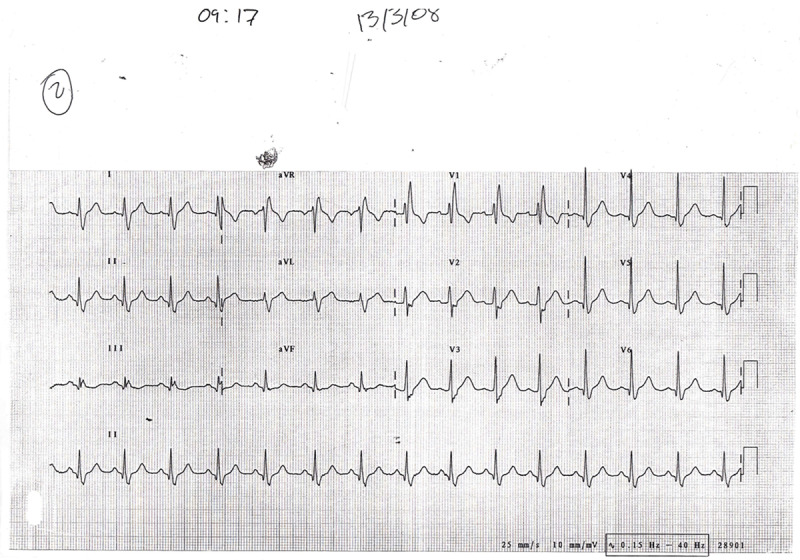
BACKGROUND Transient abrupt loss of consciousness due to sudden but pronounced decrease in cardiac output caused by a change in heart rate and rhythm is termed Stokes-Adams disease. Causes of Stokes-Adams syndrome are 1) transition from normal rhythm to high grade block, 2) slowing of idioventricular rhythm in the course of complete heart block, and 3) abnormal ventricular rhythm such as ventricular tachycardia and ventricular fibrillation. Paroxysmal ventricular standstill is one of the rarest causes of Stokes-Adams attack. It is well documented that some patients with a diagnosis of epilepsy actually have a cardiac cause for their convulsions. Brevity of these episodes sometimes makes diagnosis difficult. CASE REPORT We present a case of 40-year-old builder who was normally fit and healthy who developed paroxysmal ventricular standstill. He presented to the Emergency Department with multiple episodes of seizure-like activity. Blood tests which included antibody screen were normal except for hypophosphatemia. Computed tomography head scan was normal. He was commenced on intravenous phenytoin infusion which did not abort his seizure-like episodes. Eventually, ventricular standstill was recorded on cardiac monitoring. The seizure-like episodes were determined to be Stokes-Adams attacks. He underwent transcutaneous pacing and then transvenous pacing with eventual permanent pacemaker insertion. He did not have further episodes at yearly follow-up. CONCLUSIONS This case serves as a reminder of the diagnostic dilemma between syncope and seizures. Misdiagnosing cardiac dysrhythmia for epilepsy could lead to adverse consequences for the patient. It is incumbent upon the emergency physician to perform cardiac monitoring on all patients who present with syncope or convulsion in order that dysrhythmia is observed during such episode.
由于心率和节律的变化导致心输出量突然显著下降而导致的短暂意识丧失称为 Stokes-Adams 病。Stokes-Adams 综合征的原因有:1)从正常节律转变为高度阻滞;2)完全性心脏阻滞时固有心室节律减慢;3)异常心室节律,如室性心动过速和心室颤动。阵发性心室停搏是引起 Stokes-Adams 发作的罕见原因之一。有明确的文献记载,一些被诊断为癫痫的患者实际上其癫痫是由心脏原因引起的。这些发作的短暂性有时使诊断变得困难。
我们介绍了一位 40 岁的建筑工人的病例,他身体健康。他突发阵发性心室停搏,多次出现类似癫痫发作的症状。除了低磷血症外,包括抗体筛查在内的血液检查均正常。头颅 CT 扫描正常。他开始静脉注射苯妥英钠,但未能终止类似癫痫发作的发作。最终,在心脏监测中记录到心室停搏。这些类似癫痫发作的症状被确定为 Stokes-Adams 发作。他接受了经皮起搏,然后进行了经静脉起搏,最终植入了永久性起搏器。在每年的随访中,他都没有再发作。
本病例提醒人们在晕厥和癫痫之间存在诊断上的困境。将心律失常误诊为癫痫可能会给患者带来不良后果。急诊医生有责任对所有出现晕厥或癫痫的患者进行心脏监测,以便在发作期间观察到心律失常。