Department of International Health, Johns Hopkins Bloomberg School of Public Health, Baltimore, Maryland, United States of America.
BBC Media Action, New Delhi, Delhi, India.
PLoS One. 2020 Jun 29;15(6):e0234241. doi: 10.1371/journal.pone.0234241. eCollection 2020.
In 2017, India was home to nearly 20% of maternal and child deaths occurring globally. Accredited social health activists (ASHAs) act as the frontline for health services delivery in India, providing a range of reproductive, maternal, newborn, child health, and nutrition (RMNCH&N) services. Empirical evidence on ASHAs' knowledge is limited, yet is a critical determinant of the quality of health services provided. We assessed the determinants of RMNCH&N knowledge among ASHAs and examined the reliability of alternative modalities of survey delivery, including face-to-face and caller attended telephone interviews (phone surveys) in 4 districts of Madhya Pradesh, India.
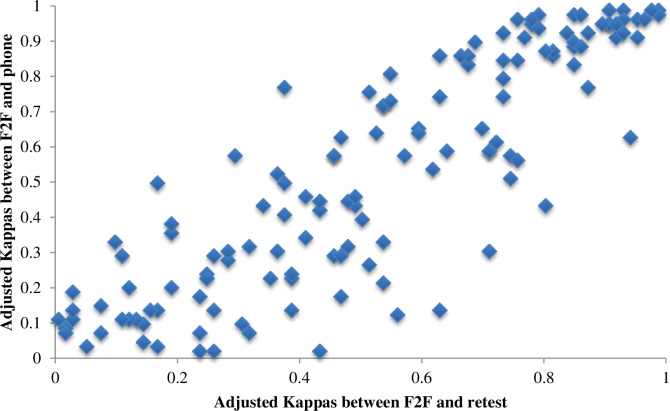
We carried out face-to-face surveys among a random cross-sectional sample of ASHAs (n = 1,552), and administered a follow-up test-retest survey within 2 weeks of the initial survey to a subsample of ASHAs (n = 173). We interviewed a separate sub-sample of ASHAs 2 weeks of the face-to-face interview over the phone (n = 155). Analyses included bivariate analyses, multivariable linear regression, and prevalence and bias adjusted kappa analyses.
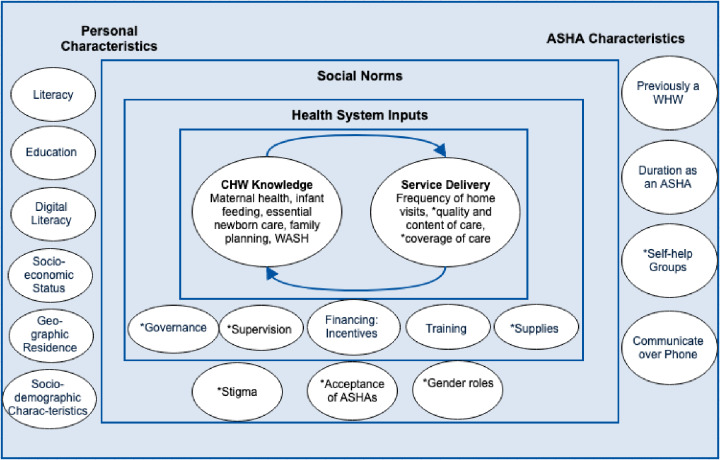
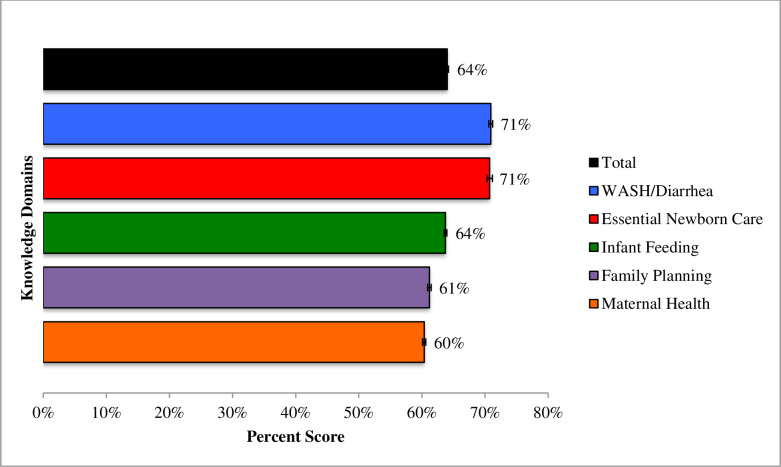
The average ASHA knowledge score was 64% and ranged across sub-domains from 71% for essential newborn care, 71% for WASH/ diarrhea, 64% for infant feeding, 61% for family planning, and 60% for maternal health. Leading determinants of knowledge included geographic location, age <30 years of age, education, experience as an ASHA, completion of seven or more client visits weekly, phone ownership and use as a communication tool for work, as well as the ability to navigate interactive voice response prompts (a measure of digital literacy). Efforts to develop a phone survey tool for measuring knowledge suggest that findings on inter-rater and inter-modal reliability were similar. Reliability was higher for shorter, widely known questions, including those about timing of exclusive breastfeeding or number of tetanus shots during pregnancy. Questions with lower reliability included those on sensitive topics such as family planning; questions with multiple response options; or which were difficult for the enumerator to convey.
Overall results highlight important gaps in the knowledge of ASHAs. Findings on the reliability of phone surveys led to the development of a tool, which can be widely used for the routine, low cost measurement of ASHA RMNCH&N knowledge in India.
2017 年,印度的产妇和儿童死亡人数占全球的近 20%。认证社会卫生活动家(ASHAs)是印度提供卫生服务的第一线人员,提供一系列生殖、孕产妇、新生儿、儿童健康和营养(RMNCH&N)服务。关于 ASHAs 知识的实证证据有限,但这是提供卫生服务质量的关键决定因素。我们评估了 ASHAs 中 RMNCH&N 知识的决定因素,并在印度中央邦的 4 个地区检验了面对面和电话调查(电话调查)等替代调查方式的可靠性。
我们对随机的横断面 ASHAs 样本(n=1552)进行了面对面调查,并在初始调查后的两周内对 ASHAs 的一个子样本(n=173)进行了随访测试-再测试调查。我们在面对面访谈两周后通过电话对另一组 ASHAs 进行了访谈(n=155)。分析包括单变量分析、多变量线性回归以及患病率和偏差调整后的 Kappa 分析。
平均 ASHA 知识得分 64%,各子领域得分范围从基本新生儿护理的 71%、WASH/腹泻的 71%、婴儿喂养的 64%、计划生育的 61%和孕产妇健康的 60%。知识的主要决定因素包括地理位置、年龄<30 岁、教育程度、作为 ASHA 的经验、每周完成 7 次或更多次上门服务、拥有和使用电话作为工作沟通工具,以及能够使用互动语音响应提示(数字扫盲的衡量标准)。开发电话调查工具以衡量知识的努力表明,评分者间和模式间可靠性的发现相似。对于较短、广为人知的问题,包括关于纯母乳喂养的时间或怀孕期间破伤风疫苗接种次数的问题,可靠性较高。可靠性较低的问题包括计划生育等敏感话题的问题;有多个答案选项的问题;或对计数员来说难以传达的问题。
总体结果突出了 ASHAs 知识的重要差距。关于电话调查可靠性的发现导致了工具的开发,该工具可广泛用于印度 ASHA RMNCH&N 知识的常规、低成本测量。