Department of International Health, Johns Hopkins Bloomberg School of Public Health, Baltimore, MD, USA.
School of Public Health and Family Medicine, Division of Epidemiology and Biostatistics, University of Cape Town, Cape Town, South Africa.
BMC Pregnancy Childbirth. 2018 Jul 4;18(1):282. doi: 10.1186/s12884-018-1906-y.
The postpartum period represents a critical window where many maternal and child deaths occur. We assess the quality of postpartum care (PPC) as well as efforts to improve service delivery through additional training and supervision in Health Centers (HCs) in Morogoro Region, Tanzania.
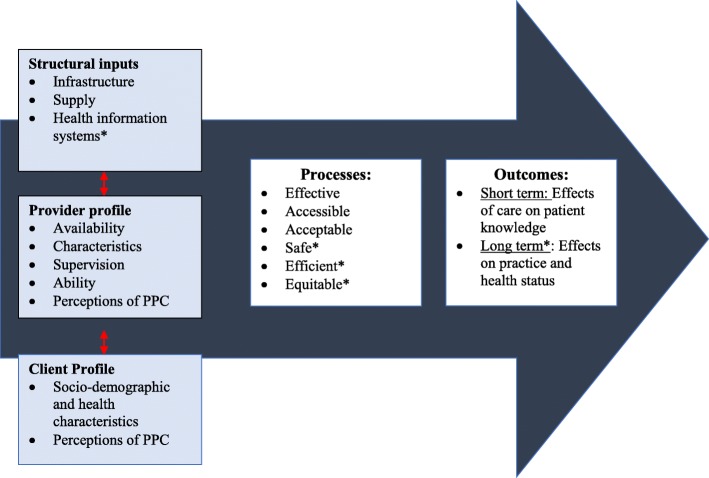
Program implementers purposively selected nine program HCs for assessment with another nine HCs in the region remaining as comparison sites in a non-randomized program evaluation. PPC quality was assessed by examining structural inputs; provider and client profiles; processes (PNC counselling) and outcomes (patient knowledge) through direct observations of equipment, supplies and infrastructure (n = 18) and PPC counselling (n = 45); client exit interviews (n = 41); a provider survey (n = 62); and in-depth provider interviews (n = 10).
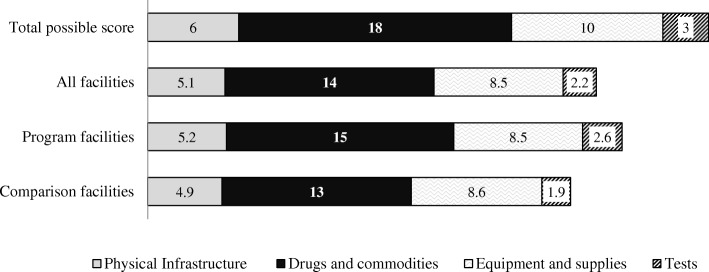
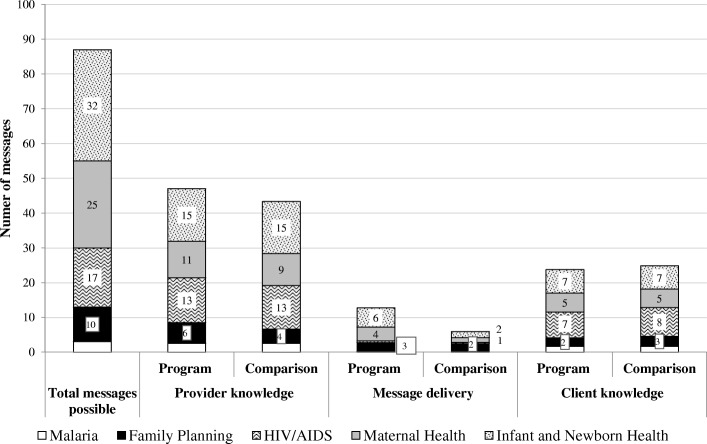
While physical infrastructure, equipment and supplies were comparable across study sites (with water and electricity limitations), program areas had better availability of drugs and commodities. Overall, provider availability was also similar across study sites, with 63% of HCs following staffing norms, 17% of Reproductive and Child Health (RCH) providers absent and 14% of those providing PPC being unqualified to do so. In the program area, a median of 4 of 10 RCH providers received training. Despite training and supervisory inputs to program area HCs, provider and client knowledge of PPC was low and the content of PPC counseling provided limited to 3 of 80 PPC messages in over half the consultations observed. Among women attending PPC, 29 (71%) had delivered in a health facility and sought care a median of 13 days after delivery. Barriers to PPC care seeking included perceptions that PPC was of limited benefit to women and was primarily about child health, geographic distance, gaps in the continuity of care, and harsh facility treatment.
Program training and supervision activities had a modest effect on the quality of PPC. To achieve broader transformation in PPC quality, client perceptions about the value of PPC need to be changed; the content of recommended PPC messages reviewed along with the location for PPC services; gaps in the availability of human resources addressed; and increased provider-client contact encouraged.
产后时期是发生许多孕产妇和儿童死亡的关键时期。我们评估了莫罗戈罗地区卫生中心(HCs)通过额外培训和监督来改善母婴保健服务(PPC)的质量。
方案实施者有目的地选择了九个项目 HCs 进行评估,而该地区的另外九个 HCs 则作为非随机方案评估的对照点。通过直接观察设备、用品和基础设施(n=18)和 PPC 咨询(n=45)、客户退出访谈(n=41)、提供者调查(n=62)以及深入的提供者访谈(n=10),评估了 PPC 质量。评估了结构投入、提供者和客户概况、流程(PNC 咨询)和结果(患者知识)。
虽然研究地点的物理基础设施、设备和用品相当(存在水电限制),但方案地区的药物和商品供应更好。总的来说,研究地点的提供者可用性也相似,63%的 HCs 遵守人员配备规范,17%的生殖和儿童健康(RCH)提供者缺勤,14%的提供 PPC 的提供者没有资格提供。在方案地区,中位数为 10 名 RCH 提供者中的 4 名接受了培训。尽管对方案地区的 HCs 进行了培训和监督投入,但提供者和客户对 PPC 的了解程度较低,并且在观察到的一半以上咨询中,提供的 PPC 咨询内容仅限于 80 条 PPC 信息中的 3 条。在参加 PPC 的妇女中,29 人(71%)在卫生机构分娩,并在分娩后平均 13 天寻求护理。寻求 PPC 护理的障碍包括认为 PPC 对妇女的益处有限,主要是关于儿童健康、地理距离、护理连续性差距以及医疗机构的苛刻待遇。
方案培训和监督活动对 PPC 的质量产生了适度的影响。为了实现 PPC 质量的广泛转变,需要改变客户对 PPC 价值的看法;审查建议的 PPC 信息的内容,以及 PPC 服务的地点;解决人力资源可用性差距问题;并鼓励增加提供者与客户的接触。