Department of Orthodontics, Peking University School and Hospital of Stomatology, 22 Zhongguancun Avenue South, Haidian District, Beijing, 100081, PR China.
National Engineering Laboratory for Digital and Material Technology of Stomatology, 22 Zhongguancun Avenue South, Haidian District, Beijing, 100081, PR China.
BMC Oral Health. 2020 Jun 29;20(1):181. doi: 10.1186/s12903-020-01168-6.
Facial esthetics is a major concern of orthodontic patients. This study aims to evaluate orthodontic treatment-related thickness changes of the masseter muscles and surrounding soft tissues and the potential factors that would influence these changes during orthodontic treatment in female adults.
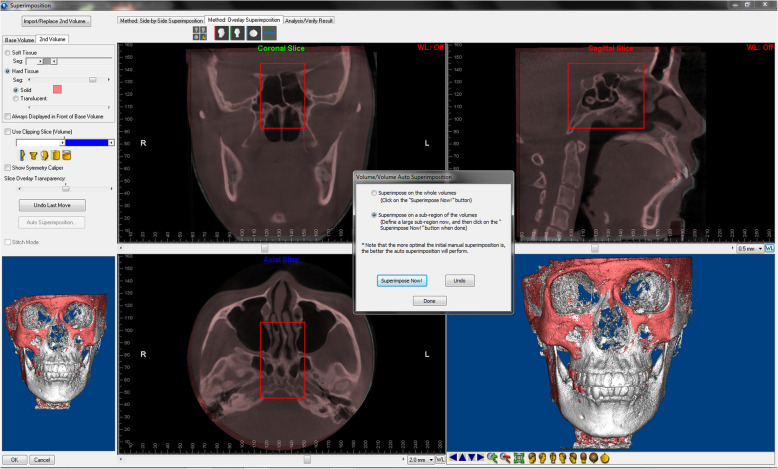
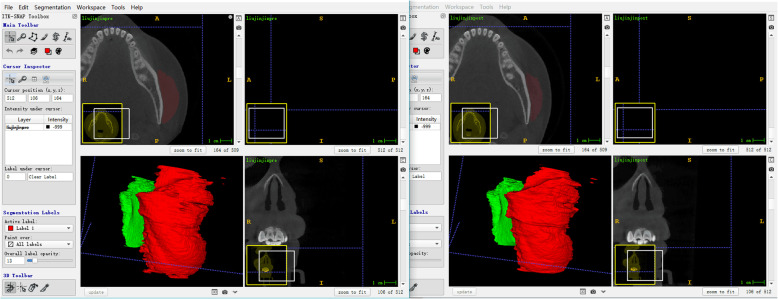
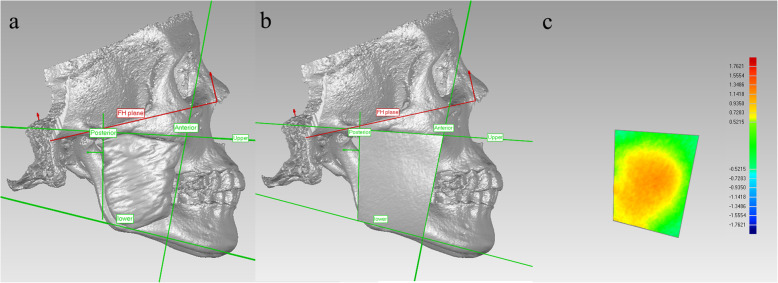
Forty-two female adult patients were included in this retrospective study and were divided into extraction (n = 22) and nonextraction (n = 20) groups. Pretreatment and posttreatment cone-beam computed tomography (CBCT) images were superimposed and reconstructed. The thickness changes of the masseter area of facial soft tissue (MAS), masseter muscles (MM) and surrounding fat tissue (FT) were measured. Pretreatment age, treatment duration, sagittal relationship (ANB), and vertical relationship (Frankfort-mandibular plane angle, FMA)-related MAS, MM and FT changes were compared between extraction and nonextraction groups. Spearman's correlation coefficient was calculated between the above variables. Regression analysis was conducted to confirm the causal relations of the variables.
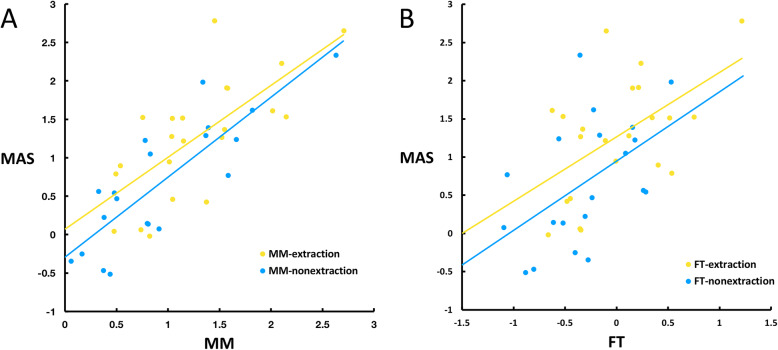
The thickness of MAS and MM significantly decreased in both groups, with larger decreases (> 1 mm) in the extraction group. There were strong correlations (r > 0.7) between the thickness decrease in MAS and MM in both groups and moderate correlations (r > 0.4) between MAS and FT in the nonextraction group. A significantly greater decrease of MAS and MM were found to be moderately correlated with a smaller FMA (r > 0.4) in the extraction group. Scatter plots and regression analysis confirmed these correlations.
Masseter muscles and the surrounding soft tissue exhibited a significant decrease in thickness during orthodontic treatment in female adults. Low-angle patients experienced a greater decrease in soft tissue thickness in the masseter area in the extraction case. But the thickness changes were clinically very small in most patients.
面部美学是正畸患者关注的主要问题。本研究旨在评估女性成年人正畸治疗相关的咀嚼肌及周围软组织厚度变化,并探讨正畸治疗过程中可能影响这些变化的因素。
本回顾性研究纳入 42 名女性成年患者,分为拔牙组(n=22)和非拔牙组(n=20)。对治疗前后锥形束 CT(CBCT)图像进行叠加和重建,测量面部软组织(MAS)、咀嚼肌(MM)和周围脂肪组织(FT)的咀嚼肌区厚度变化。比较拔牙组和非拔牙组治疗前年龄、治疗时间、矢状关系(ANB)和垂直关系(法兰克福-下颌平面角,FMA)与 MAS、MM 和 FT 变化的相关性。采用 Spearman 相关系数分析上述变量之间的相关性。进行回归分析以确认变量之间的因果关系。
两组 MAS 和 MM 的厚度均显著减小,拔牙组减小幅度更大(>1mm)。两组 MAS 和 MM 的厚度减小之间存在很强的相关性(r>0.7),非拔牙组 MAS 和 FT 之间存在中度相关性(r>0.4)。在拔牙组中,MAS 和 MM 的显著减小与较小的 FMA 呈中度相关(r>0.4)。散点图和回归分析证实了这些相关性。
女性成年人在正畸治疗过程中咀嚼肌及周围软组织厚度显著减小。低角患者在拔牙病例中咀嚼肌区软组织厚度减小较大。但在大多数患者中,厚度变化在临床上非常小。