Health Services Academy, Ministry of National Health Services Regulation & Coordination, Government of Pakistan, Islamabad, Pakistan.
College of Public Health Sciences, Chulalongkorn University, Bangkok, Thailand.
Malar J. 2020 Jun 29;19(1):232. doi: 10.1186/s12936-020-03298-2.
About one quarter of pregnant women in the population of Pakistan are using long-lasting insecticide-treated bed nets (LLINs) for prevention of malaria. Past research reported that adequate information and education would act as mediator to change behaviour among patients for prevention of malaria infection. The effective use of LLINs would contribute to reduction of disease burden caused by malaria. The aim of this study was to determine the effectiveness of health education on the adoption of LLINs among pregnant women living in Tharparkar, a remote district in Sindh Province, Pakistan.
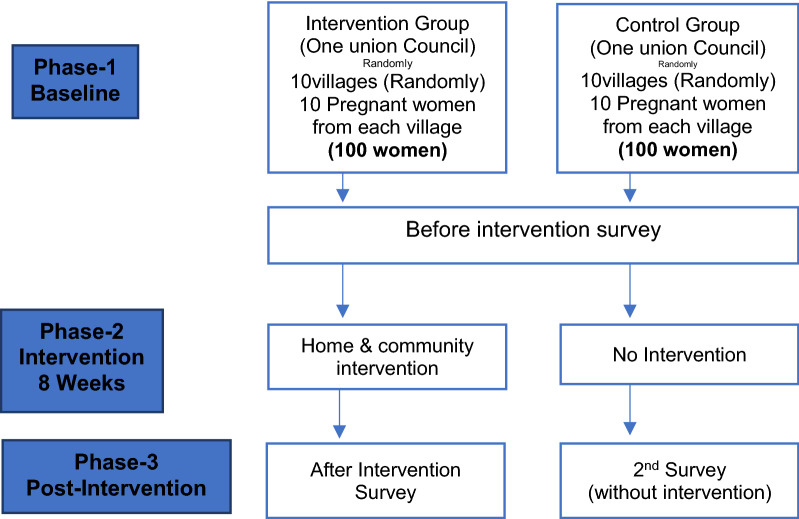
A quasi-experimental study design with control and intervention groups was conducted with 200 pregnant women (100 in each group). Women in the intervention group were provided with health education sessions on malaria for 12 weeks, while those in the control group obtained routine information from lady health workers (LHWs). Pre- and post-intervention assessment was done of knowledge about malaria and use of LLIN, which was statistically analysed using descriptive statistics and difference in difference (DID) multivariable regression analysis to test effectiveness of the intervention.
Baseline was conducted with 200 pregnant women. Demographic characteristics were similar in both groups with slight differences in age, education, income, type of latrine, and source of drinking water. There were no significant differences between mean knowledge and use of LLINs scores between groups at baseline. However, the estimated DID value after the intervention was 4.170 (p < 0.01) and represents an increase in scores of knowledge in the intervention group compared to control. Similarly DID value of 3.360 (p < 0.05) showed an increase in use of LLINs score after the intervention which was significant, showing that the intervention had a positive effect.
Results proved that health education could be an effective intervention for improving knowledge and usage of LLINs among pregnant women for the prevention of malaria. Such educational interventions have a positive potential to be implemented at larger scale by incorporating them into routine health sessions provided by health workers.
在巴基斯坦的孕妇人群中,约有四分之一使用长效驱虫蚊帐(LLIN)来预防疟疾。过去的研究报告称,充分的信息和教育将作为中介,改变患者的行为,以预防疟疾感染。有效使用 LLIN 将有助于减轻疟疾造成的疾病负担。本研究旨在确定在巴基斯坦信德省偏远地区 Tharparkar 为孕妇提供健康教育对其采用 LLIN 的效果。
采用对照和干预组的准实验设计,对 200 名孕妇(每组 100 名)进行了研究。干预组的孕妇接受了为期 12 周的疟疾健康教育课程,而对照组的孕妇则从女卫生工作者(LHW)那里获得常规信息。在干预前后对疟疾知识和 LLIN 使用情况进行了评估,采用描述性统计和差异(DID)多变量回归分析来检验干预的效果。
在 200 名孕妇中进行了基线调查。两组的人口统计学特征相似,仅在年龄、教育程度、收入、厕所类型和饮用水来源方面略有差异。两组的知识和 LLIN 使用评分在基线时没有显著差异。然而,干预后的估计 DID 值为 4.170(p<0.01),这表明干预组的知识评分有所提高,而对照组则没有。同样,干预后 LLIN 使用评分的 DID 值为 3.360(p<0.05),表明干预后 LLIN 使用评分有所提高,这表明干预具有积极效果。
结果表明,健康教育可以有效改善孕妇对疟疾的预防知识和 LLIN 的使用。这种教育干预具有积极的潜力,可以通过将其纳入卫生工作者提供的常规健康课程中,在更大范围内实施。