Division of Urologic Oncology, Department of Surgical Oncology, Princess Margaret Cancer Centre, University Health Network and University of Toronto, Toronto, Ontario, Canada.
Cancer Gene Therapy Group, Translational Immunology Research Program, University of Helsinki, Helsinki, Finland.
J Hematol Oncol. 2020 Jun 29;13(1):84. doi: 10.1186/s13045-020-00922-1.
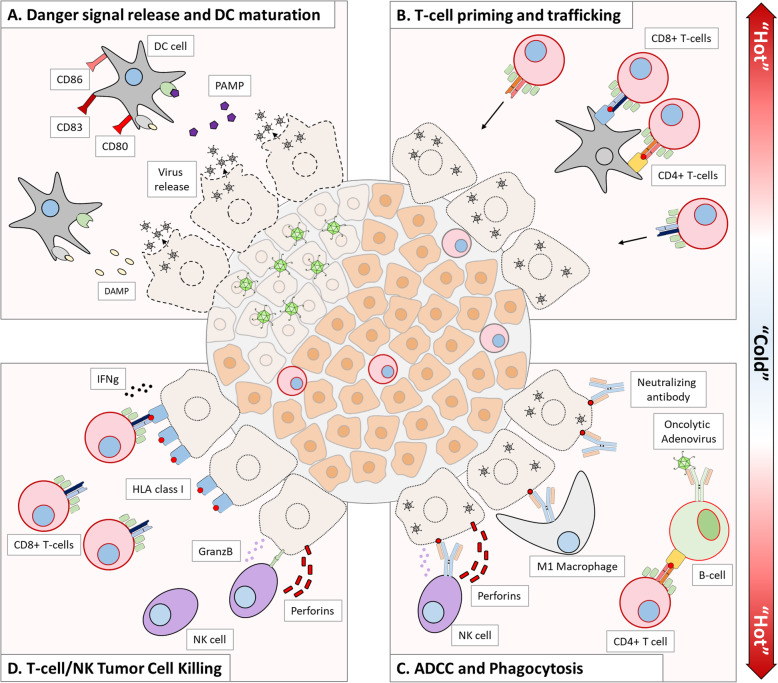
In this review, we discuss the use of oncolytic viruses in cancer immunotherapy treatments in general, with a particular focus on adenoviruses. These serve as a model to elucidate how versatile viruses are, and how they can be used to complement other cancer therapies to gain optimal patient benefits. Historical reports from over a hundred years suggest treatment efficacy and safety with adenovirus and other oncolytic viruses. This is confirmed in more contemporary patient series and multiple clinical trials. Yet, while the first viruses have already been granted approval from several regulatory authorities, room for improvement remains.As good safety and tolerability have been seen, the oncolytic virus field has now moved on to increase efficacy in a wide array of approaches. Adding different immunomodulatory transgenes to the viruses is one strategy gaining momentum. Immunostimulatory molecules can thus be produced at the tumor with reduced systemic side effects. On the other hand, preclinical work suggests additive or synergistic effects with conventional treatments such as radiotherapy and chemotherapy. In addition, the newly introduced checkpoint inhibitors and other immunomodulatory drugs could make perfect companions to oncolytic viruses. Especially tumors that seem not to be recognized by the immune system can be made immunogenic by oncolytic viruses. Logically, the combination with checkpoint inhibitors is being evaluated in ongoing trials. Another promising avenue is modulating the tumor microenvironment with oncolytic viruses to allow T cell therapies to work in solid tumors.Oncolytic viruses could be the next remarkable wave in cancer immunotherapy.
在这篇综述中,我们讨论了溶瘤病毒在癌症免疫治疗中的一般应用,特别关注腺病毒。腺病毒作为一个模型,阐明了病毒的多功能性,以及如何利用它们来补充其他癌症疗法,以获得最佳的患者受益。一百多年来的历史报告表明,腺病毒和其他溶瘤病毒具有治疗效果和安全性。这在更多的当代患者系列和多项临床试验中得到了证实。然而,虽然第一批病毒已经获得了几个监管机构的批准,但仍有改进的空间。由于已经观察到良好的安全性和耐受性,溶瘤病毒领域现在已经开始通过多种方法提高疗效。向病毒中添加不同的免疫调节转基因是一种正在获得动力的策略。因此,可以在肿瘤中产生免疫刺激性分子,而减少全身副作用。另一方面,临床前研究表明,与放疗和化疗等常规治疗方法具有相加或协同作用。此外,新引入的检查点抑制剂和其他免疫调节药物可以成为溶瘤病毒的完美伴侣。特别是那些似乎不能被免疫系统识别的肿瘤,可以通过溶瘤病毒使其具有免疫原性。从逻辑上讲,联合检查点抑制剂正在进行中的试验中进行评估。另一个有前途的途径是用溶瘤病毒来调节肿瘤微环境,使 T 细胞疗法能在实体肿瘤中发挥作用。溶瘤病毒可能是癌症免疫治疗的下一个显著浪潮。