Brain Tumor Center, The University of Texas MD Anderson Cancer Center, Houston, Texas.
Applied Cancer Science Institute, The University of Texas MD Anderson Cancer Center, Houston, Texas.
Clin Cancer Res. 2019 Nov 15;25(22):6801-6814. doi: 10.1158/1078-0432.CCR-19-0405. Epub 2019 Aug 27.
Intratumoral injection of oncolytic adenovirus Delta-24-RGDOX induces efficacious antiglioma immunity in syngeneic glioma mouse models. We hypothesized that localized treatment with the virus is effective against disseminated melanomas.
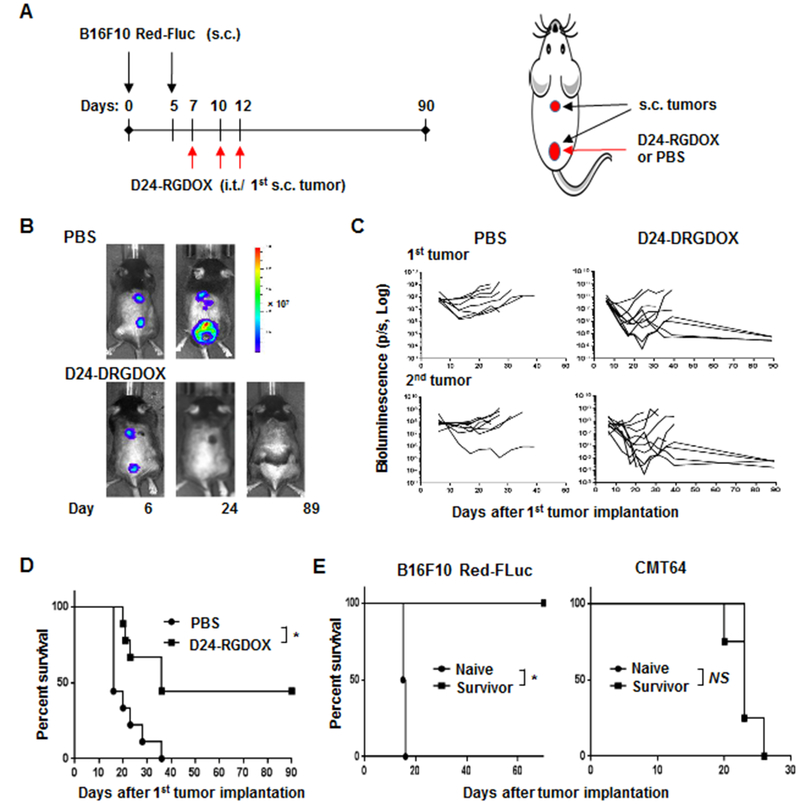
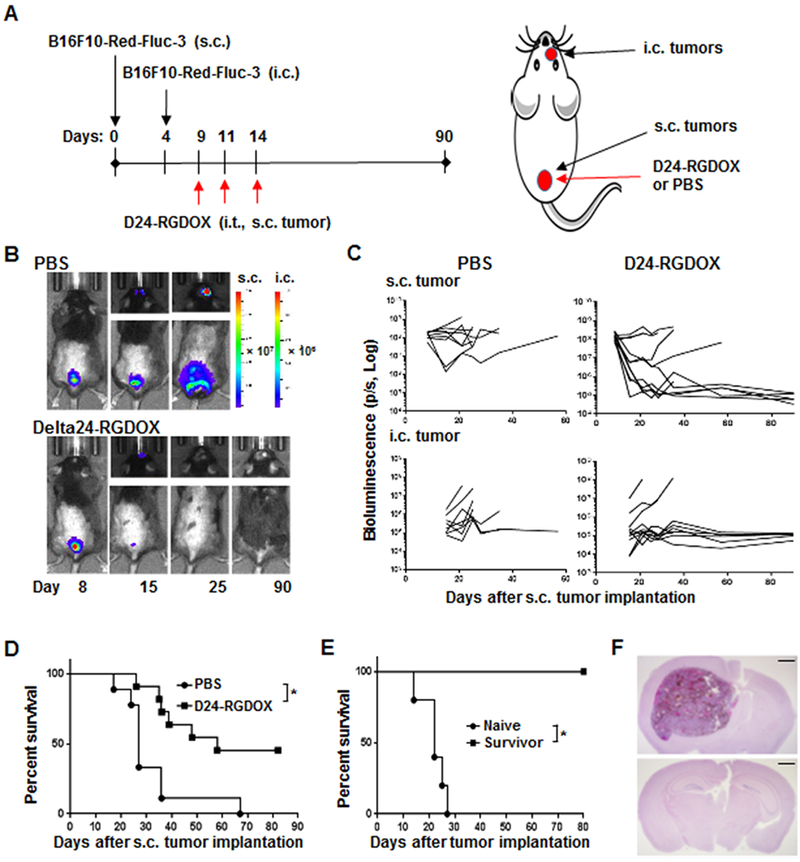
We tested the therapeutic effect of injecting Delta-24-RGDOX into primary subcutaneous (s.c.) B16-Red-FLuc tumors in s.c./s.c. and s.c./intracranial (i.c.) melanoma models in C57BL/6 mice. Tumor growth and luciferase-expressing ovalbumin-specific (OT-I/Luc) T cells were monitored with bioluminescence imaging. Cells were profiled for surface markers with flow cytometry.
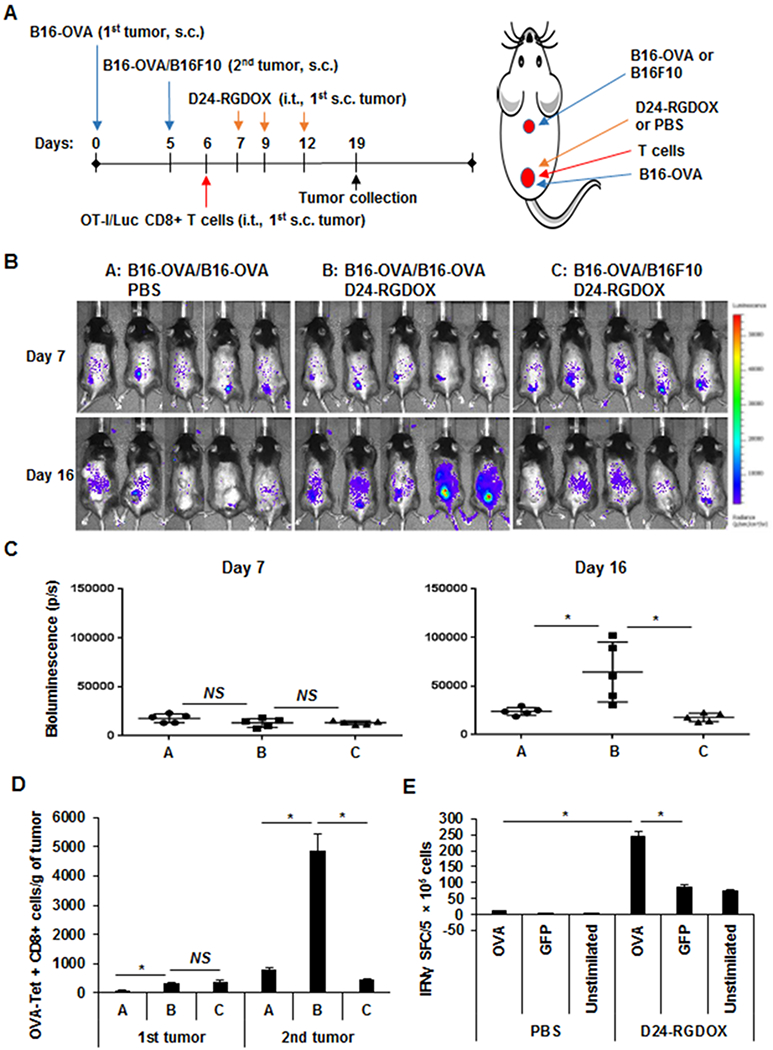
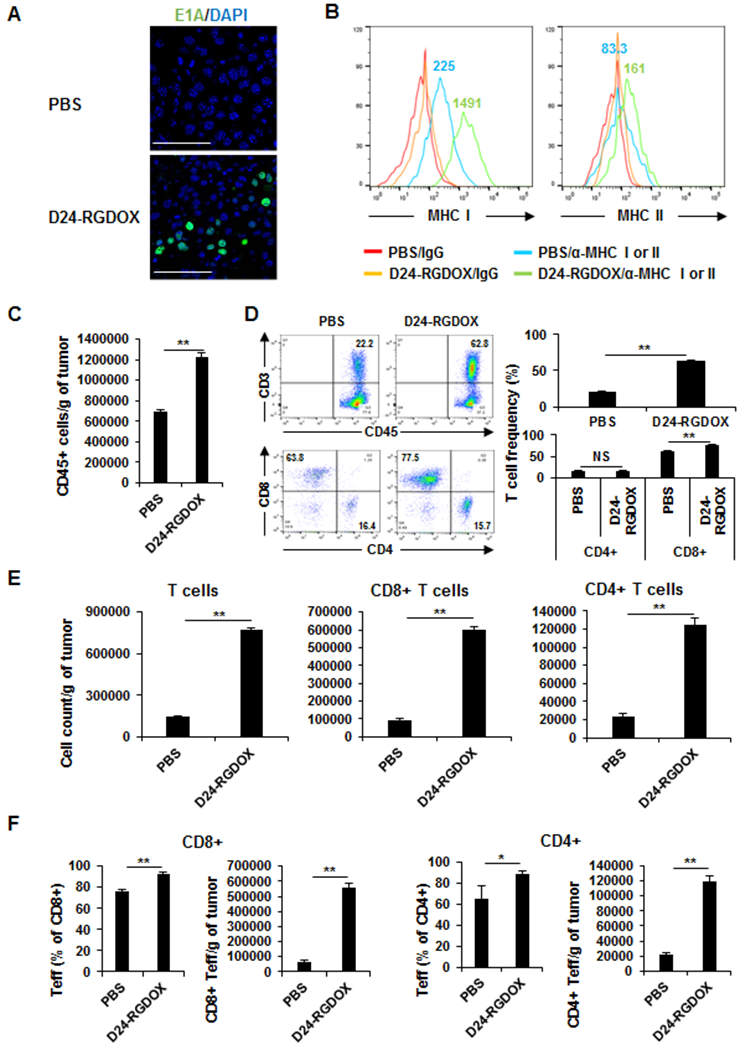
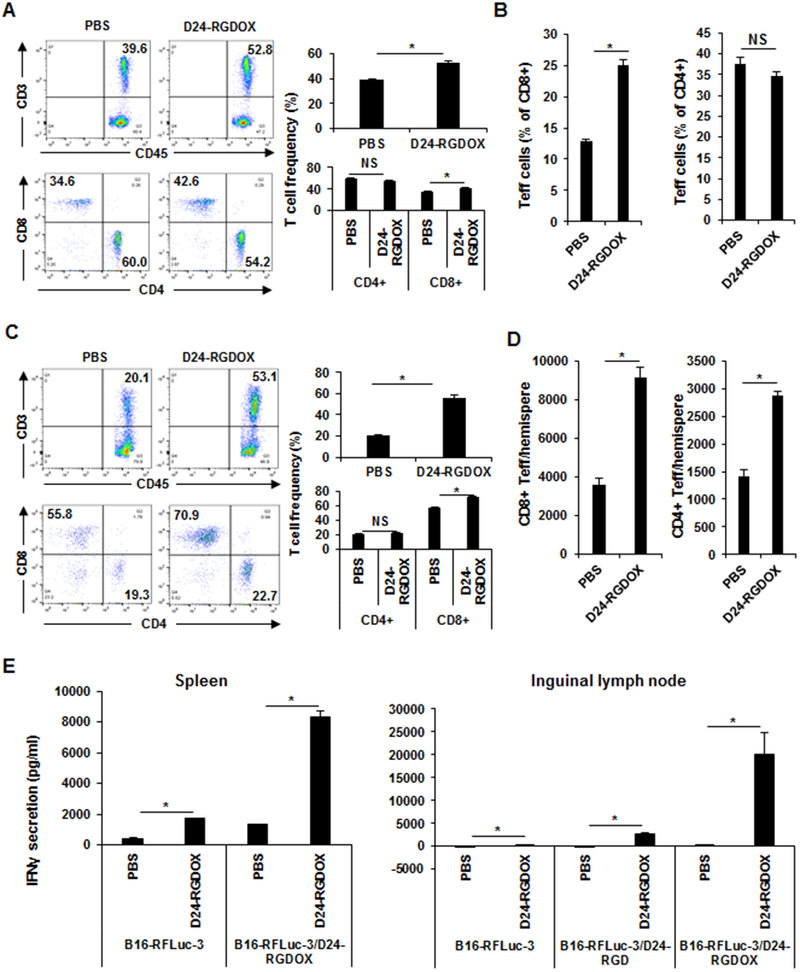
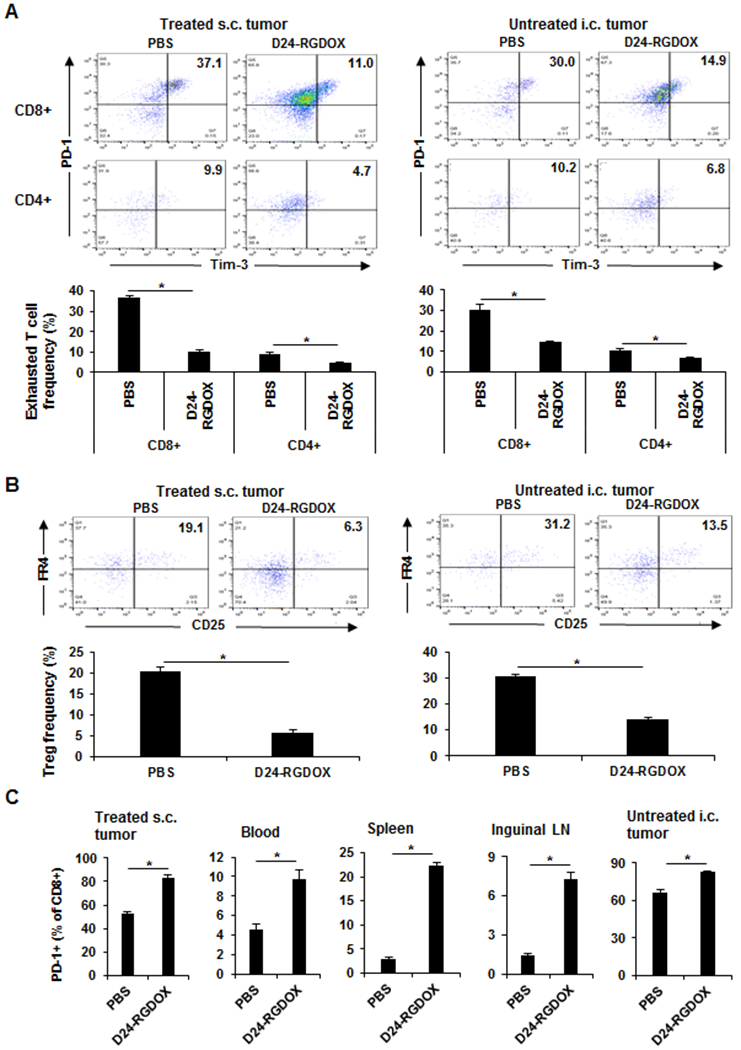
In both s.c./s.c. and s.c./i.c. models, 3 injections of Delta-24-RGDOX significantly inhibited the growth of both the virus-injected s.c. tumor and untreated distant s.c. and i.c. tumors, thereby prolonging survival. The surviving mice were protected from rechallenging with the same tumor cells. The virus treatment increased the presence of T cells and the frequency of effector T cells in the virus-injected tumor and mediated the same changes in T cells from peripheral blood, spleen, and brain hemispheres with untreated tumor. Moreover, Delta-24-RGDOX decreased the numbers of exhausted T cells and regulatory T cells in the virus-injected and untreated tumors. Consequently, the virus promoted the expansion of tumor-specific T cells and their migration to tumors expressing the target antigen.
Localized intratumoral injection of Delta-24-RGDOX induces an antovaccination of the treated melanoma, the effect of which changes the immune landscape of the treated mice, resulting in systemic immunity against disseminated s.c. and i.c. tumors.
溶瘤腺病毒 Delta-24-RGDOX 的瘤内注射可在同种异体神经胶质瘤小鼠模型中诱导有效的抗神经胶质瘤免疫。我们假设病毒的局部治疗对播散性黑色素瘤有效。
我们在 C57BL/6 小鼠的皮下(s.c.)/皮下(s.c.)和皮下(s.c.)/颅内(i.c.)黑色素瘤模型中测试了 Delta-24-RGDOX 注射到原发性皮下(s.c.)B16-Red-FLuc 肿瘤中的治疗效果。使用生物发光成像监测肿瘤生长和表达荧光素酶的卵清蛋白特异性(OT-I/Luc)T 细胞。使用流式细胞术对细胞进行表面标志物分析。
在 s.c./s.c.和 s.c./i.c.模型中,3 次注射 Delta-24-RGDOX 显著抑制了病毒注射的 s.c.肿瘤和未治疗的远处 s.c.和 i.c.肿瘤的生长,从而延长了生存时间。幸存的小鼠免受相同肿瘤细胞的再挑战。病毒治疗增加了病毒注射肿瘤中 T 细胞的存在和效应 T 细胞的频率,并介导了未处理肿瘤中的 T 细胞发生相同的变化。此外,Delta-24-RGDOX 减少了病毒注射和未处理肿瘤中耗竭 T 细胞和调节性 T 细胞的数量。因此,病毒促进了肿瘤特异性 T 细胞的扩增及其向表达靶抗原的肿瘤的迁移。
Delta-24-RGDOX 的局部肿瘤内注射可诱导治疗性黑色素瘤的主动免疫,其作用改变了治疗小鼠的免疫景观,导致对播散性 s.c.和 i.c.肿瘤的全身免疫。