Glick Andrew, Ali Naseem, Bossuyt Juliaan, Calaf Marc, Cal Raúl Bayoán
Department of Mechanical and Materials Engineering, Portland State University, Portland, OR, 97207, USA.
Department of Mechanical Engineering, University of Utah, Utah, UT, 84112, USA.
Sci Rep. 2020 Jun 29;10(1):10505. doi: 10.1038/s41598-020-66347-5.
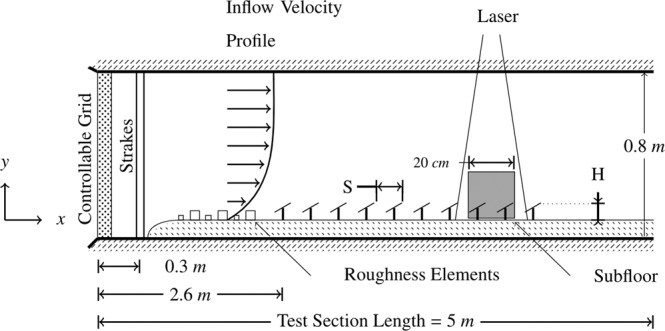
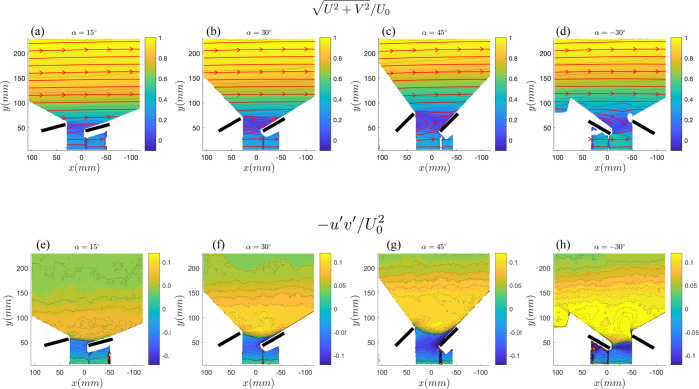
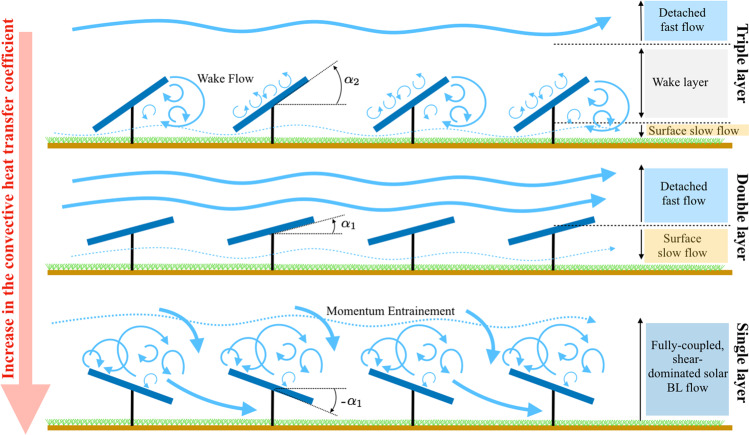
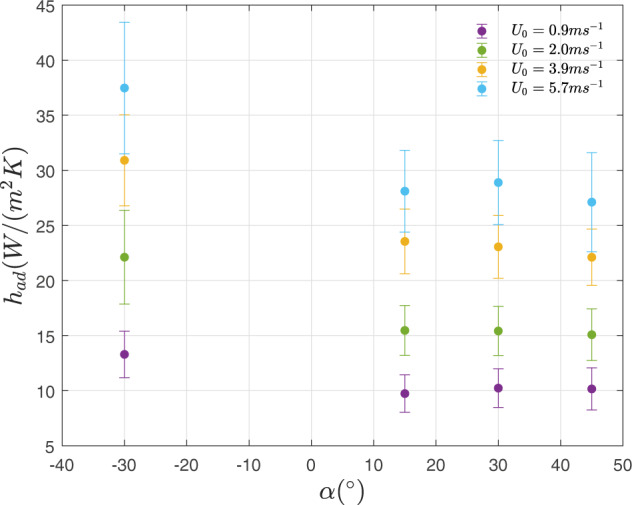
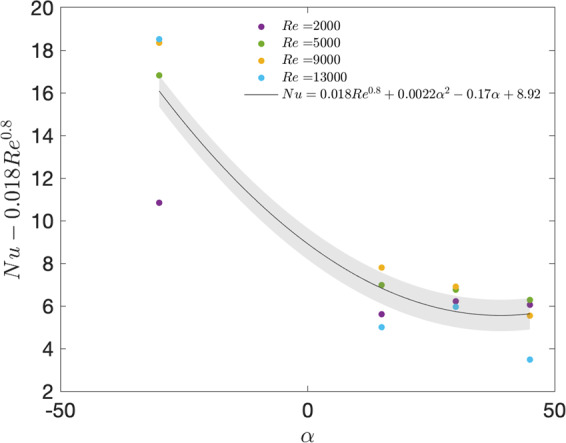
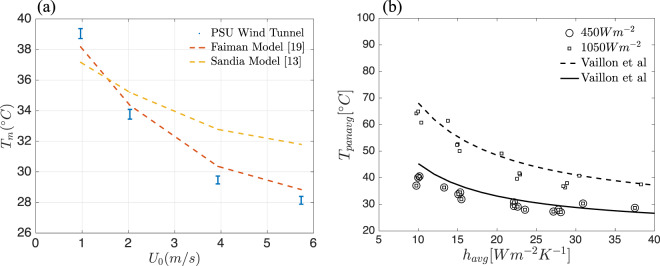
Performance of solar PV diminishes with the increase in temperature of the solar modules. Therefore, to further facilitate the reduction in cost of photovoltaic energy, new approaches to limit module temperature increase in natural ambient conditions should be explored. Thus far only approaches based at the individual panel level have been investigated, while the more complex, systems approach remains unexplored. Here, we perform the first wind tunnel scaled solar farm experiments to investigate the potential for temperature reduction through system-level flow enhancement. The percentage of solar irradiance converted into electric power depends upon module efficiency, typically less than 20%. The remaining 80% of solar irradiance is converted into heat, and thus improved heat removal becomes an important factor in increasing performance. Here, We investigate the impact of module inclination on system-level flow and the convective heat transfer coefficient. Results indicate that significant changes in the convective heat transfer coefficient are possible, based on wind direction, wind speed, and module inclination. We show that 30-45% increases in convection are possible through an array-flow informed approach to layout design, leading to a potential overall power increase of ~5% and decrease of solar panel degradation by +0.3%/year. The proposed method promises to augment performance without abandoning current PV panel designs, allowing for practical adoption into the existing industry. Previous models demonstrating the sensitivity to convection are validated through the wind tunnel results, and a new conceptual framework is provided that can lead to new means of solar PV array optimization.
太阳能光伏组件的性能会随着太阳能模块温度的升高而降低。因此,为了进一步降低光伏发电成本,应探索在自然环境条件下限制模块温度升高的新方法。到目前为止,仅研究了基于单个面板层面的方法,而更复杂的系统层面方法仍未被探索。在此,我们进行了首次风洞缩尺太阳能电站实验,以研究通过系统层面的流动增强来降低温度的潜力。转化为电能的太阳辐照百分比取决于模块效率,通常低于20%。其余80%的太阳辐照转化为热量,因此改善散热成为提高性能的一个重要因素。在此,我们研究了模块倾斜度对系统层面流动和对流换热系数的影响。结果表明,根据风向、风速和模块倾斜度,对流换热系数可能会发生显著变化。我们表明,通过基于阵列流动的布局设计方法,对流可提高30%-45%,从而使总功率潜在增加约5%,并使太阳能电池板的退化率每年降低0.3%。所提出的方法有望在不摒弃现有光伏面板设计的情况下提高性能,从而能够实际应用于现有行业。通过风洞实验结果验证了先前展示对流敏感性的模型,并提供了一个新的概念框架,该框架可带来太阳能光伏阵列优化的新方法。