Centre for Lung Infection and Immunity, Division of Pulmonology, Department of Medicine and UCT Lung Institute & South African MRC/UCT Centre for the Study of Antimicrobial Resistance, University of Cape Town, Cape Town, South Africa.
DSI-NRF Centre of Excellence for Biomedical Tuberculosis Research and South African Medical Research Centre for Tuberculosis Research, Division of Molecular Biology and Human Genetics, Faculty of Medicine and Health Sciences, Stellenbosch University, Cape Town, South Africa.
Nat Med. 2020 Sep;26(9):1435-1443. doi: 10.1038/s41591-020-0940-2. Epub 2020 Jun 29.
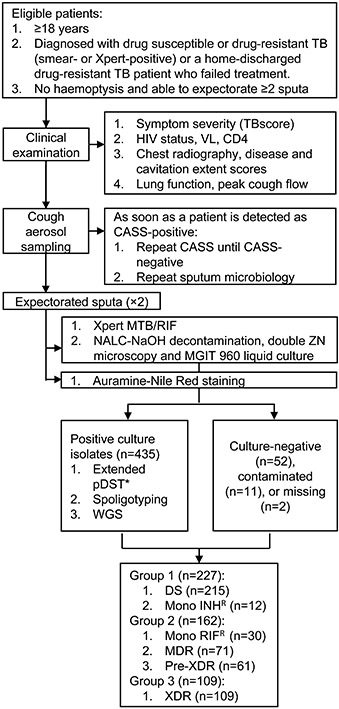
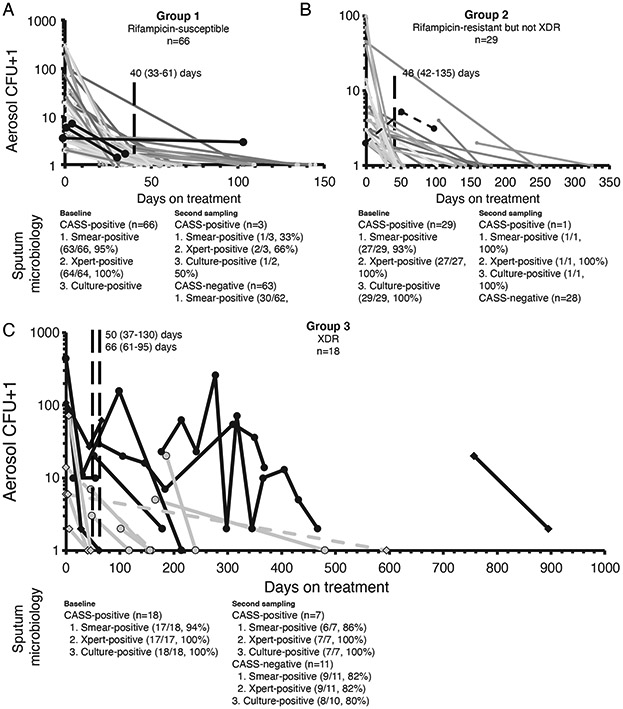
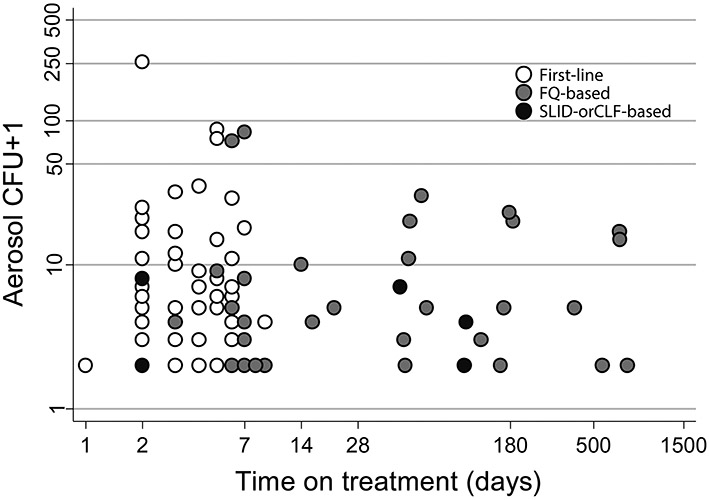
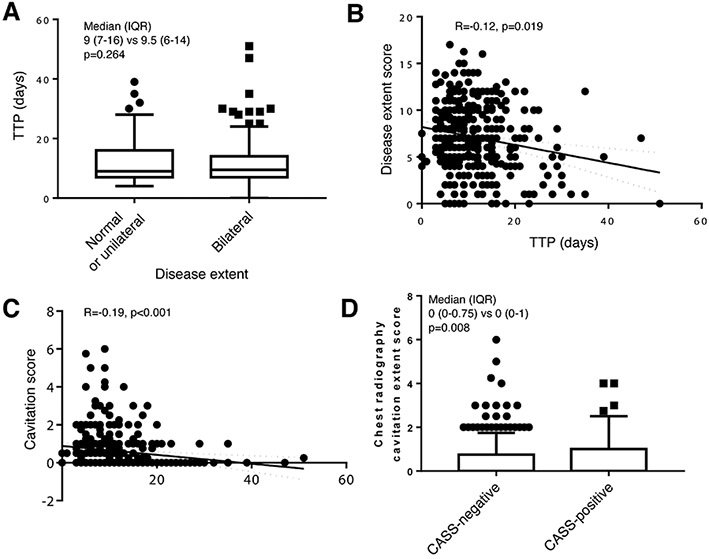
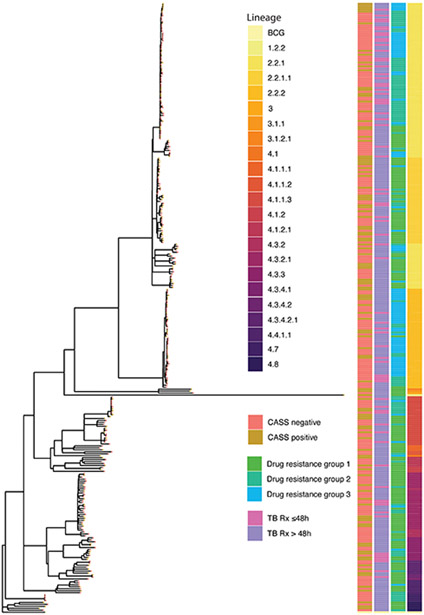
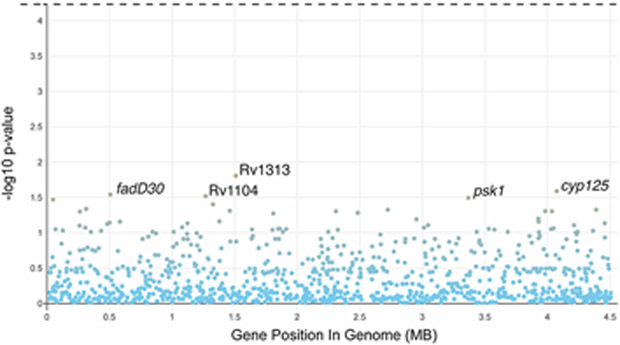
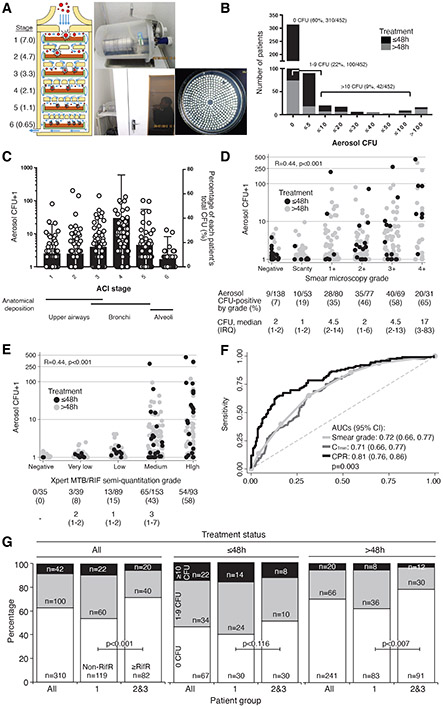
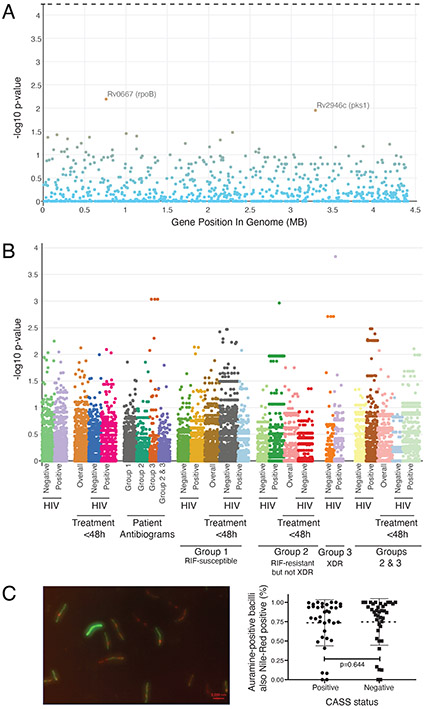
A burgeoning epidemic of drug-resistant tuberculosis (TB) threatens to derail global control efforts. Although the mechanisms remain poorly clarified, drug-resistant strains are widely believed to be less infectious than drug-susceptible strains. Consequently, we hypothesized that lower proportions of patients with drug-resistant TB would have culturable Mycobacterium tuberculosis from respirable, cough-generated aerosols compared to patients with drug-susceptible TB, and that multiple factors, including mycobacterial genomic variation, would predict culturable cough aerosol production. We enumerated the colony forming units in aerosols (≤10 µm) from 452 patients with TB (227 with drug resistance), compared clinical characteristics, and performed mycobacterial whole-genome sequencing, dormancy phenotyping and drug-susceptibility analyses on M. tuberculosis from sputum. After considering treatment duration, we found that almost half of the patients with drug-resistant TB were cough aerosol culture-positive. Surprisingly, neither mycobacterial genomic variants, lineage, nor dormancy status predicted cough aerosol culture positivity. However, mycobacterial sputum bacillary load and clinical characteristics, including a lower symptom score and stronger cough, were strongly predictive, thereby supporting targeted transmission-limiting interventions. Effective treatment largely abrogated cough aerosol culture positivity; however, this was not always rapid. These data question current paradigms, inform public health strategies and suggest the need to redirect TB transmission-associated research efforts toward host-pathogen interactions.
耐药结核病(TB)的流行呈上升趋势,这有可能破坏全球的控制工作。尽管耐药机制仍不清楚,但广泛认为耐药株的传染性低于敏感株。因此,我们假设耐药性结核病患者的可培养结核分枝杆菌(Mycobacterium tuberculosis)从可呼吸、咳嗽产生的气溶胶中的比例低于敏感性结核病患者,并且包括分枝杆菌基因组变异在内的多种因素可预测可培养的咳嗽气溶胶产生。我们对来自 452 名结核病患者(227 名耐药)的气溶胶中的菌落形成单位(≤10μm)进行了计数,比较了临床特征,并对痰液中的结核分枝杆菌进行了全基因组测序、休眠表型和药敏分析。在考虑了治疗时间后,我们发现近一半的耐药性结核病患者的咳嗽气溶胶培养呈阳性。令人惊讶的是,分枝杆菌基因组变异、谱系或休眠状态均不能预测咳嗽气溶胶培养的阳性结果。然而,分枝杆菌痰菌负荷和临床特征,包括较低的症状评分和更强的咳嗽,具有很强的预测性,从而支持有针对性的传播限制干预措施。有效的治疗在很大程度上消除了咳嗽气溶胶培养的阳性结果;然而,这并不总是迅速的。这些数据对当前的范式提出了质疑,为公共卫生策略提供了信息,并表明需要将结核病传播相关的研究工作重点转向宿主-病原体相互作用。