Wake Forest Institute for Regenerative Medicine, Wake Forest University School of Medicine, Winston-Salem, NC, USA.
Nat Biotechnol. 2020 Nov;38(11):1280-1287. doi: 10.1038/s41587-020-0547-7. Epub 2020 Jun 29.
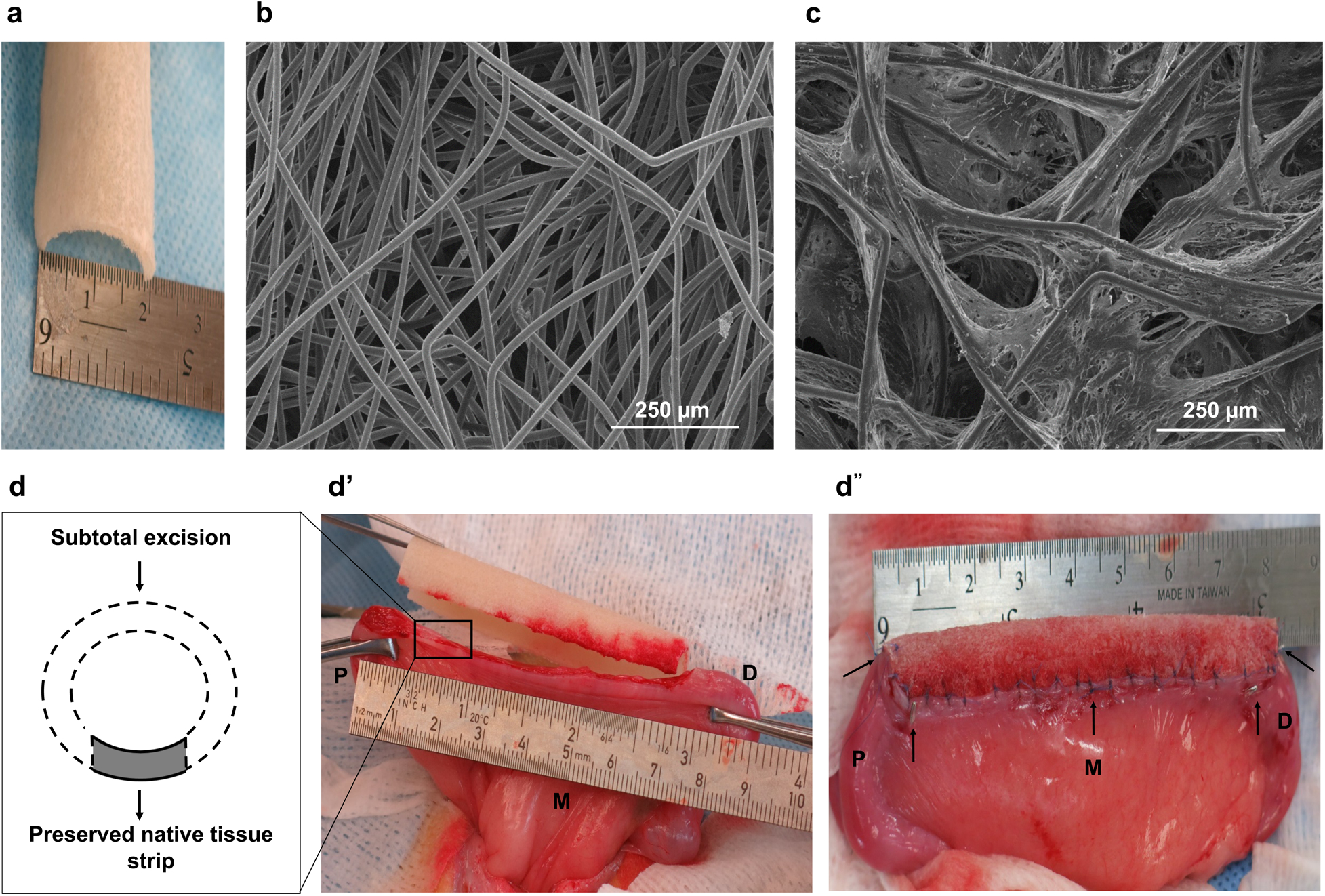
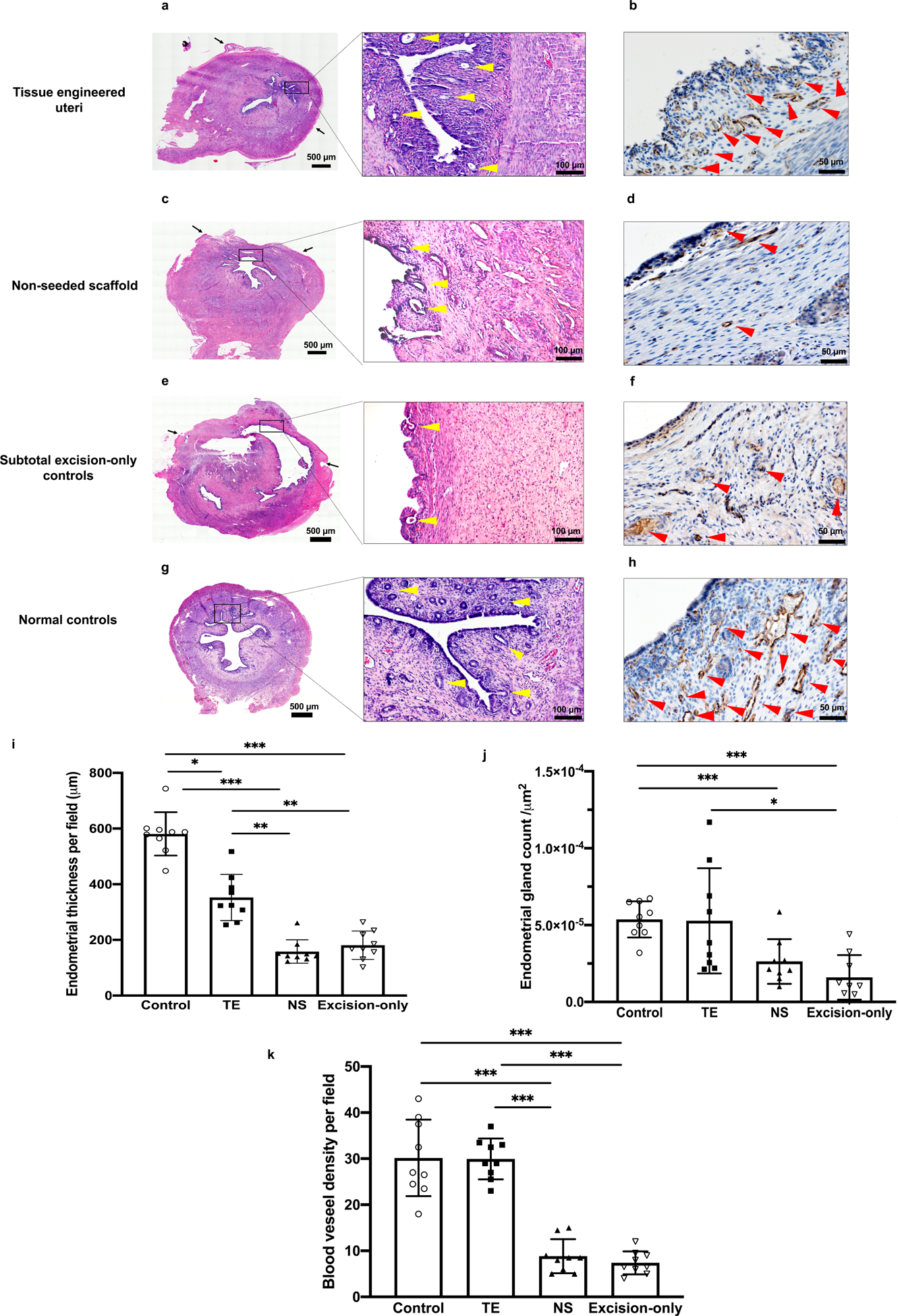
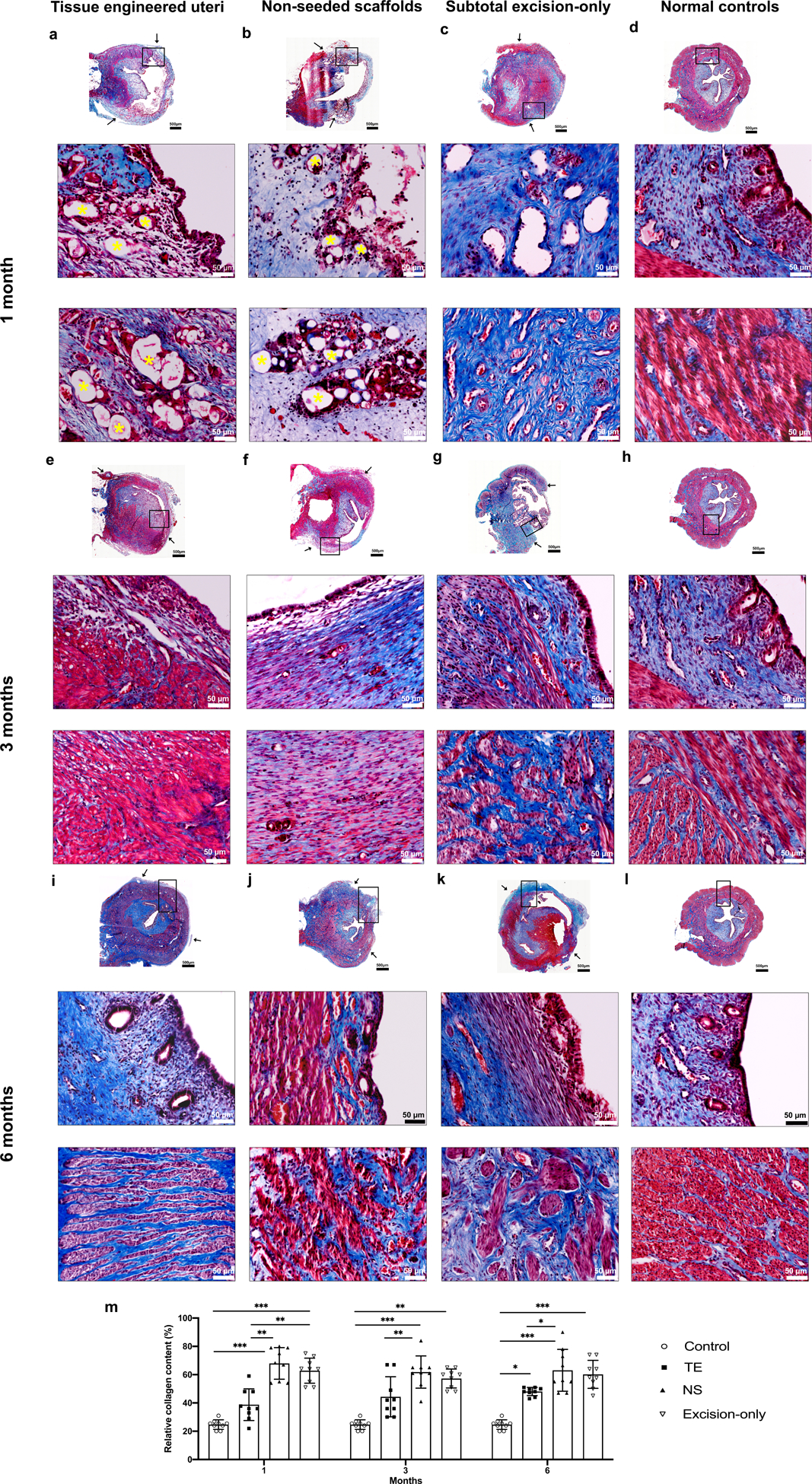
Bioengineered uterine tissue could provide a treatment option for women with uterine factor infertility. In large animal models, reconstruction of the uterus has been demonstrated only with xenogeneic tissue grafts. Here we use biodegradable polymer scaffolds seeded with autologous cells to restore uterine structure and function in rabbits. Rabbits underwent a subtotal uterine excision and were reconstructed with autologous cell-seeded constructs, with nonseeded scaffolds or by suturing. At 6 months postimplantation, only the cell-seeded engineered uteri developed native tissue-like structures, including organized luminal/glandular epithelium, stroma, vascularized mucosa and two-layered myometrium. Only rabbits with cell-seeded constructs had normal pregnancies (four in ten) in the reconstructed segment of the uterus and supported fetal development to term and live birth. With further development, this approach may provide a regenerative medicine solution to uterine factor infertility.
生物工程化的子宫组织可为患有子宫因素不孕的女性提供一种治疗选择。在大型动物模型中,仅通过异种组织移植物实现了子宫的重建。在这里,我们使用带有自体细胞的可生物降解聚合物支架来恢复兔子的子宫结构和功能。兔子接受了子宫次全切除术,并使用自体细胞接种的构建体、未接种支架或缝合进行重建。在植入后 6 个月时,只有细胞接种的工程化子宫形成了类似于天然组织的结构,包括有组织的腔/腺体上皮、基质、血管化的黏膜和双层平滑肌。只有在细胞接种构建体的兔子中,重建子宫段有正常妊娠(十个中有四个),并支持胎儿发育至足月和活产。随着进一步的发展,这种方法可能为子宫因素不孕提供再生医学解决方案。