Center for Translational Medicine, Union Hospital, Tongji Medical College, Huazhong University of Science and Technology, Wuhan, People's Republic of China.
Institute of Hematology, Union Hospital, Tongji Medical College, Huazhong University of Science and Technology, Wuhan, People's Republic of China.
Stem Cells Transl Med. 2020 Dec;9(12):1604-1616. doi: 10.1002/sctm.20-0129. Epub 2020 Jun 29.
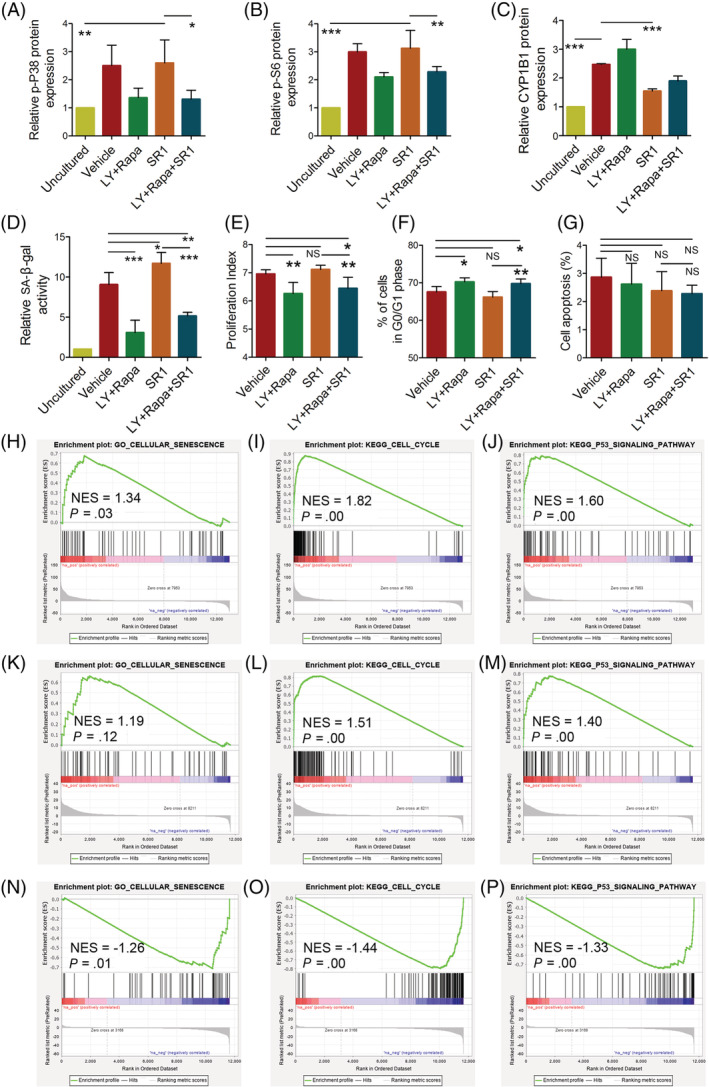
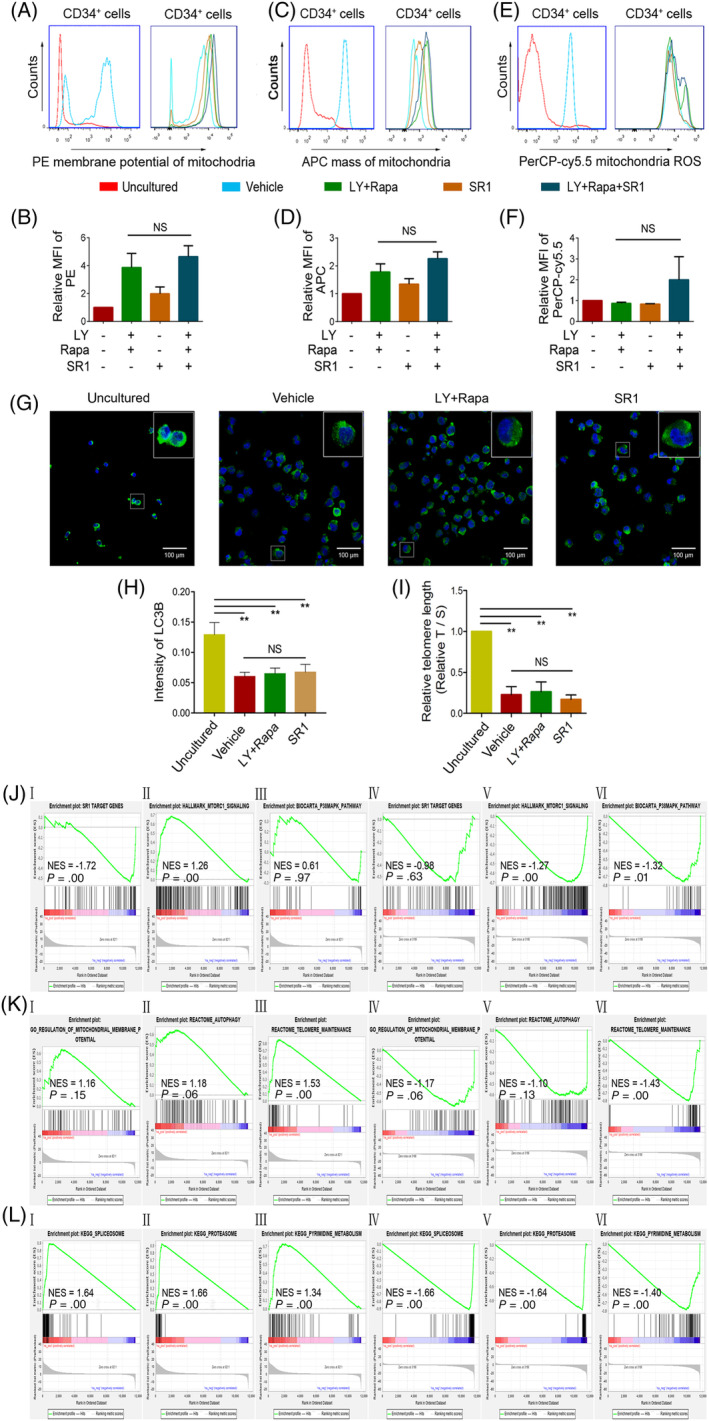
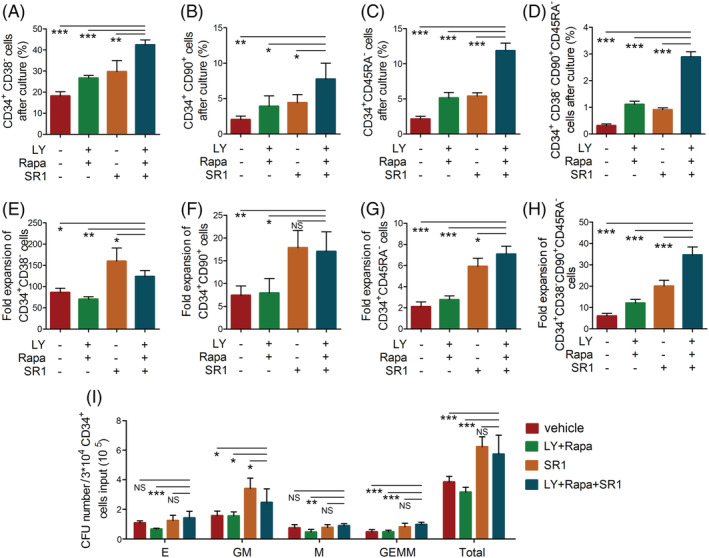
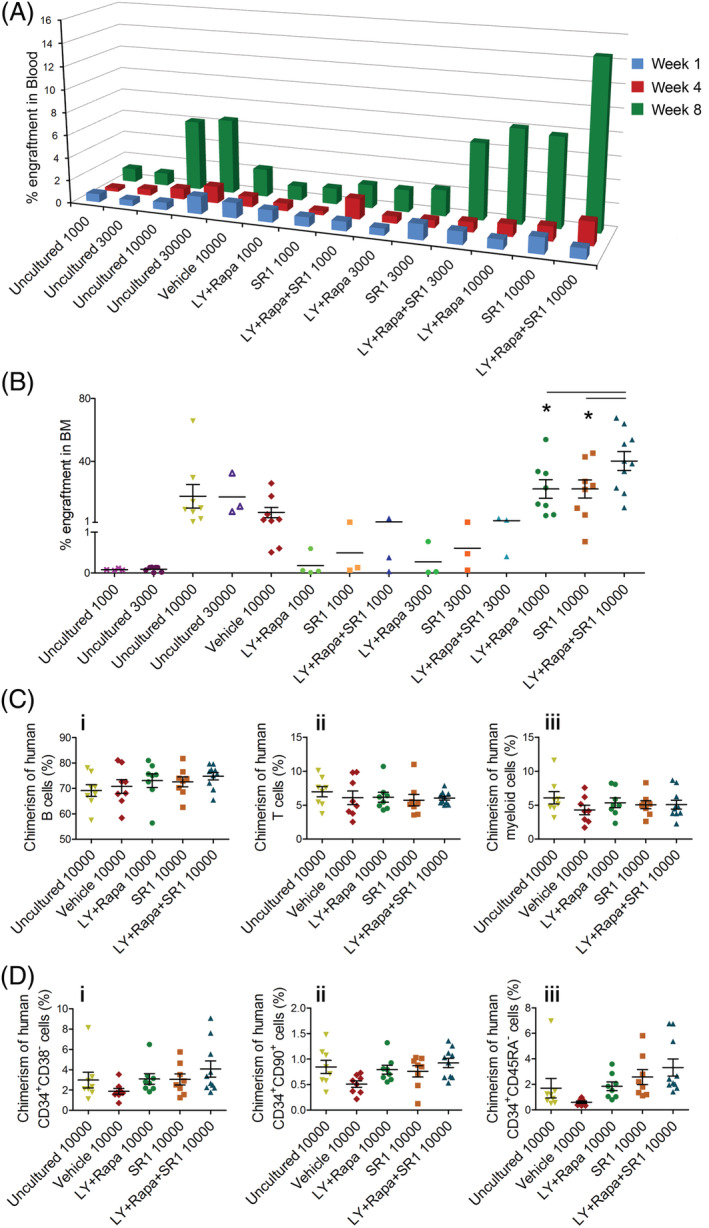
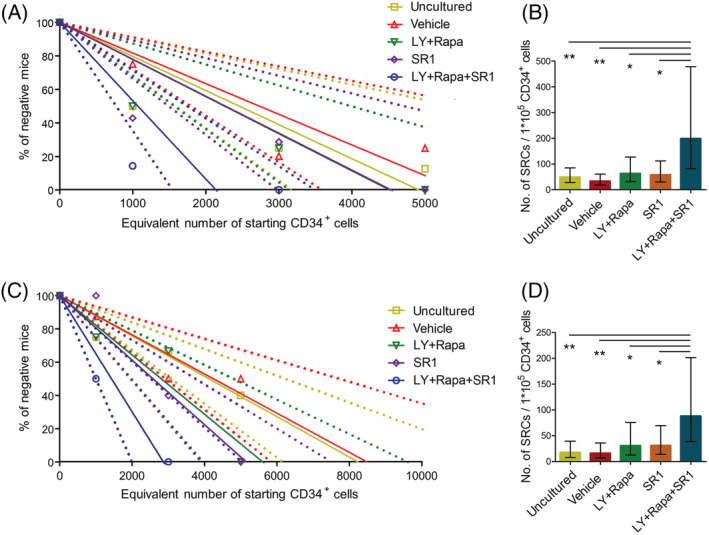
The stemness of ex vivo expanded hematopoietic stem cells (HSCs) is usually compromised by current methods. To explore the failure mechanism of stemness maintenance of human HSCs, which were expanded from human umbilical cord blood (hUCB) CD34 cells, by differentiation inhibitor Stem Regenin 1 (SR1), an antagonist of aryl hydrocarbon receptor, we investigated the activity of p38 mitogen-activated protein kinase α (p38 MAPKα, p38α) and mammalian target of rapamycin complex 1 (mTORC1), and their effect on SR1-expanded hUCB CD34 cells. Our results showed that cellular senescence occurred in the SR1-expanded hUCB CD34 cells in which p38α and mTORC1 were successively activated. Furthermore, their coinhibition resulted in a further decrease in hUCB CD34 cell senescence without an effect on apoptosis, promoted the maintenance of expanded phenotypic HSCs without differentiation inhibition, increased the hematopoietic reconstitution ability of multiple lineages, and potentiated the long-term self-renewal capability of HSCs from SR1-expanded hUCB CD34 cells in NOD/Shi-scid/IL-2Rγ mice. Our mechanistic study revealed that senescence inhibition by our strategy was mainly attributed to downregulation of the splicesome, proteasome formation, and pyrimidine metabolism signaling pathways. These results suggest that coinhibition of activated p38α and mTORC1 potentiates stemness maintenance of HSCs from SR1-expanded hUCB CD34 cells via senescence inhibition. Thus, we established a new strategy to maintain the stemness of ex vivo differentiation inhibitor-expanded human HSCs via coinhibition of multiple independent senescence initiating signal pathways. This senescence inhibition-induced stemness maintenance of ex vivo expanded HSCs could also have an important role in other HSC expansion systems.
体外扩增的造血干细胞(HSCs)的干性通常会受到当前方法的影响。为了探索分化抑制剂 Stem Regenin 1(SR1)扩增的人脐血(hUCB)CD34 细胞来源的人 HSCs 干性维持失败的机制,我们研究了 p38 丝裂原激活蛋白激酶α(p38 MAPKα,p38α)和哺乳动物雷帕霉素靶蛋白复合物 1(mTORC1)的活性,及其对 SR1 扩增的 hUCB CD34 细胞的影响。结果显示,p38α和 mTORC1 相继激活,导致 SR1 扩增的 hUCB CD34 细胞发生细胞衰老。此外,它们的联合抑制导致 hUCB CD34 细胞衰老进一步减少,而对细胞凋亡没有影响,促进了无分化抑制的扩增表型 HSCs 的维持,增加了多系造血重建能力,并增强了 NOD/Shi-scid/IL-2Rγ小鼠中 SR1 扩增的 hUCB CD34 细胞来源的 HSCs 的长期自我更新能力。我们的机制研究表明,我们的策略通过抑制衰老来增强干性的主要原因是下调剪接体、蛋白酶体形成和嘧啶代谢信号通路。这些结果表明,通过抑制衰老,联合抑制激活的 p38α和 mTORC1 增强了 SR1 扩增的 hUCB CD34 细胞来源的 HSCs 的干性维持。因此,我们建立了一种通过联合抑制多个独立的衰老起始信号通路来维持体外分化抑制剂扩增的人类 HSCs 干性的新策略。这种抑制衰老诱导的体外扩增 HSCs 的干性维持也可能在其他 HSC 扩增系统中发挥重要作用。