Department of Laboratory Medicine, Zhongnan Hospital of Wuhan University, Wuhan University, Wuhan, China.
Department of Radiology, Zhongnan Hospital of Wuhan University, Wuhan University, Wuhan, China.
J Cell Mol Med. 2020 Aug;24(15):8326-8349. doi: 10.1111/jcmm.15097. Epub 2020 Jun 30.
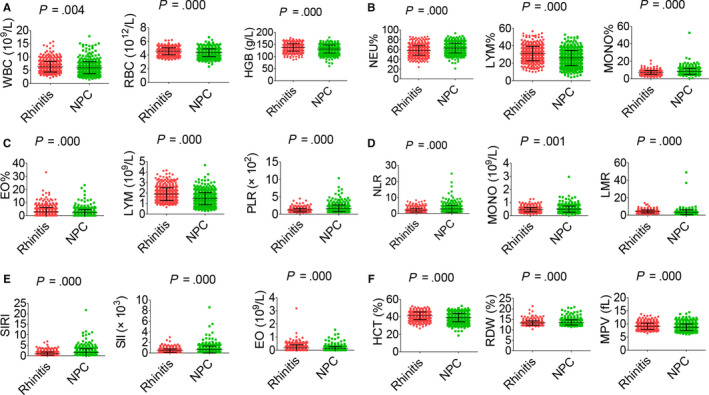
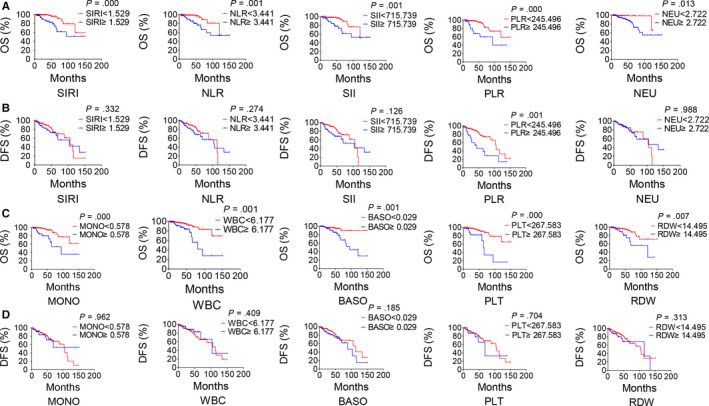
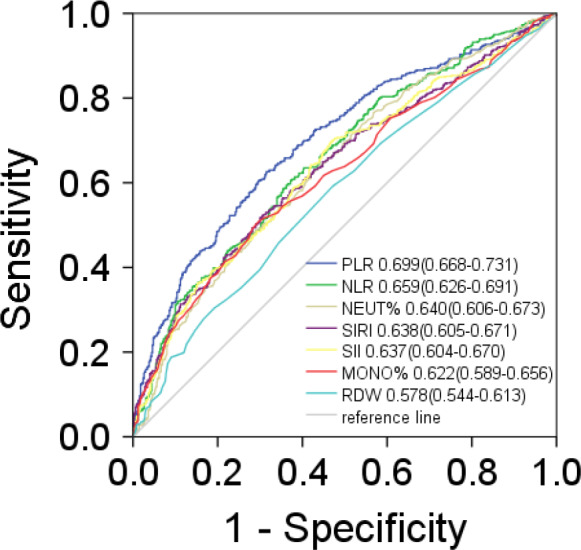
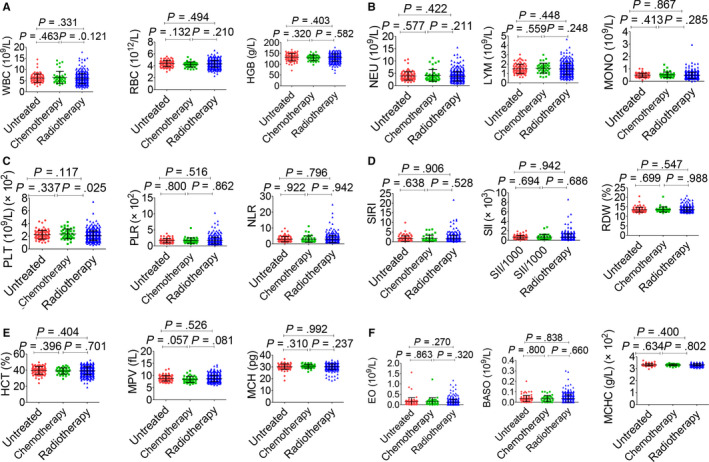
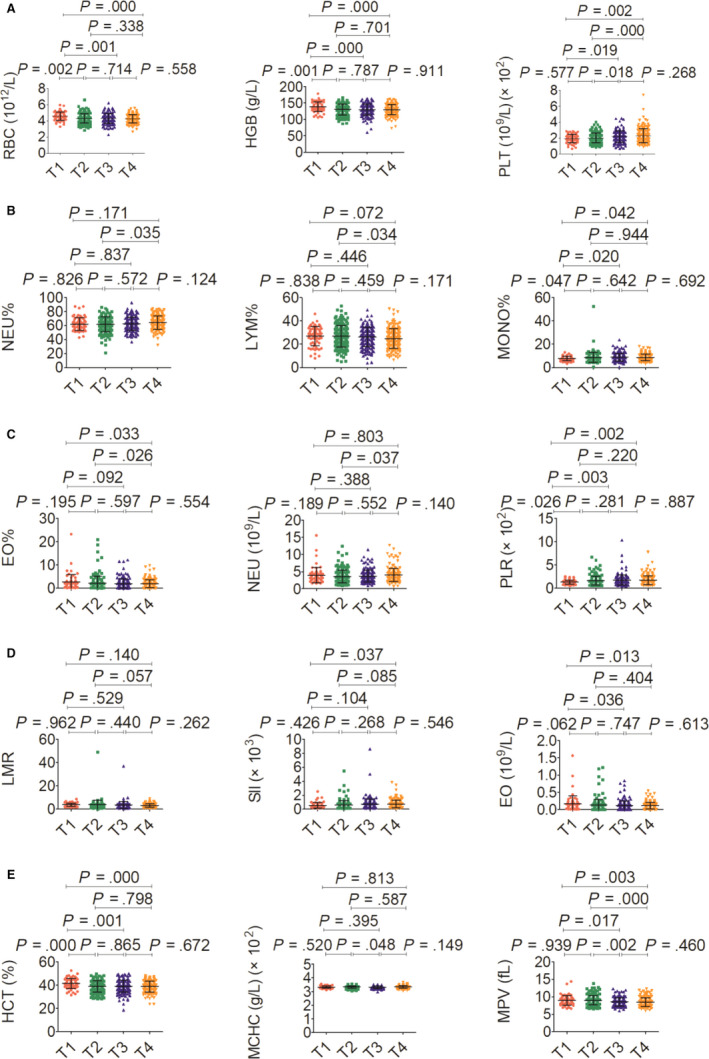
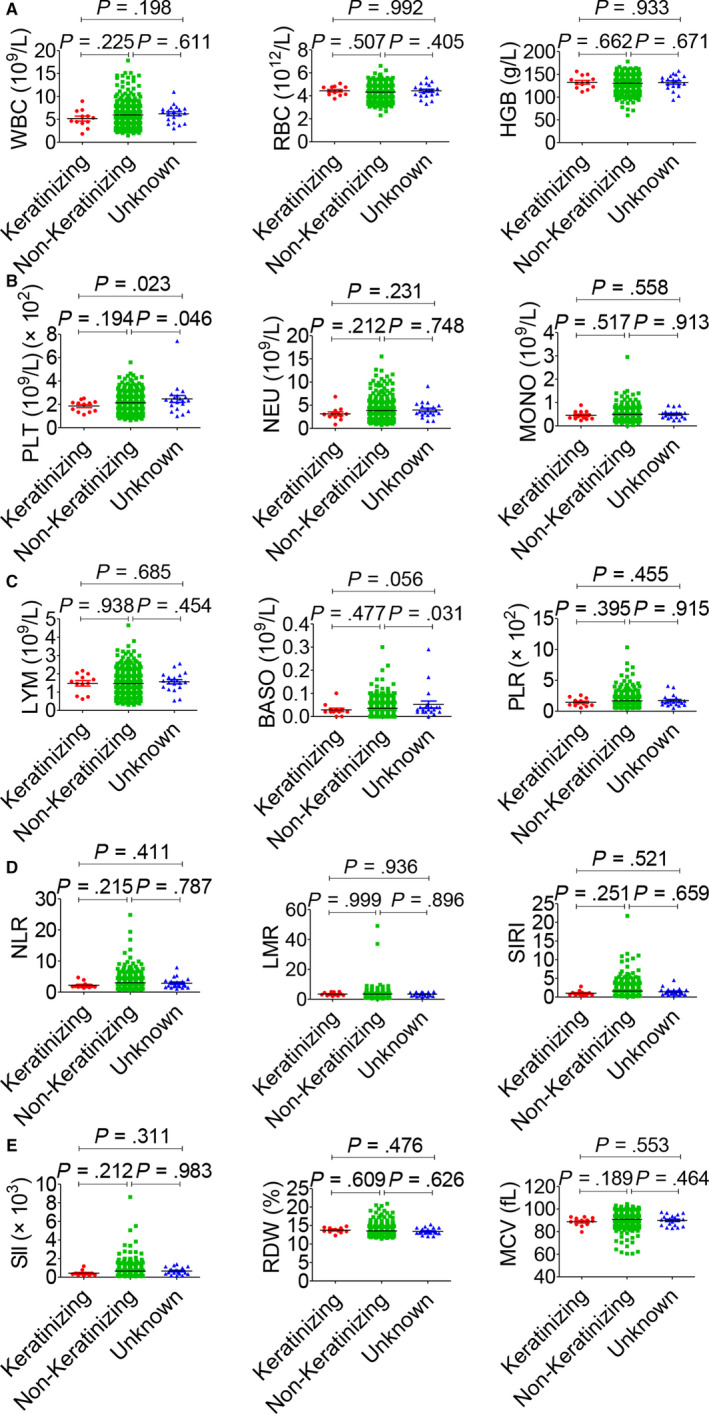
Inflammation indicators, such as systemic inflammation response index (SIRI), systemic immune-inflammation index (SII), neutrophil-to-lymphocyte ratio (NLR) and platelet-lymphocyte ratio (PLR), are associated with poor prognosis in various solid cancers. In this study, we investigated the predictive value of these inflammation indicators in nasopharyngeal carcinoma (NPC). This retrospective study involved 559 patients with NPC and 500 patients with chronic rhinitis, and 255 NPC patients were followed up successfully. Continuous variables and qualitative variables were measured by t test and chi-square test, respectively. The optimal cut-off values of various inflammation indicators were determined by receiver operating characteristic (ROC) curve. Moreover, the diagnostic value for NPC was decided by the area under the curves (AUCs). The Kaplan-Meier methods and the log-rank test were used to analyse overall survival (OS) and disease-free survival (DFS). The independent prognostic risk factors for survival and influencing factors of side effects after treatment were analysed by Cox and logistic regression analysis, respectively. Most haematological indexes of NPC and rhinitis were significantly different between the two groups, and PLR was optimal predictive indicators of diagnosis. In the multivariable Cox regression analysis, PLR, WBC, RDW, M stage and age were independent prognostic risk factors. Many inflammation indicators that affected various side effects were evaluated by logistic regression analysis. In conclusion, the combined inflammation indicators were superior to single haematological indicator in the diagnosis and prognosis of NPC. These inflammation indicators can be used to supply the current evaluation system of the TNM staging system to help predict the prognosis in NPC patients.
炎症指标,如全身炎症反应指数(SIRI)、全身免疫炎症指数(SII)、中性粒细胞与淋巴细胞比值(NLR)和血小板与淋巴细胞比值(PLR),与各种实体瘤的预后不良相关。在本研究中,我们调查了这些炎症指标在鼻咽癌(NPC)中的预测价值。这项回顾性研究涉及 559 例 NPC 患者和 500 例慢性鼻炎患者,其中 255 例 NPC 患者成功随访。连续变量和定性变量分别通过 t 检验和卡方检验进行测量。通过接收者操作特征(ROC)曲线确定各种炎症指标的最佳截断值。此外,曲线下面积(AUCs)决定了对 NPC 的诊断价值。Kaplan-Meier 方法和对数秩检验用于分析总生存期(OS)和无病生存期(DFS)。通过 Cox 和逻辑回归分析分别分析生存的独立预后危险因素和治疗后副作用的影响因素。NPC 和鼻炎两组的大多数血液学指标差异显著,PLR 是诊断的最佳预测指标。在多变量 Cox 回归分析中,PLR、WBC、RDW、M 分期和年龄是独立的预后危险因素。通过逻辑回归分析评估了许多影响各种副作用的炎症指标。总之,联合炎症指标在 NPC 的诊断和预后方面优于单一血液学指标。这些炎症指标可用于补充当前的 TNM 分期系统评估体系,以帮助预测 NPC 患者的预后。