Department of Pharmacy, China Medical University, Taichung 404, Taiwan.
Biotech Research Institute, Grape King Bio Ltd., Taoyuan City 325, Taiwan.
Nutrients. 2020 Jun 28;12(7):1914. doi: 10.3390/nu12071914.
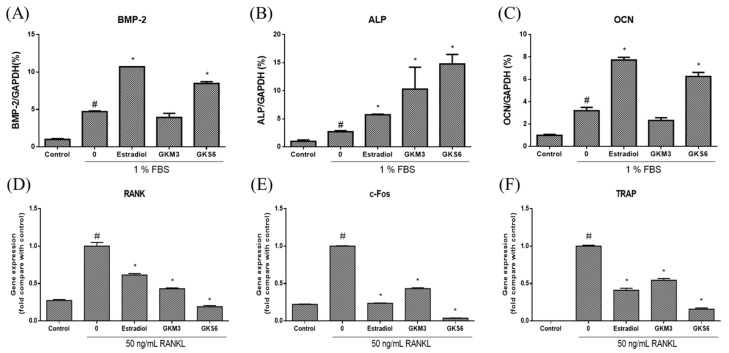
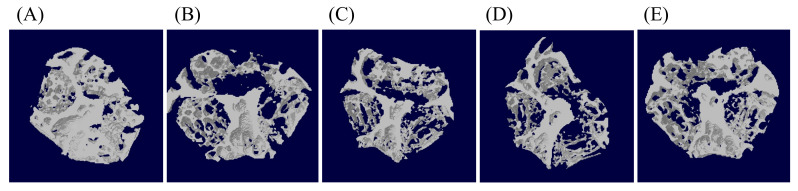
Osteoporosis, an imbalance in the bone-forming process mediated by osteoblasts and the bone-resorbing function mediated by osteoclasts, is a bone degenerative disease prevalent among the aged population. Due to deleterious side effects of currently available medications, probiotics as a potential treatment of osteoporosis is an appealing approach. Hence, this study aims to evaluate the beneficial effects of two novel Lacobacilli strain probiotics on bone health in ovariectomized (OVX) induced osteoporotic mice model and its underlying mechanisms. Forty-five 9-week-old Institute of Cancer Research (ICR) mice underwent either a sham-operation ( = 9) or OVX ( = 36). Four days after the operation, OVX mice were further divided into four groups and received either saline alone, Lactobacillus plantarum GKM3, Lactobacillus paracasei GKS6 or alendronate per day for 28 days. After sacrifice by decapitation, right distal femur diaphysis was imaged via micro-computed tomography (MCT) and parameters including bone volume/tissue volume ratio (BV/TV), trabecular thickness (Tb.Th), trabecular number (Tb.N), trabecular separation (Tb.Sp), and bone mineral density (BMD) were measured. Moreover, GKM3 and GKS6 on RANKL-induced osteoclast formation and osteoblast differentiation using in vitro cultures were also investigated. The results showed that both probiotics strains inhibited osteoporosis in the OVX mice model, with L. paracasei GKS6 outperforming L. plantarum GKM3. Besides this, both GKS6 and GKM3 promoted osteoblast differentiation and inhibited RANKL-induced osteoclast differentiation via the Bone Morphogenetic Proteins (BMP) and RANKL pathways, respectively. These findings suggested that both strains of Lactobacilli may be pursued as potential candidates for the treatment and management of osteoporosis, particularly in postmenopausal osteoporosis.
骨质疏松症是一种由成骨细胞介导的骨形成过程和破骨细胞介导的骨吸收功能失衡的骨骼退行性疾病,在老年人群中较为普遍。由于目前可用药物存在有害的副作用,益生菌作为骨质疏松症的潜在治疗方法是一种很有吸引力的方法。因此,本研究旨在评估两种新型乳杆菌益生菌菌株对去卵巢诱导骨质疏松症小鼠模型的骨骼健康的有益作用及其潜在机制。45 只 9 周龄的癌症研究所(ICR)小鼠接受了假手术( = 9)或去卵巢手术( = 36)。手术后 4 天,OVX 小鼠进一步分为四组,每天分别给予生理盐水、植物乳杆菌 GKM3、副干酪乳杆菌 GKS6 或阿仑膦酸钠,共 28 天。通过断头处死小鼠后,通过微计算机断层扫描(MCT)对右侧远端股骨骨干进行成像,并测量了包括骨体积/组织体积比(BV/TV)、骨小梁厚度(Tb.Th)、骨小梁数量(Tb.N)、骨小梁间隔(Tb.Sp)和骨密度(BMD)在内的参数。此外,还研究了 GKM3 和 GKS6 对 RANKL 诱导的破骨细胞形成和成骨细胞分化的体外培养的影响。结果表明,两种益生菌菌株均抑制了 OVX 小鼠模型的骨质疏松症,其中副干酪乳杆菌 GKS6 的效果优于植物乳杆菌 GKM3。此外,GKS6 和 GKM3 分别通过骨形态发生蛋白(BMP)和 RANKL 途径促进成骨细胞分化并抑制 RANKL 诱导的破骨细胞分化。这些发现表明,这两种乳杆菌菌株都可能成为治疗和管理骨质疏松症的潜在候选物,特别是在绝经后骨质疏松症中。