Met Office Hadley Centre, FitzRoy Road, Exeter, EX1 3PB, UK.
Nat Commun. 2020 Jun 30;11(1):3093. doi: 10.1038/s41467-020-16834-0.
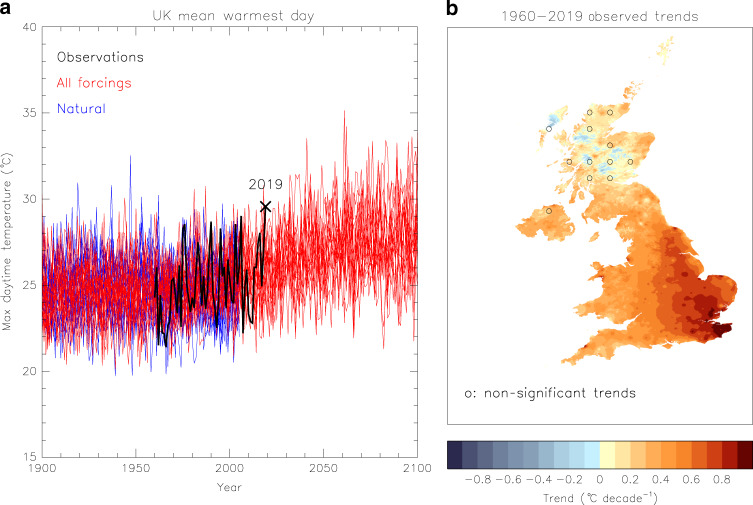
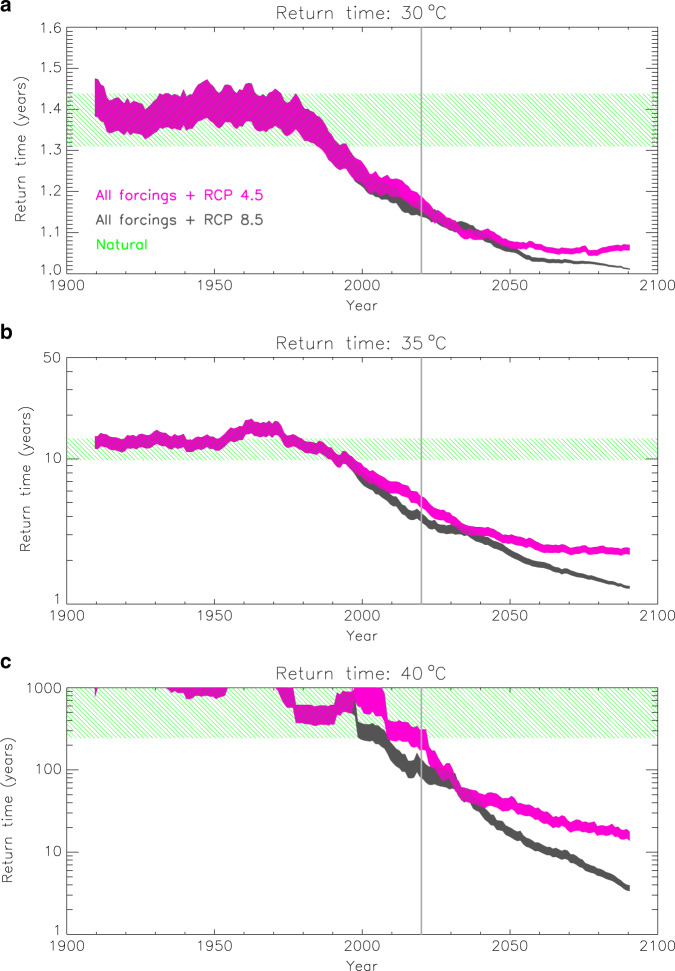
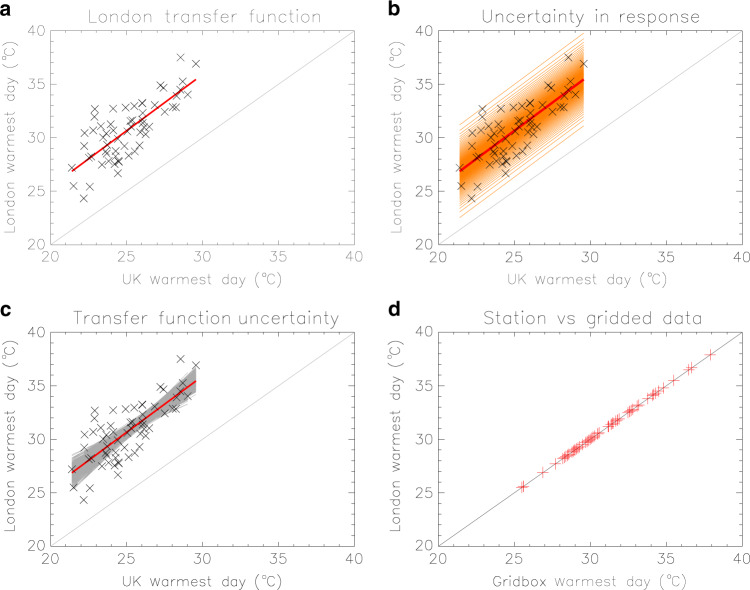
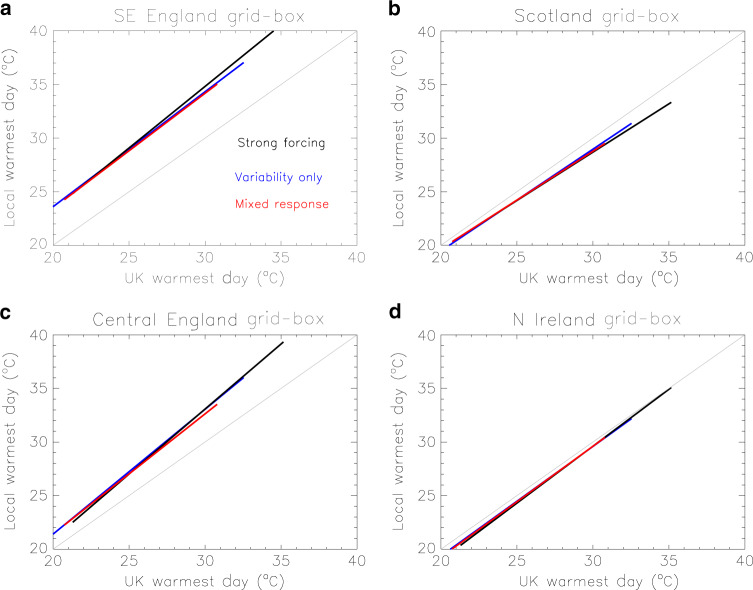
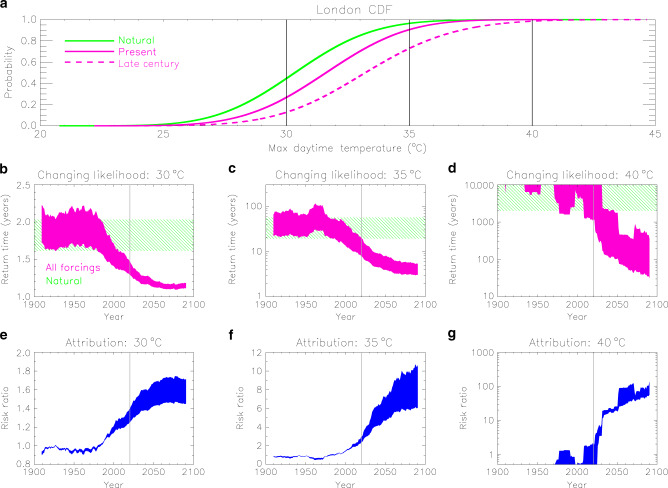
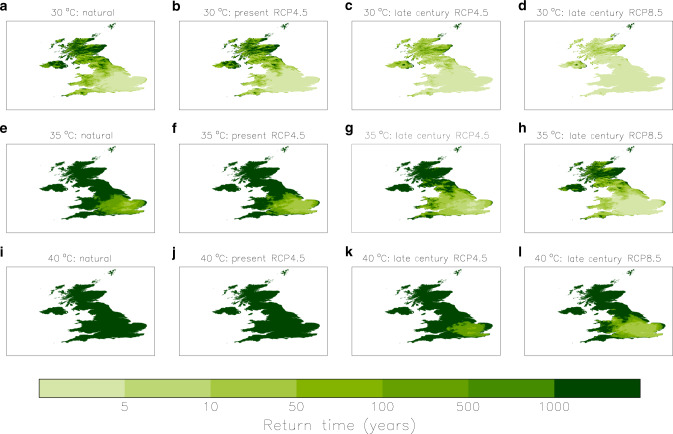
As European heatwaves become more severe, summers in the United Kingdom (UK) are also getting warmer. The UK record temperature of 38.7 °C set in Cambridge in July 2019 prompts the question of whether exceeding 40 °C is now within reach. Here, we show how human influence is increasing the likelihood of exceeding 30, 35 and 40 °C locally. We utilise observations to relate local to UK mean extremes and apply the resulting relationships to climate model data in a risk-based attribution methodology. We find that temperatures above 35 °C are becoming increasingly common in the southeast, while by 2100 many areas in the north are likely to exceed 30 °C at least once per decade. Summers which see days above 40 °C somewhere in the UK have a return time of 100-300 years at present, but, without mitigating greenhouse gas emissions, this can decrease to 3.5 years by 2100.
随着欧洲热浪变得更加剧烈,英国(UK)的夏季也变得越来越热。英国在剑桥创下的 38.7°C 的最高温记录,不禁让人发问,英国是否即将突破 40°C 的高温。在这里,我们展示了人为因素是如何增加局部地区超过 30°C、35°C 和 40°C 的可能性。我们利用观测数据将局部地区的极端温度与英国平均极端温度相关联,并将相关关系应用于风险归因方法中的气候模型数据。我们发现,东南部地区 35°C 以上的高温天气变得越来越普遍,而到 2100 年,英国北部的许多地区每年至少有一次会出现 30°C 以上的高温天气。目前,英国某个地区出现 40°C 以上高温天气的重现时间为 100-300 年,但如果不减少温室气体排放,这一时间可能会在 2100 年缩短至 3.5 年。