Hu Xiangxu, Wang Guan, Shan Lei, Sun Shuyan, Hu Yibo, Wei Fuwen
Key Laboratory of Animal Ecology and Conservation Biology Institute of Zoology Chinese Academy of Sciences Beijing China.
University of Chinese Academy of Sciences Beijing China.
Ecol Evol. 2020 May 4;10(12):5913-5921. doi: 10.1002/ece3.6327. eCollection 2020 Jun.
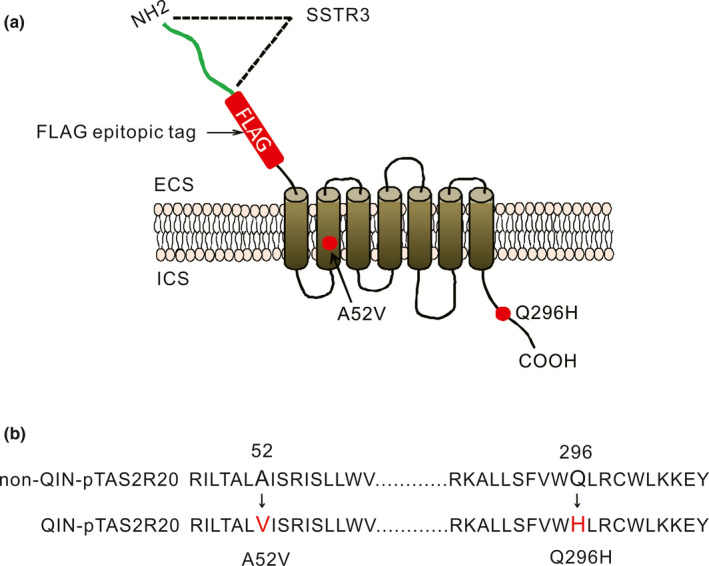
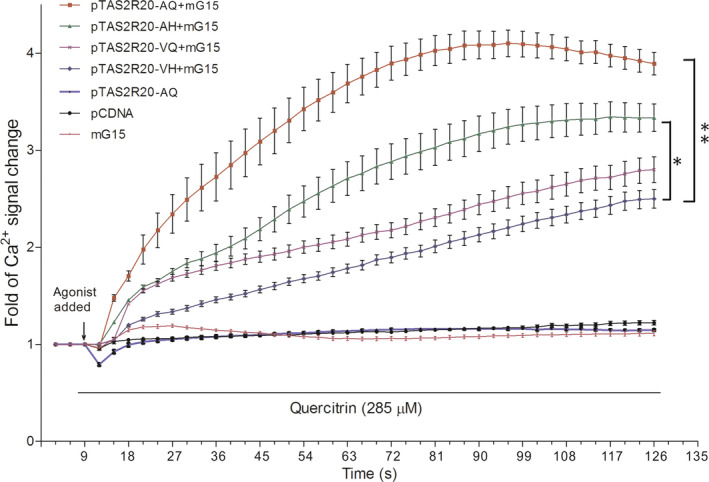
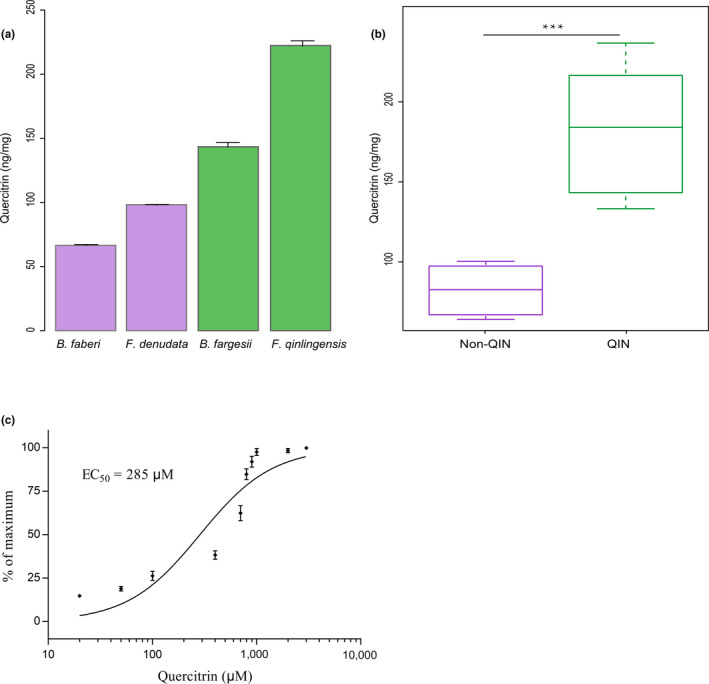
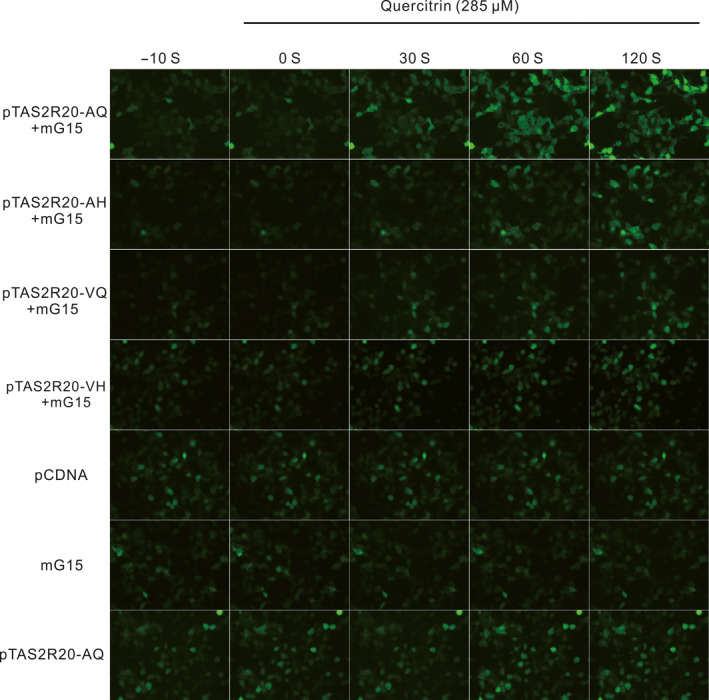
Sensitivity to bitter tastes provides animals with an important means of interacting with their environment and thus, influences their dietary preferences. Genetic variants encoding functionally distinct receptor types contribute to variation in bitter taste sensitivity. Our previous study showed that two nonsynonymous sites, A52V and Q296H, in the gene are directionally selected in giant pandas from the Qinling Mountains, which are speculated to be the causative base-pair changes of Qinling pandas for the higher preference for bamboo leaves in comparison with other pandas. Here, we used functional expression in engineered cells to identify agonists of pTAS2R20 (i.e., giant panda's TAS2R20) and interrogated the differences in perception in the in vitro responses of pTAS2R20 variants to the agonists. Our results show that pTAS2R20 is specifically activated by quercitrin and that pTAS2R20 variants exhibit differences in the sensitivity of their response to the agonist. Compared with pTAS2R20 in pandas from other areas, the receptor variant with A52V and Q296H, which is most commonly found in Qinling pandas, confers a significantly decreased sensitivity to quercitrin. We subsequently quantified the quercitrin content of the leaves of bamboo distributed in the Qinling Mountains, which was found to be significantly higher than that of the leaves of bamboo from panda habitats in other areas. Our results suggest that the decreased sensitivity to quercitrin in Qinling pandas results in higher-quercitrin-containing bamboo leaves to be tasting less bitter to them and thus, influences their dietary preference. This study illustrates the genetic adaptation of Qinling pandas to their environments and provides a fine example of the functional effects of directional selection in the giant panda.
对苦味的敏感度为动物提供了一种与环境互动的重要方式,因此会影响它们的饮食偏好。编码功能不同的受体类型的基因变异导致苦味敏感度的差异。我们之前的研究表明,秦岭大熊猫中,该基因的两个非同义位点A52V和Q296H受到定向选择,据推测,这是秦岭大熊猫比其他大熊猫更偏好竹叶的碱基对变化原因。在这里,我们利用工程细胞中的功能表达来鉴定pTAS2R20(即大熊猫的TAS2R20)的激动剂,并研究pTAS2R20变体对激动剂的体外反应中的感知差异。我们的结果表明,pTAS2R20被槲皮苷特异性激活,并且pTAS2R20变体对激动剂的反应敏感性存在差异。与其他地区大熊猫的pTAS2R20相比,在秦岭大熊猫中最常见的带有A52V和Q296H的受体变体对槲皮苷的敏感性显著降低。我们随后对分布在秦岭的竹子叶片中的槲皮苷含量进行了量化,发现其显著高于其他大熊猫栖息地竹子叶片中的含量。我们的结果表明,秦岭大熊猫对槲皮苷敏感性的降低使得含有较高槲皮苷的竹叶对它们来说苦味减轻,从而影响了它们的饮食偏好。这项研究说明了秦岭大熊猫对其环境的遗传适应,并为大熊猫定向选择的功能效应提供了一个很好的例子。