Knott Katrina K, Christian Amelia L, Falcone Josephine F, Vance Carrie K, Bauer Laura L, Fahey George C, Kouba Andrew J
Conservation and Research Department, Memphis Zoological Society, Memphis, Tennessee, United States of America.
Department of Animal Sciences, Texas A&M University, College Station, Texas, United States of America.
PLoS One. 2017 Jun 14;12(6):e0177582. doi: 10.1371/journal.pone.0177582. eCollection 2017.
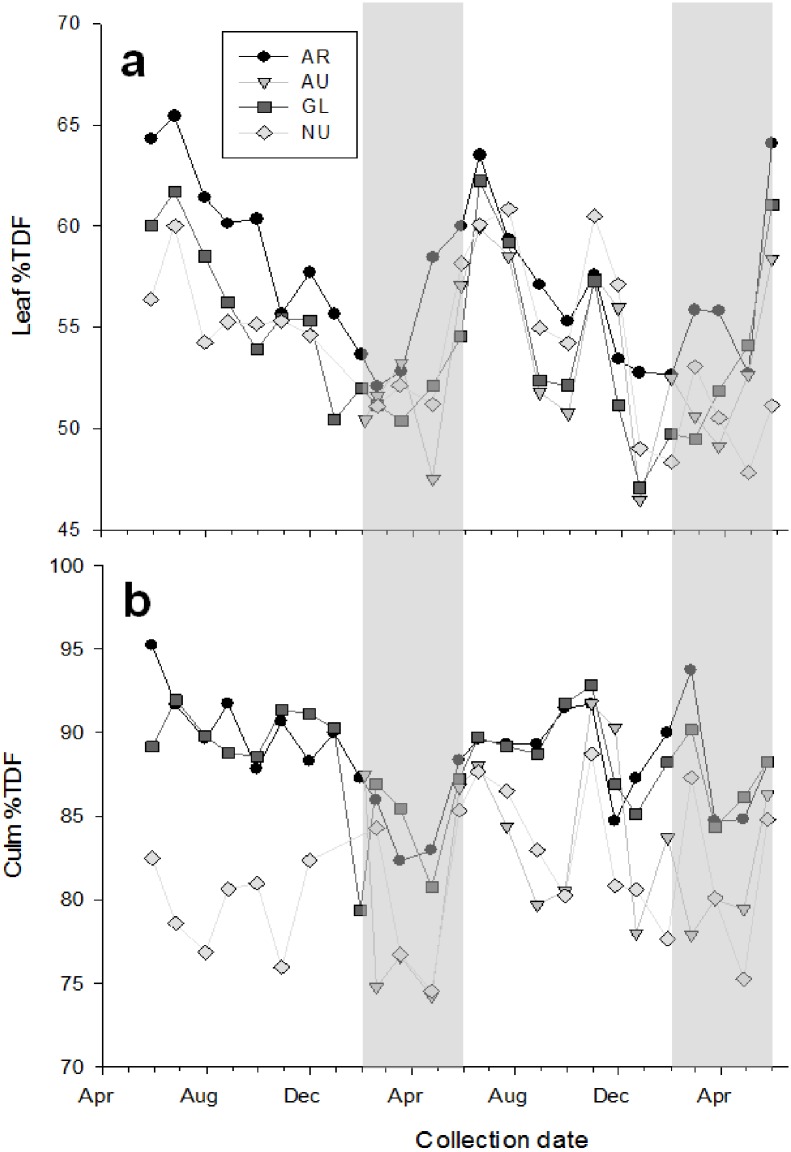
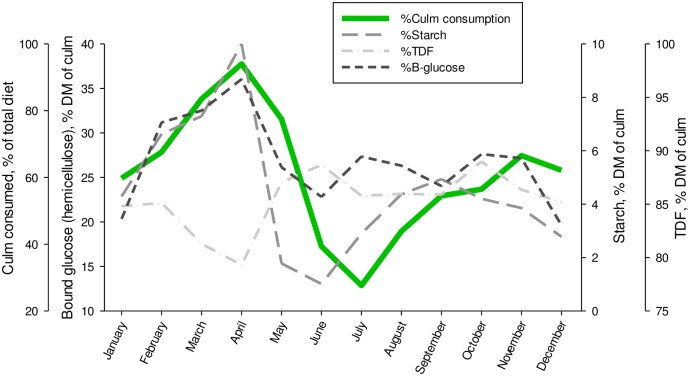
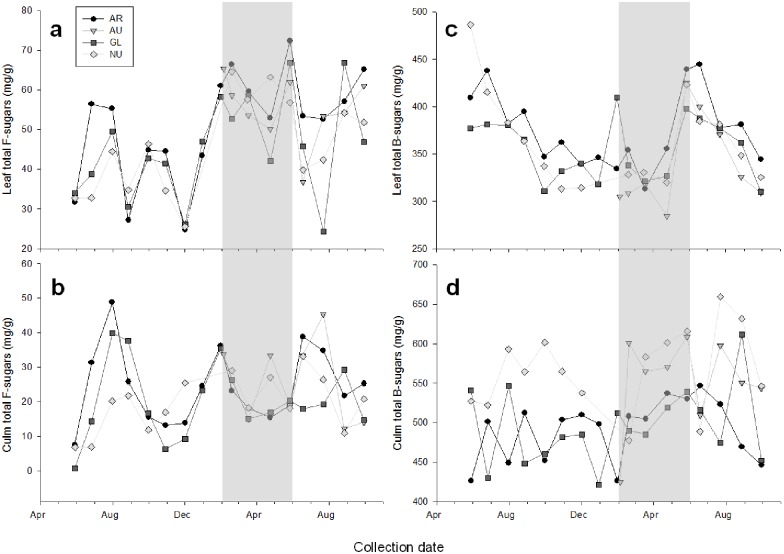
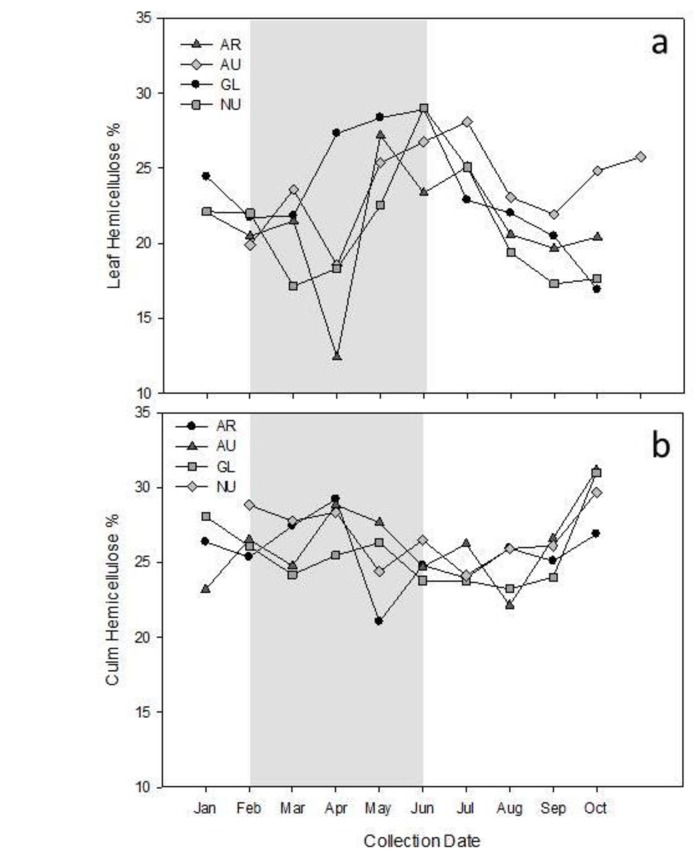
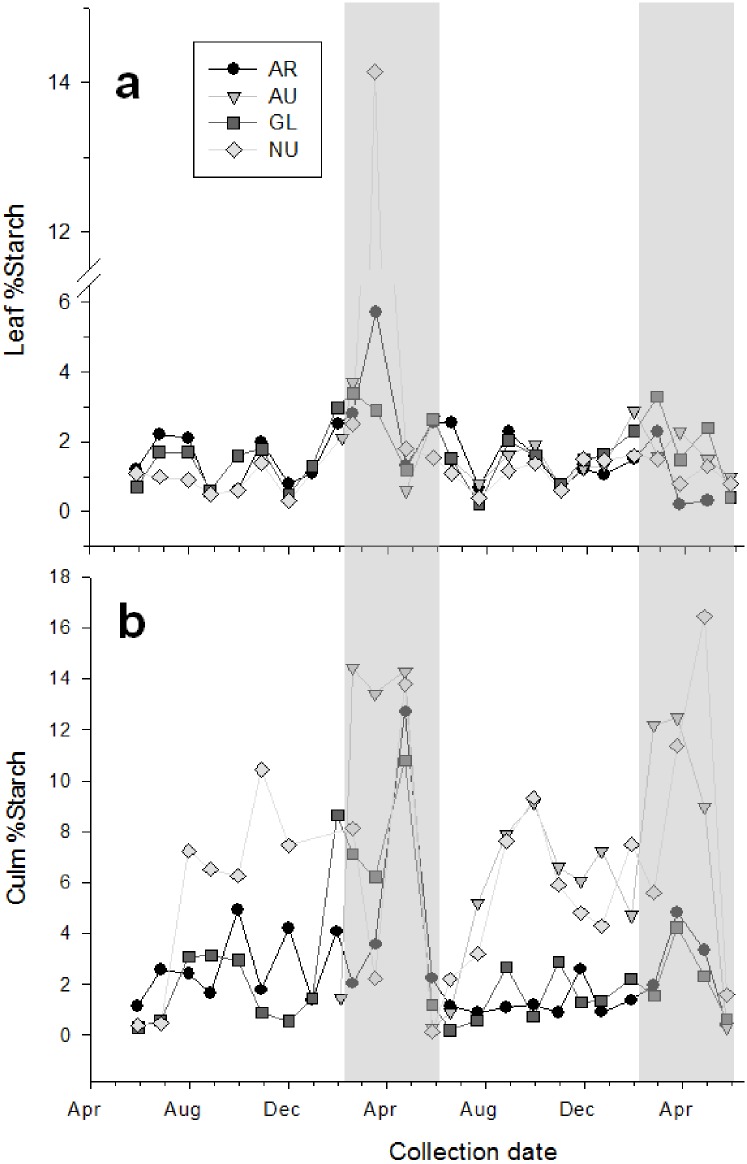
Seasonal changes in the foodscape force herbivores to select different plant species or plant parts to meet nutritional requirements. We examined whether the search for calorie-rich carbohydrates explained giant panda's selection for bamboo culm over leaves during spring. Leaves and culms were collected from four Phyllostachys bamboos (P. aurea, P. aureosulcata, P. glauca, and P. nuda) once per month over 18-27 months. Monthly changes in annual plant part nutrients were examined, and compared to seasonal foraging behaviors of captive giant pandas. Although total fiber was greater (p<0.0001) in culm (85.6 ± 0.5%) than leaves (55.3 ± 0.4%) throughout the year, culm fiber was at its lowest in spring (79-85%) when culm selection by giant pandas exceeded 70% of their overall diet. Culm starch also was greatest (p = 0.044) during spring (5.5 ± 1.1%) and 2.5-fold the percentage of starch in leaves (2.2 ± 0.6%). The free sugars in spring culm consisted of a high proportion of glucose (35%) and fructose (47%), whereas sucrose made up 42% of the total free sugar content of spring leaves. Bound sugars in culm consisted of 60% glucose and 38% xylose likely representative of hemicellulose. The concentrations of bound sugars (hemicelluloses) in spring culms (543.7 ± 13.0 mg/g) was greater (p<0.001) than in leaves (373.0 ± 14.8 mg/g). These data help explain a long-standing question in giant panda foraging ecology: why consume the plant part with the lowest protein and fat during the energetically intensive spring breeding season? Giant pandas likely prefer spring culm that contains abundant mono- and polysaccharides made more bioavailable as a result of reduced fiber content. These data suggest that phenological changes in bamboo plant part nutrition drive foraging decisions by giant pandas.
食物景观的季节性变化迫使食草动物选择不同的植物种类或植物部位来满足营养需求。我们研究了对富含卡路里的碳水化合物的寻觅是否能解释大熊猫在春季选择竹茎而非竹叶的行为。在18至27个月的时间里,每月从四种毛竹(金竹、黄槽竹、淡竹和裸竹)采集竹叶和竹茎。研究了一年生植物部位营养成分的月度变化,并与圈养大熊猫的季节性觅食行为进行比较。尽管全年竹茎中的总纤维含量(85.6 ± 0.5%)高于竹叶(55.3 ± 0.4%)(p<0.0001),但在春季竹茎纤维含量处于最低水平(79 - 85%),此时大熊猫对竹茎的选择超过其总体饮食的70%。春季竹茎中的淀粉含量也最高(p = 0.044)(5.5 ± 1.1%),是竹叶中淀粉含量(2.2 ± 0.6%)的2.5倍。春季竹茎中的游离糖由高比例的葡萄糖(35%)和果糖(47%)组成,而蔗糖占春季竹叶总游离糖含量的42%。竹茎中的结合糖由60%的葡萄糖和38%的木糖组成,可能代表半纤维素。春季竹茎中结合糖(半纤维素)的浓度(543.7 ± 13.0毫克/克)高于竹叶(373.0 ± 14.8毫克/克)(p<0.001)。这些数据有助于解释大熊猫觅食生态学中一个长期存在的问题:为什么在能量消耗巨大的春季繁殖季节食用蛋白质和脂肪含量最低的植物部位?大熊猫可能更喜欢春季的竹茎,因为其含有丰富的单糖和多糖,由于纤维含量降低,这些糖类的生物利用率更高。这些数据表明,竹子植物部位营养的物候变化驱动了大熊猫的觅食决策。