Sharma Purushottam, Panthi Saroj, Yadav Subodh Kumar, Bhatta Manoj, Karki Ajay, Duncan Tom, Poudel Megharaj, Acharya Krishna Prasad
Department of National Parks and Wildlife Conservation Kathmandu Nepal.
Ministry of Industry, Tourism, Forest, and Environment Pokhara Nepal.
Ecol Evol. 2020 May 25;10(12):6112-6119. doi: 10.1002/ece3.6356. eCollection 2020 Jun.
There is currently very little available research on the habitat suitability, the influence of infrastructure on distribution, and the extent and connectivity of habitat available to the wild Asian elephant (). Information related to the habitat is crucial for conservation of this species.
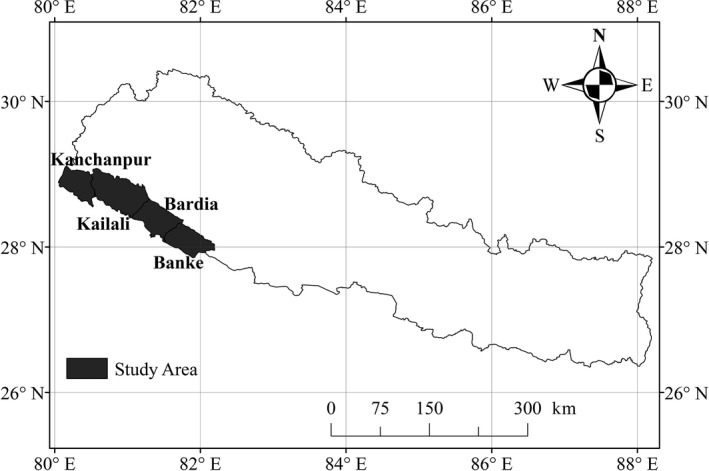
In this study, we identified suitable habitat for wild Asian elephants in the Western Terai region of Nepal using Maximum Entropy (MaxEnt) software.
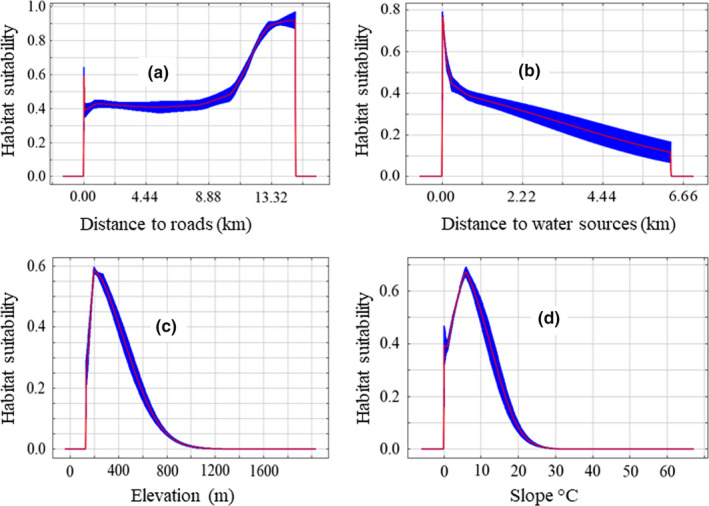
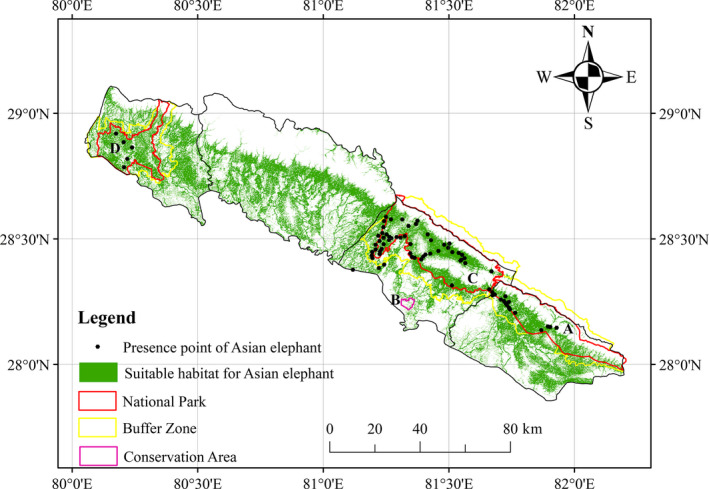
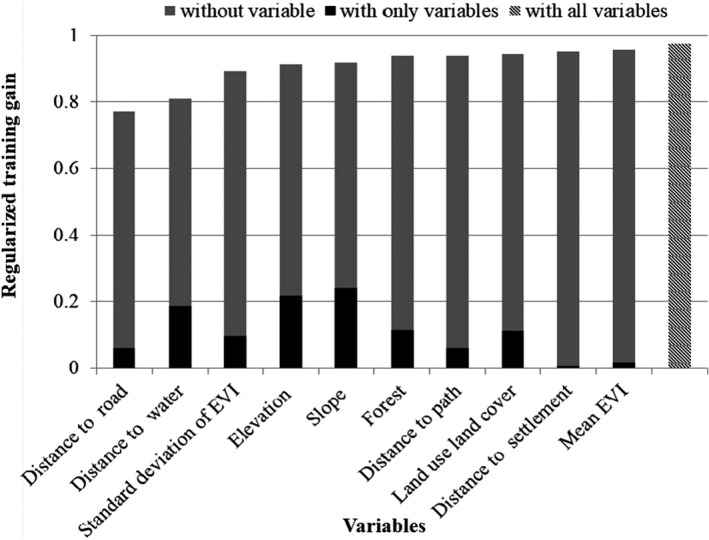
Of 9,207 km, we identified 3194.82 km as suitable habitat for wild Asian elephants in the study area. Approximately 40% of identified habitat occurs in existing protected areas. Most of these habitat patches are smaller than previous estimations of the species home range, and this may reduce the probability of the species continued survival in the study area. Proximity to roads was identified as the most important factor defining habitat suitability, with elephants preferring habitats far from roads.
We conclude that further habitat fragmentation in the study area can be reduced by avoiding the construction of new roads and connectivity between areas of existing suitable habitat can be increased through the identification and management of wildlife corridors between habitat patches.
目前关于野生亚洲象栖息地适宜性、基础设施对其分布的影响以及现有栖息地范围和连通性的研究非常少。与栖息地相关的信息对于该物种的保护至关重要。
在本研究中,我们使用最大熵(MaxEnt)软件确定了尼泊尔西部特赖地区野生亚洲象的适宜栖息地。
在9207公里的区域中,我们确定研究区域内3194.82公里为野生亚洲象的适宜栖息地。约40%的已确定栖息地位于现有保护区内。这些栖息地斑块大多比该物种先前估计的家域范围小,这可能会降低该物种在研究区域持续生存的概率。靠近道路被确定为定义栖息地适宜性的最重要因素,大象更喜欢远离道路的栖息地。
我们得出结论,通过避免修建新道路,可以减少研究区域内进一步的栖息地破碎化,并且通过识别和管理栖息地斑块之间的野生动物走廊,可以增加现有适宜栖息地之间的连通性。