Villumsen Sidsel, Adler-Milstein Julia, Nøhr Christian
Center for Health Informatics and Technology, Maersk Mc-Kinney Moller Institute, University of Southern Denmark, Odense, Denmark.
Center for Clinical Informatics and Improvement Research, School of Medicine, University of California, San Francisco, California, USA.
JAMIA Open. 2020 Mar 20;3(1):132-140. doi: 10.1093/jamiaopen/ooz071. eCollection 2020 Apr.
There has been substantial growth in eHealth over the past decade, driven by expectations of improved healthcare system performance. Despite substantial eHealth investment, little is known about the monitoring and evaluation strategies for gauging progress in eHealth availability and use. This scoping review aims to map the existing literature and depict the predominant approaches and methodological recommendations to national and regional monitoring and evaluation of eHealth availability and use, to advance national strategies for monitoring and evaluating eHealth.
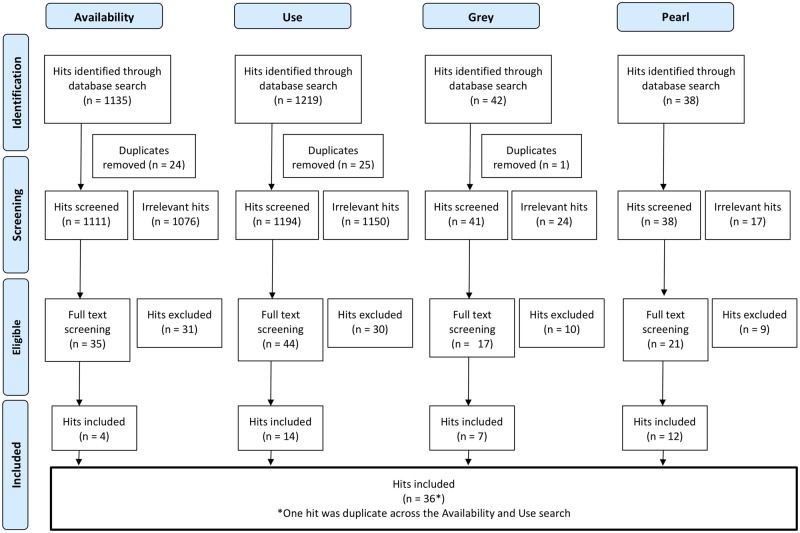
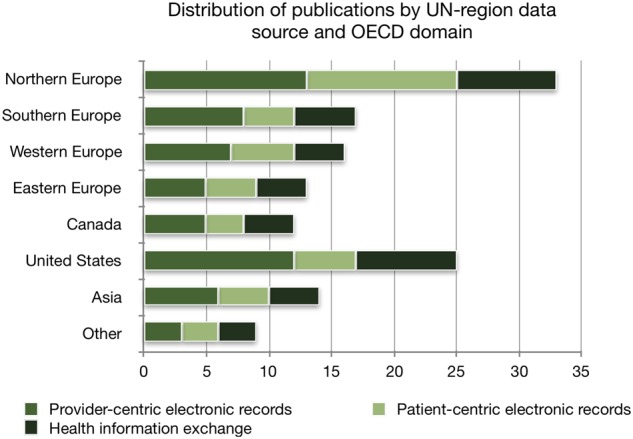
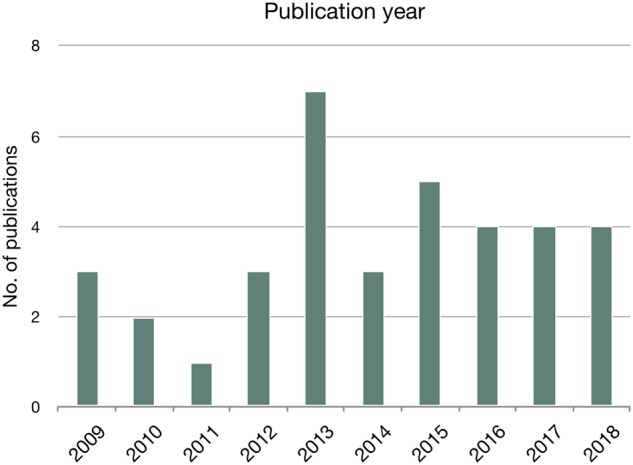
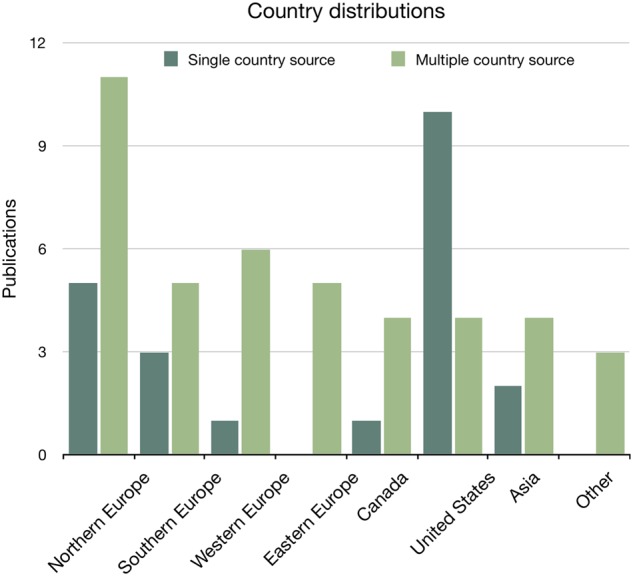
Peer-reviewed and grey literature on monitoring and evaluation of eHealth availability and use published between January 1, 2009, and March 11, 2019, were eligible for inclusion. A total of 2354 publications were identified and 36 publications were included after full-text review. Data on publication type (eg, empirical research), country, level (national or regional), publication year, method (eg, survey), and domain (eg, provider-centric electronic record) were charted.
The majority of publications monitored availability alone or applied a combination of availability and use measures. Surveys were the most common data collection method (used in 86% of the publications). Organization for Economic Co-operation and Development (OECD), European Commission, Canada Health Infoway, and World Health Organization (WHO) have developed comprehensive eHealth monitoring and evaluation methodology recommendations.
Establishing continuous national eHealth monitoring and evaluation, based on international approaches and recommendations, could improve the ability for cross-country benchmarking and learning. This scoping review provides an overview of the predominant approaches to and recommendations for national and regional monitoring and evaluation of eHealth. It thereby provides a starting point for developing national eHealth monitoring strategies.
在过去十年中,受改善医疗保健系统绩效期望的推动,电子健康领域取得了显著增长。尽管在电子健康方面投入巨大,但对于衡量电子健康可及性和使用进展情况的监测和评估策略却知之甚少。本范围综述旨在梳理现有文献,描述国家和区域层面监测和评估电子健康可及性和使用情况的主要方法及方法学建议,以推动国家电子健康监测和评估战略的发展。
纳入2009年1月1日至2019年3月11日期间发表的关于电子健康可及性和使用情况监测与评估的同行评审文献和灰色文献。共识别出2354篇出版物,经过全文评审后纳入36篇。对出版物类型(如实证研究)、国家、层面(国家或区域)、出版年份、方法(如调查)和领域(如以提供者为中心的电子记录)的数据进行了梳理。
大多数出版物仅监测可及性,或采用可及性和使用措施相结合的方式。调查是最常见的数据收集方法(86%的出版物使用)。经济合作与发展组织(经合组织)、欧盟委员会、加拿大卫生信息高速公路和世界卫生组织(世卫组织)已制定了全面的电子健康监测和评估方法建议。
基于国际方法和建议建立持续的国家电子健康监测和评估,可提高跨国标杆对比和学习的能力。本范围综述概述了国家和区域层面监测和评估电子健康的主要方法及建议。因此,它为制定国家电子健康监测战略提供了一个起点。