State Key Laboratory of Military Stomatology & National Clinical Research Center for Oral Diseases & Shaanxi International Joint Research Center for Oral Diseases, Center for Tissue Engineering, School of Stomatology, The Fourth Military Medical University, Xi'an, China.
State Key Laboratory of Military Stomatology & National Clinical Research Center for Oral Diseases & Shaanxi Key Laboratory of Stomatology, Department of Prosthodontics, School of Stomatology, The Fourth Military Medical University, Xi'an, China.
Cell Prolif. 2020 Aug;53(8):e12830. doi: 10.1111/cpr.12830. Epub 2020 Jul 1.
Skin serves as the major interface between the external environment and body which is liable to many kinds of injuries. Mesenchymal stem cell (MSC) therapy has been widely used and became a promising strategy. Pre-treatment with chemical agents, hypoxia or gene modifications can partially protect MSCs against injury, and the pre-treated MSCs show the improved differentiation, homing capacity, survival and paracrine effects regard to attenuating injury. The aim of this study was to investigate whether the exosomes from the educated MSCs contribute to accelerate wound healing process.
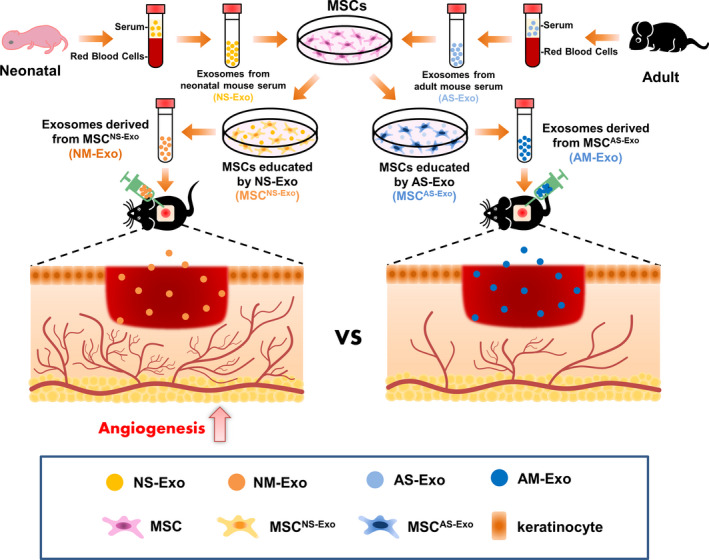
We extracted the exosomes from the two educated MSCs and utilized them in the cutaneous wound healing model. The pro-angiogenetic effect of exosomes on endothelial cells was also investigated.
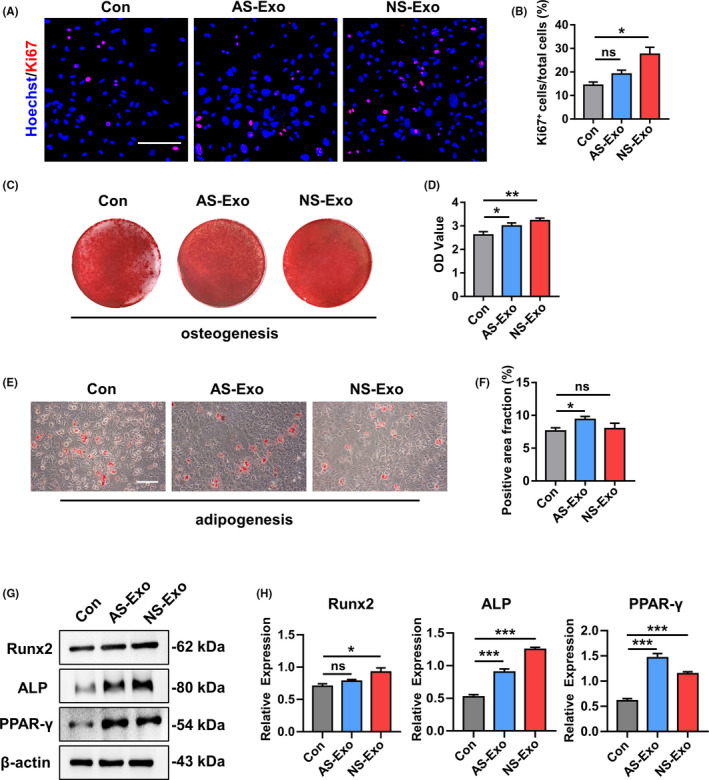
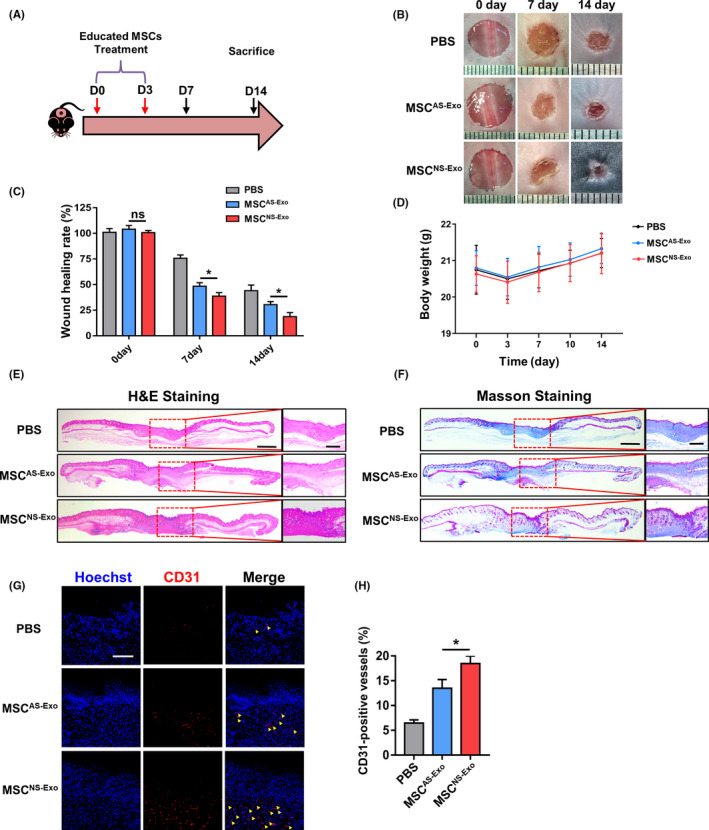
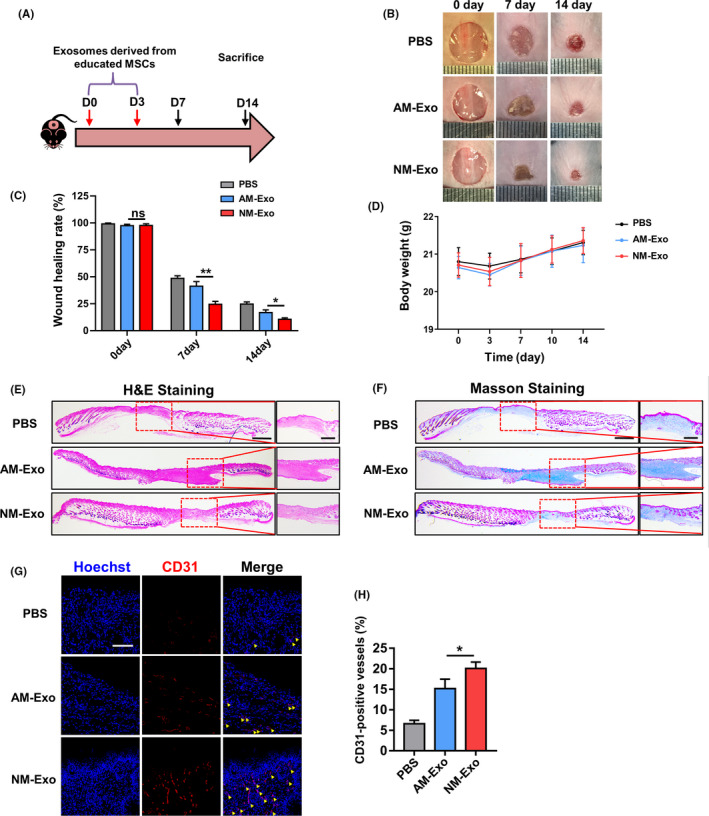
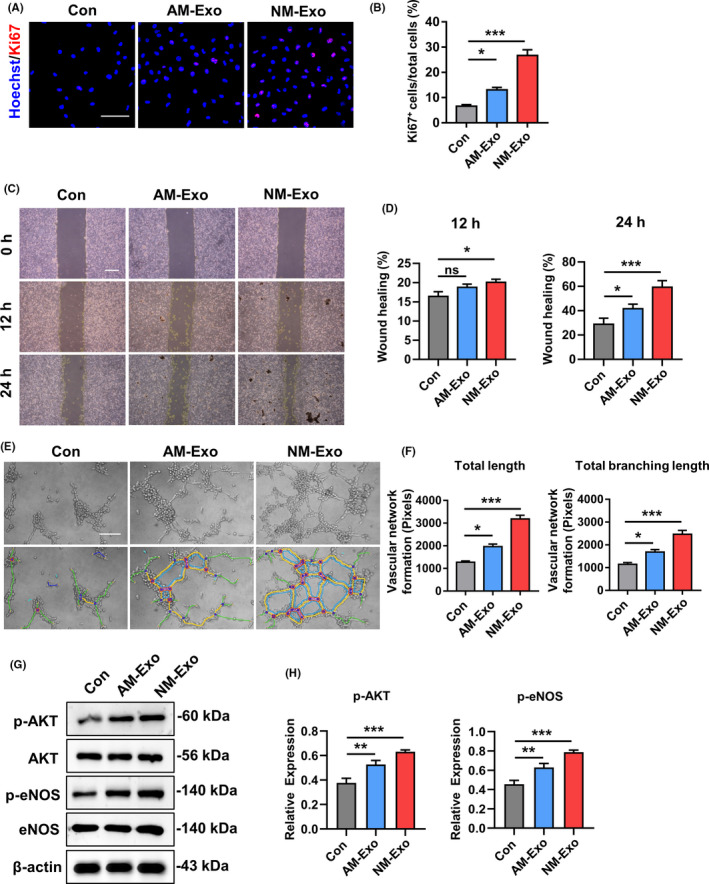
We firstly found that MSCs pre-treated by exosomes from neonatal serum significantly improved their biological functions and the effect of therapy. Moreover, we extracted the exosomes from the educated MSCs and utilized them to treat the cutaneous wound model directly. We found that the released exosomes from MSCs which educated by neonatal serum before had the more outstanding performance in therapeutic effect. Mechanistically, we revealed that the recipient endothelial cells (ECs) were targeted and the exosomes promoted their functions to enhance angiogenesis via regulating AKT/eNOS pathway.
Our findings unravelled the positive effect of the upgraded exosomes from the educated MSCs as a promising cell-free therapeutic strategy for cutaneous wound healing.
皮肤是机体与外界环境之间的主要界面,容易受到多种损伤。间充质干细胞(MSC)治疗已被广泛应用,并成为一种很有前途的策略。化学试剂预处理、缺氧或基因修饰可以部分保护 MSC 免受损伤,预处理后的 MSC 在减轻损伤方面显示出改善的分化、归巢能力、存活和旁分泌作用。本研究旨在探讨诱导 MSC 的外泌体是否有助于加速伤口愈合过程。
我们从两种诱导 MSC 中提取外泌体,并将其用于皮肤伤口愈合模型中。还研究了外泌体对内皮细胞的促血管生成作用。
我们首先发现,经新生儿血清来源的外泌体预处理的 MSC 显著改善了其生物学功能和治疗效果。此外,我们还从诱导 MSC 中提取外泌体,并直接用于治疗皮肤伤口模型。我们发现,经新生儿血清诱导的 MSC 释放的外泌体在治疗效果方面表现更为出色。从机制上讲,我们揭示了外泌体通过调节 AKT/eNOS 通路靶向受者内皮细胞(EC)并促进其功能以增强血管生成。
我们的研究结果揭示了经过升级的诱导 MSC 的外泌体作为一种有前途的无细胞治疗策略在皮肤伤口愈合中的积极作用。