Institute of Biotechnology, University of Helsinki, Helsinki, 00014, Finland.
Graduate School of Pharmaceutical Sciences, Kyoto University, Sakyo-ku, Kyoto 606-8501, Japan.
ACS Chem Biol. 2020 Aug 21;15(8):2125-2136. doi: 10.1021/acschembio.0c00325. Epub 2020 Jul 20.
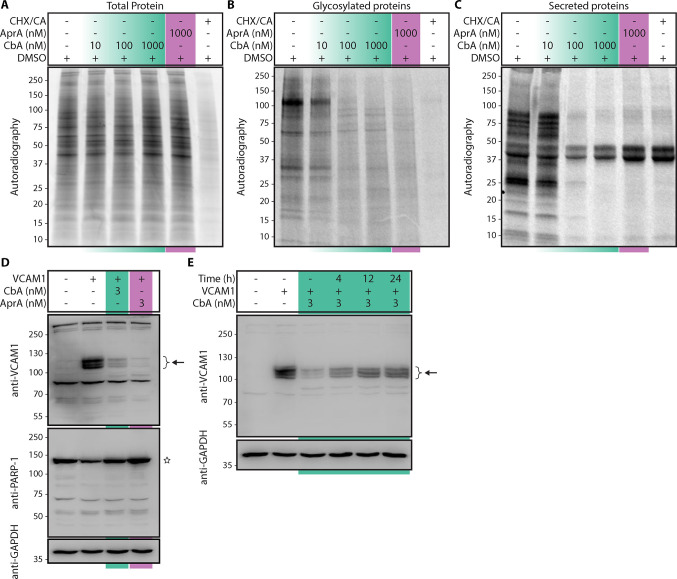
Coibamide A (CbA) is a marine natural product with potent antiproliferative activity against human cancer cells and a unique selectivity profile. Despite promising antitumor activity, the mechanism of cytotoxicity and specific cellular target of CbA remain unknown. Here, we develop an optimized synthetic CbA photoaffinity probe (photo-CbA) and use it to demonstrate that CbA directly targets the Sec61α subunit of the Sec61 protein translocon. CbA binding to Sec61 results in broad substrate-nonselective inhibition of ER protein import and potent cytotoxicity against specific cancer cell lines. CbA targets a lumenal cavity of Sec61 that is partially shared with known Sec61 inhibitors, yet profiling against resistance conferring Sec61α mutations identified from human HCT116 cells suggests a distinct binding mode for CbA. Specifically, despite conferring strong resistance to all previously known Sec61 inhibitors, the Sec61α mutant R66I remains sensitive to CbA. A further unbiased screen for Sec61α resistance mutations identified the CbA-resistant mutation S71P, which confirms nonidentical binding sites for CbA and apratoxin A and supports the susceptibility of the Sec61 plug region for channel inhibition. Remarkably, CbA, apratoxin A, and ipomoeassin F do not display comparable patterns of potency and selectivity in the NCI60 panel of human cancer cell lines. Our work connecting CbA activity with selective prevention of secretory and membrane protein biogenesis by inhibition of Sec61 opens up possibilities for developing new Sec61 inhibitors with improved drug-like properties that are based on the coibamide pharmacophore.
科伊酰胺 A(CbA)是一种具有强效抗人类癌细胞增殖活性的海洋天然产物,且具有独特的选择性特征。尽管具有有前景的抗肿瘤活性,但 CbA 的细胞毒性机制和特定细胞靶标仍不清楚。在这里,我们开发了一种优化的合成 CbA 光亲和探针(photo-CbA),并使用它证明 CbA 直接靶向 Sec61 蛋白易位通道的 Sec61α 亚基。CbA 与 Sec61 结合导致 ER 蛋白输入的广泛底物非选择性抑制和对特定癌细胞系的有效细胞毒性。CbA 靶向 Sec61 的一个腔室,该腔室与已知的 Sec61 抑制剂部分共享,但对来自人 HCT116 细胞的赋予抗性的 Sec61α 突变进行分析表明 CbA 具有独特的结合模式。具体而言,尽管赋予所有先前已知的 Sec61 抑制剂强烈的抗性,但 Sec61α 突变体 R66I 仍然对 CbA 敏感。针对 Sec61α 抗性突变的进一步无偏筛选确定了 CbA 抗性突变 S71P,这证实了 CbA 和 apratoxin A 的结合位点不同,并支持 Sec61 塞子区域对通道抑制的敏感性。值得注意的是,CbA、apratoxin A 和 ipomoeassin F 在 NCI60 人类癌细胞系panel 中没有显示出可比的效力和选择性模式。我们将 CbA 活性与通过抑制 Sec61 选择性预防分泌和膜蛋白生物发生联系起来的工作为开发基于科伊酰胺药效团的具有改善的类药性的新型 Sec61 抑制剂开辟了可能性。