Department of Physics, Harvard University, Cambridge, MA, United States of America.
Harvard-MIT Center for Ultracold Atoms, Cambridge, MA, United States of America.
PLoS One. 2020 Jul 1;15(7):e0234851. doi: 10.1371/journal.pone.0234851. eCollection 2020.
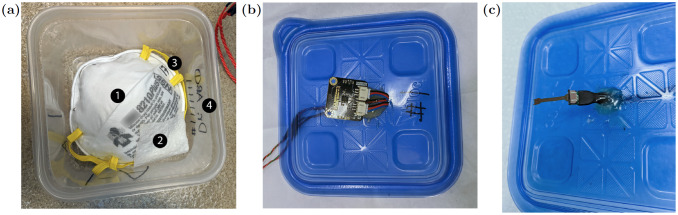
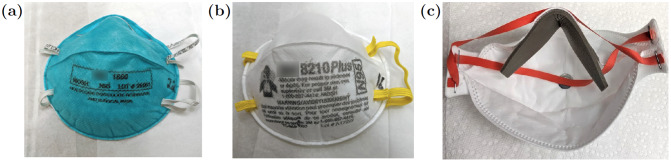
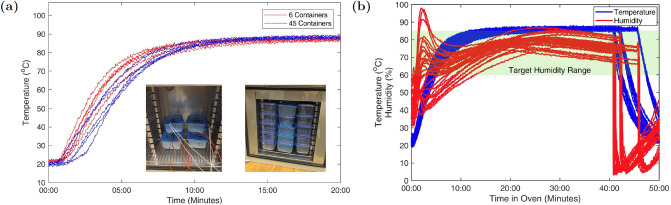
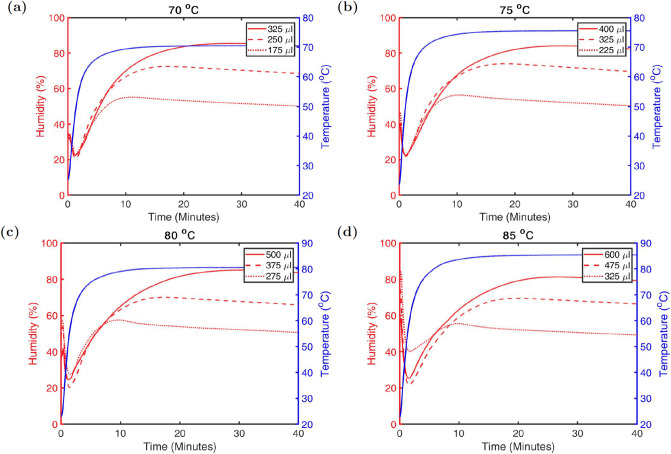
A lack of N95 Filtering Facepiece Respirators (FFRs) during the COVID-19 crisis has placed healthcare workers at risk. It is important for any N95 reuse strategy to determine the effects that proposed protocols would have on the physical functioning of the mask, as well as the practical aspects of implementation. Here we propose and implement a method of heating N95 respirators with moisture (85°C, 60-85% humidity). We test both mask filtration efficiency and fit to validate this process. Our tests focus on the 3M 1860, 3M 1870, and 3M 8210 Plus N95 models. After five cycles of the heating procedure, all three respirators pass both quantitative fit testing (score of >100) and show no degradation of mask filtration efficiency. We also test the Chen Heng V9501 KN95 and HKYQ N95 finding no degradation of mask filtration efficiency, however even for unheated masks these scored <50 for every fit test. The heating method presented here is scalable from individual masks to over a thousand a day with a single industrial convection oven, making this method practical for local application inside health-care facilities.
在 COVID-19 危机期间,缺乏 N95 过滤式面罩呼吸器 (FFR) 使医护人员面临风险。对于任何 N95 重复使用策略,重要的是要确定所提出的协议对口罩的物理功能以及实施的实际方面的影响。在这里,我们提出并实施了一种用湿气加热 N95 呼吸器的方法(85°C,60-85%湿度)。我们测试了口罩过滤效率和贴合度,以验证此过程。我们的测试重点是 3M 1860、3M 1870 和 3M 8210 Plus N95 型号。经过五次加热循环后,所有三种呼吸器都通过了定量贴合测试(得分>100),并且没有显示口罩过滤效率的降低。我们还测试了 Chen Heng V9501 KN95 和 HKYQ N95,没有发现口罩过滤效率降低的情况,但即使是未加热的口罩,每次贴合测试的得分都低于 50。这里提出的加热方法可以从单个口罩扩展到每天一千多个口罩,使用单个工业对流烤箱,因此这种方法在医疗保健设施内部的本地应用中非常实用。