Department of Neuroscience, Genentech, Inc., South San Francisco, CA, USA.
Department of Bioinformatics and Computational Biology, Genentech, Inc., South San Francisco, CA, USA.
Cell Rep. 2020 Jun 30;31(13):107843. doi: 10.1016/j.celrep.2020.107843.
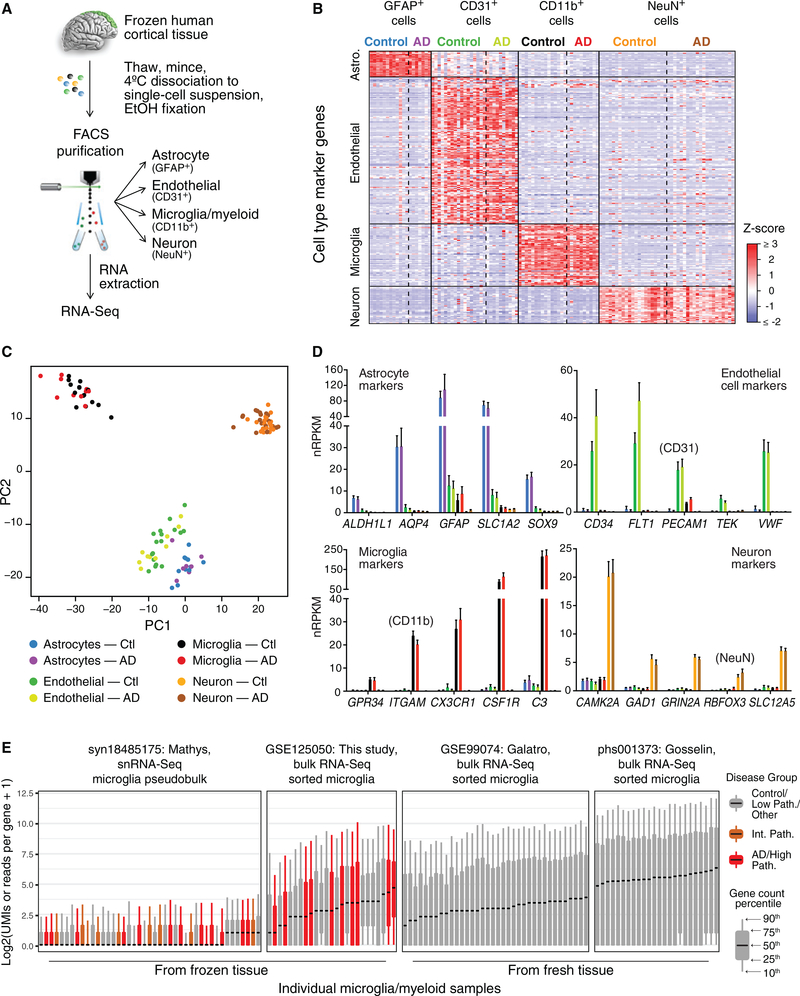
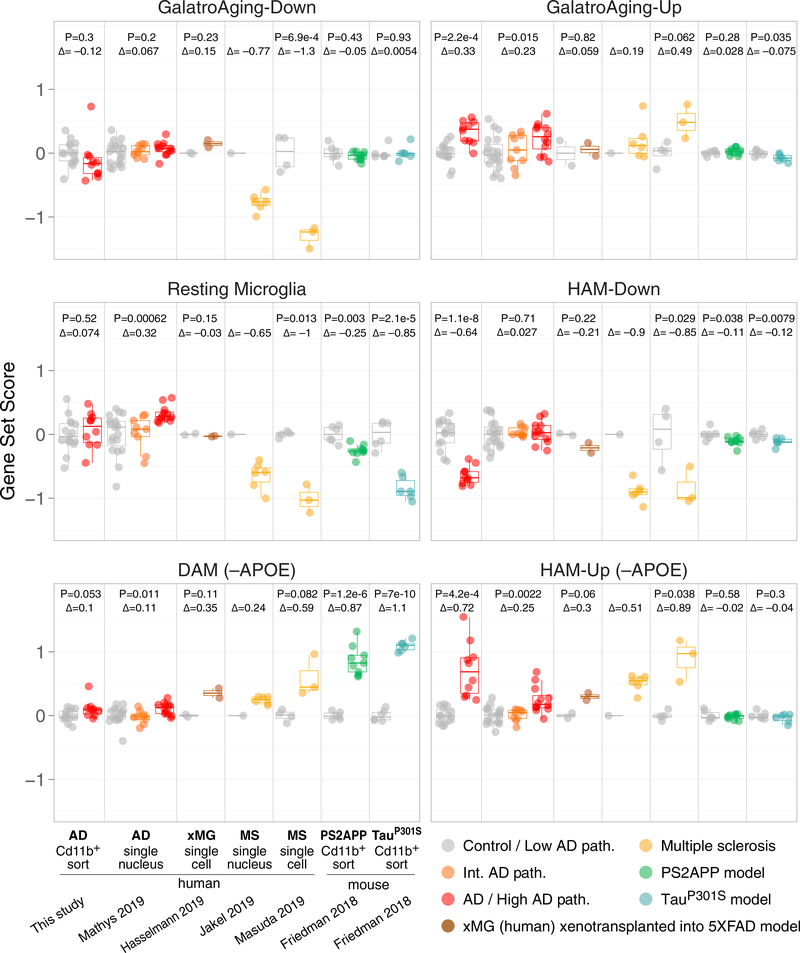
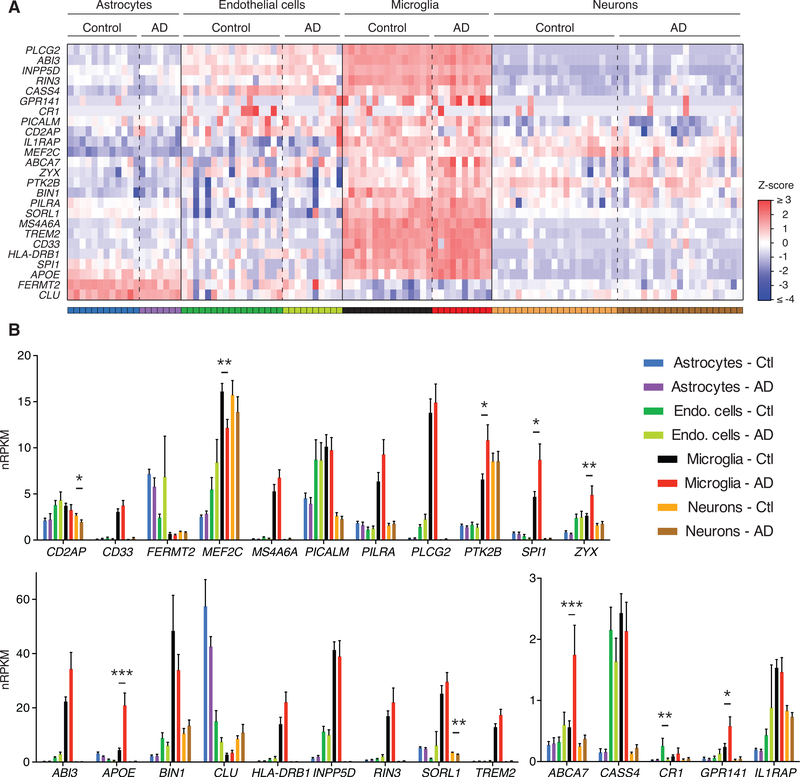
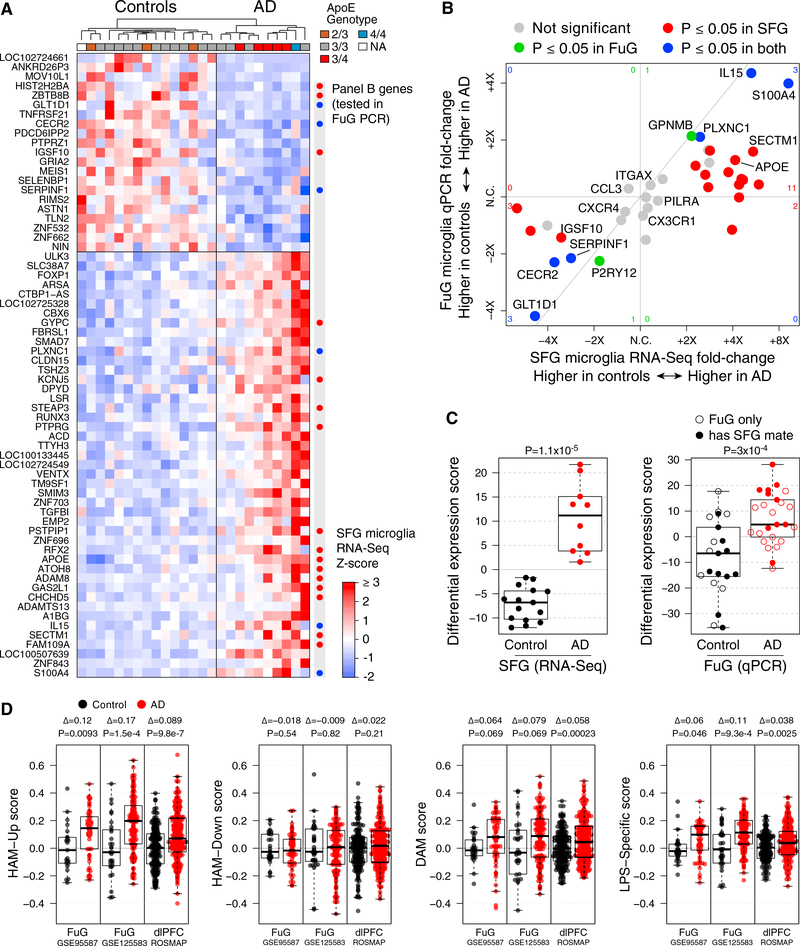
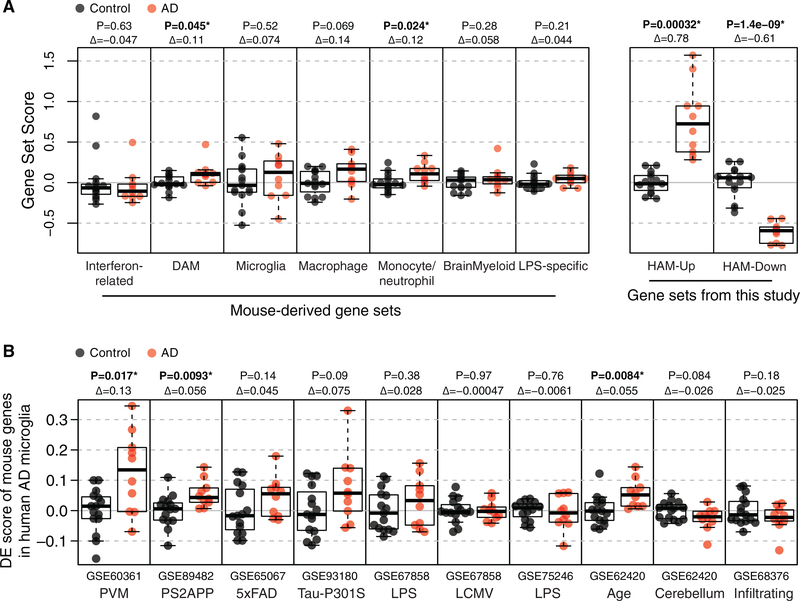
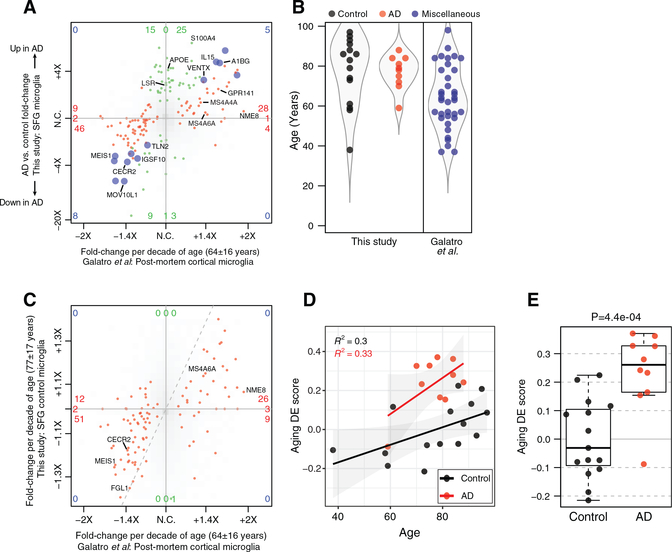
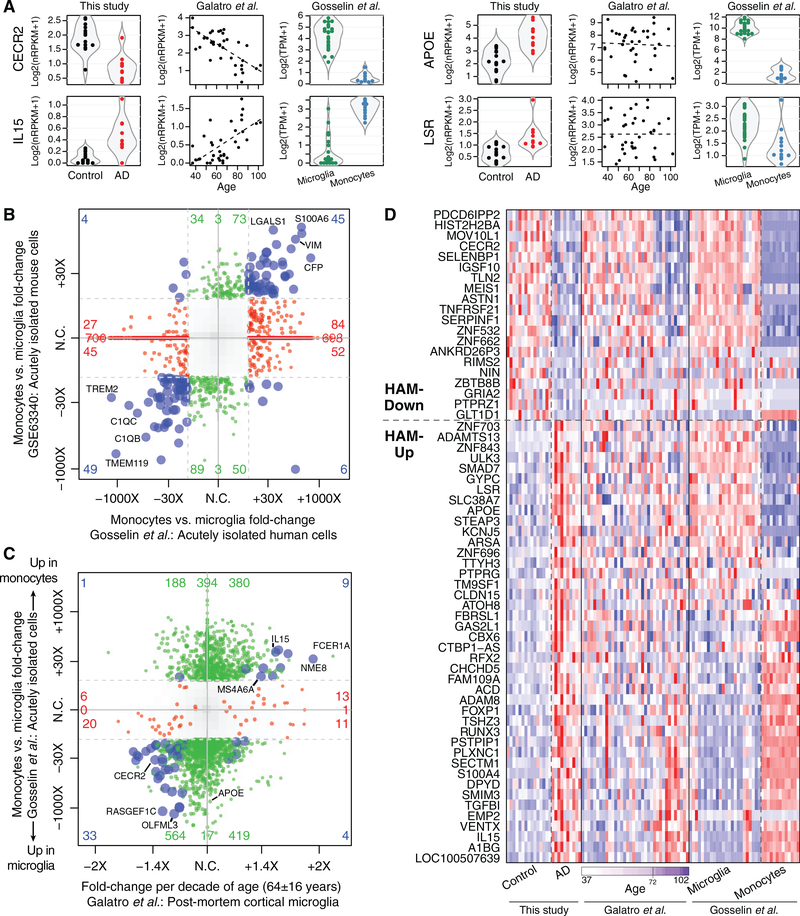
Damage-associated microglia (DAM) profiles observed in Alzheimer's disease (AD)-related mouse models reflect an activation state that could modulate AD risk or progression. To learn whether human AD microglia (HAM) display a similar profile, we develop a method for purifying cell types from frozen cerebrocortical tissues for RNA-seq analysis, allowing better transcriptome coverage than typical single-nucleus RNA-seq approaches. The HAM profile we observe bears little resemblance to the DAM profile. Instead, HAM display an enhanced human aging profile, in addition to other disease-related changes such as APOE upregulation. Analyses of whole-tissue RNA-seq and single-cell/nucleus RNA-seq datasets corroborate our findings and suggest that the lack of DAM response in human microglia occurs specifically in AD tissues, not other neurodegenerative settings. These results, which can be browsed at http://research-pub.gene.com/BrainMyeloidLandscape, provide a genome-wide picture of microglial activation in human AD and highlight considerable differences between mouse models and human disease.
在与阿尔茨海默病(AD)相关的小鼠模型中观察到的损伤相关小胶质细胞(DAM)表型反映了一种可能调节 AD 风险或进展的激活状态。为了了解人类 AD 小胶质细胞(HAM)是否显示出类似的表型,我们开发了一种从冷冻大脑皮质组织中纯化细胞类型进行 RNA-seq 分析的方法,与典型的单核 RNA-seq 方法相比,该方法能够更好地覆盖转录组。我们观察到的 HAM 表型与 DAM 表型几乎没有相似之处。相反,HAM 显示出增强的人类衰老表型,此外还有其他与疾病相关的变化,如 APOE 上调。对全组织 RNA-seq 和单细胞/核 RNA-seq 数据集的分析证实了我们的发现,并表明人类小胶质细胞中缺乏 DAM 反应特定发生在 AD 组织中,而不是其他神经退行性疾病环境中。这些结果可以在 http://research-pub.gene.com/BrainMyeloidLandscape 上浏览,提供了人类 AD 中小胶质细胞激活的全基因组图谱,并强调了小鼠模型和人类疾病之间的巨大差异。