Taebi Amirtahà, Pillai Rex M, Roudsari Bahman S, Vu Catherine T, Roncali Emilie
Department of Biomedical Engineering, University of California Davis, One Shields Ave., Davis, CA 95616, USA.
Department of Radiology, University of California Davis, 4860 Y Street, Suite 3100, Sacramento, CA 95817, USA.
Bioengineering (Basel). 2020 Jun 29;7(3):64. doi: 10.3390/bioengineering7030064.
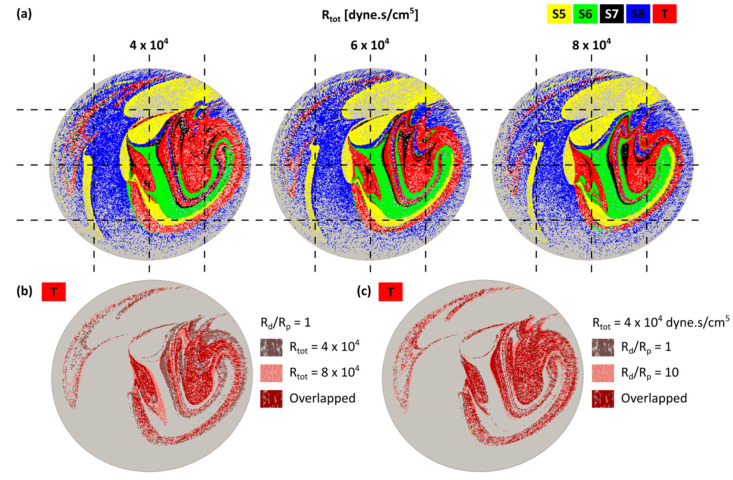
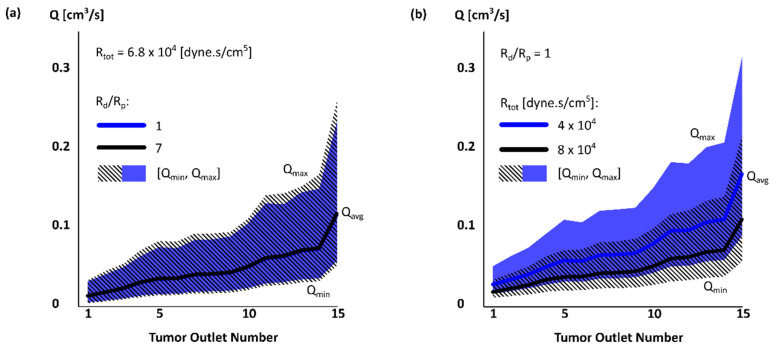
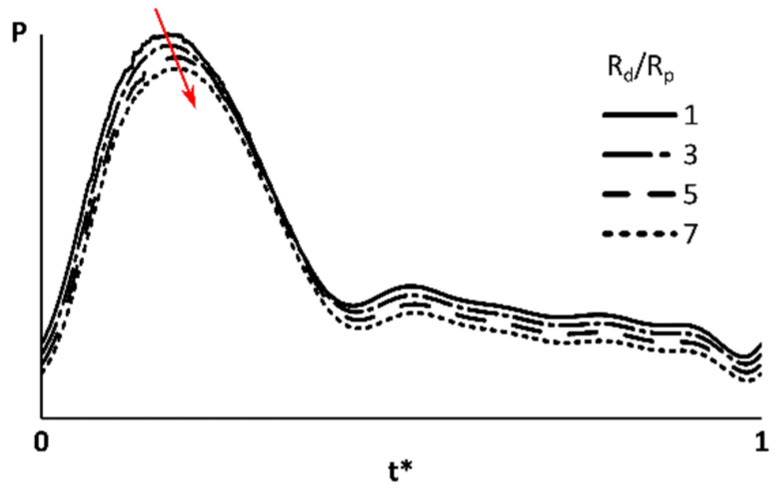
Transarterial embolization is a minimally invasive treatment for advanced liver cancer using microspheres loaded with a chemotherapeutic drug or radioactive yttrium-90 (Y) that are injected into the hepatic arterial tree through a catheter. For personalized treatment, the microsphere distribution in the liver should be optimized through the injection volume and location. Computational fluid dynamics (CFD) simulations of the blood flow in the hepatic artery can help estimate this distribution if carefully parameterized. An important aspect is the choice of the boundary conditions imposed at the inlet and outlets of the computational domain. In this study, the effect of boundary conditions on the hepatic arterial tree hemodynamics was investigated. The outlet boundary conditions were modeled with three-element Windkessel circuits, representative of the downstream vasculature resistance. Results demonstrated that the downstream vasculature resistance affected the hepatic artery hemodynamics such as the velocity field, the pressure field and the blood flow streamline trajectories. Moreover, the number of microspheres received by the tumor significantly changed (more than 10% of the total injected microspheres) with downstream resistance variations. These findings suggest that patient-specific boundary conditions should be used in order to achieve a more accurate drug distribution estimation with CFD in transarterial embolization treatment planning.
经动脉栓塞是一种针对晚期肝癌的微创治疗方法,通过导管将载有化疗药物或放射性钇-90(Y)的微球注入肝动脉树。为实现个性化治疗,应通过注射量和注射位置来优化肝脏内微球的分布。如果进行仔细的参数化,对肝动脉内血流的计算流体动力学(CFD)模拟有助于估计这种分布。一个重要方面是在计算域的入口和出口处施加的边界条件的选择。在本研究中,研究了边界条件对肝动脉树血流动力学的影响。出口边界条件采用三元Windkessel电路进行建模,代表下游血管阻力。结果表明,下游血管阻力会影响肝动脉血流动力学,如速度场、压力场和血流流线轨迹。此外,随着下游阻力的变化,肿瘤接收的微球数量显著改变(超过注入微球总数的10%)。这些发现表明,在经动脉栓塞治疗规划中,为了通过CFD实现更准确的药物分布估计,应使用患者特异性边界条件。