Department of Materials Science and Engineering, Northwestern University, Evanston, IL, USA.
School of Applied and Engineering Physics, Cornell University, Ithaca, NY, USA.
Nature. 2020 Jul;583(7814):66-71. doi: 10.1038/s41586-020-2433-3. Epub 2020 Jul 1.
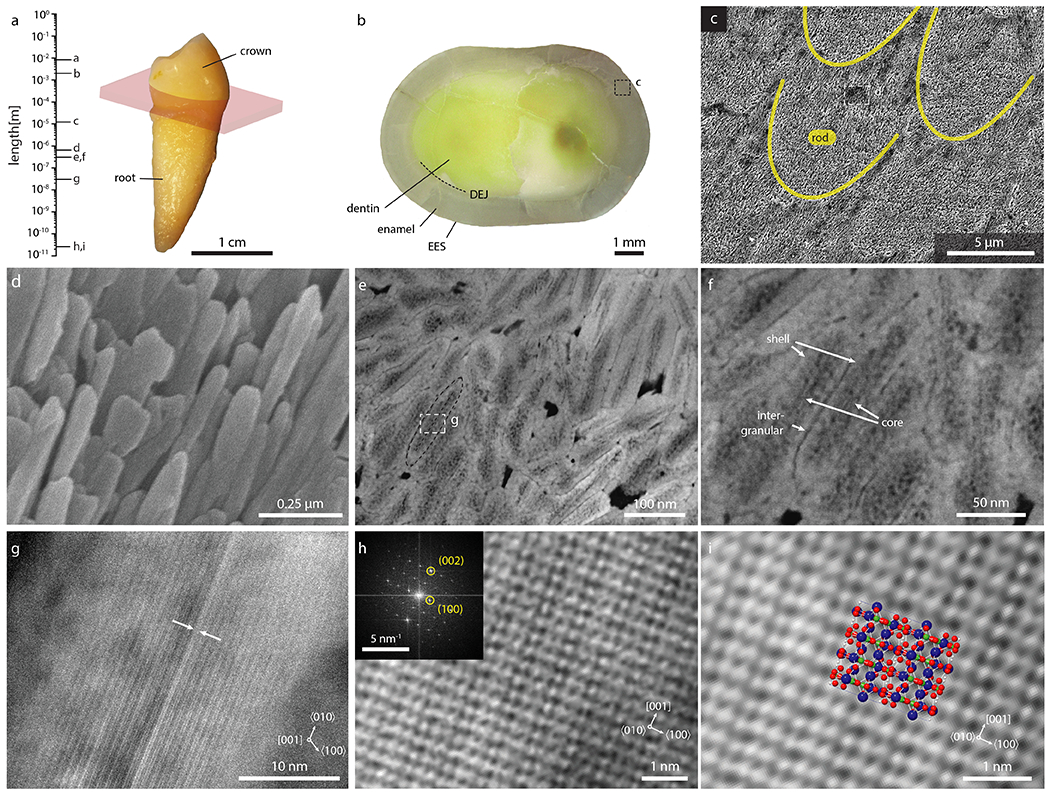
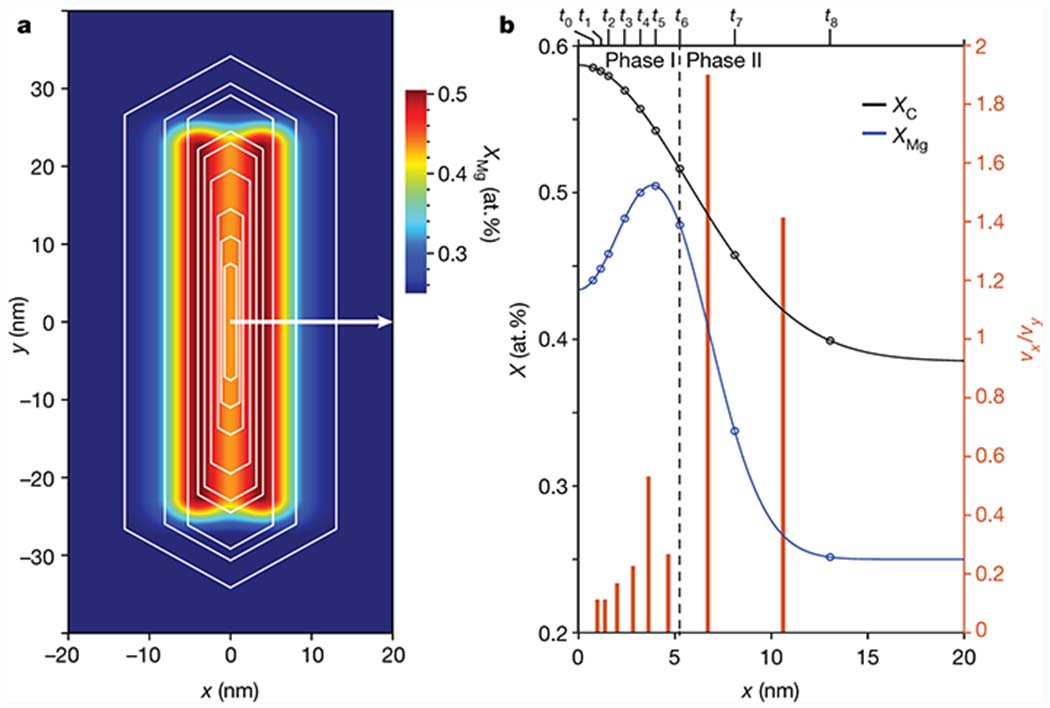
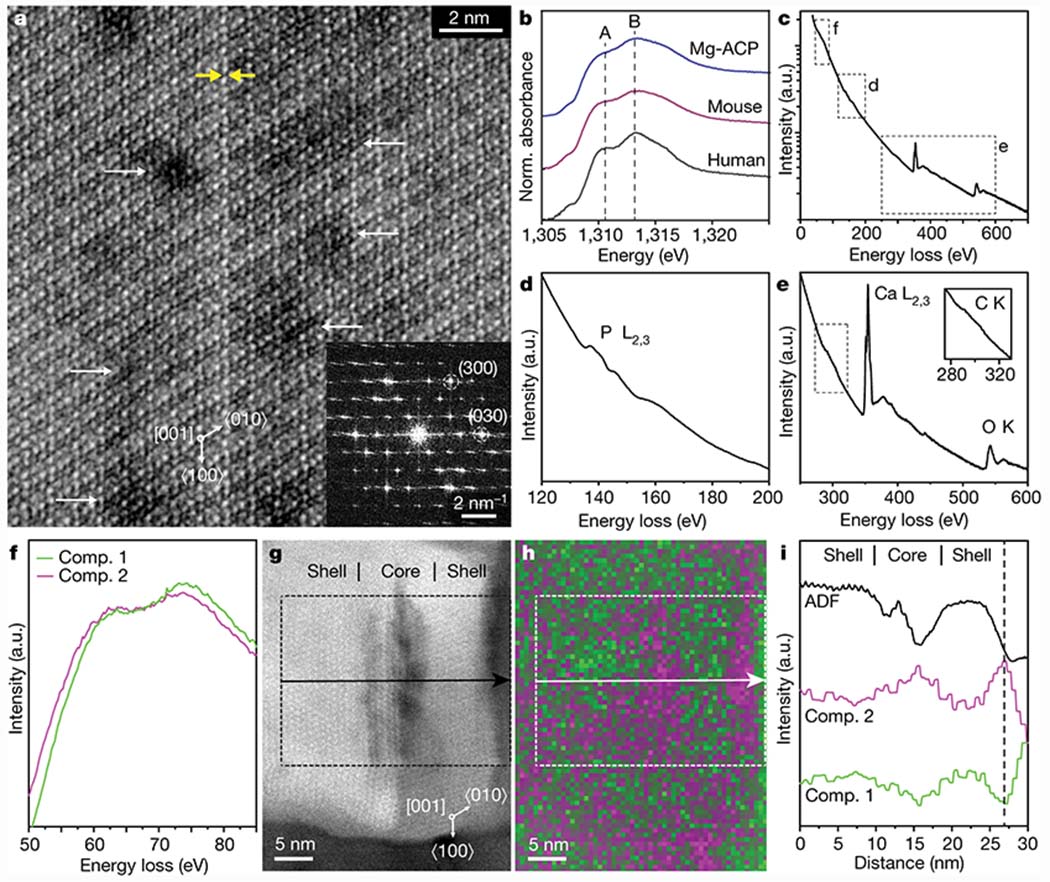
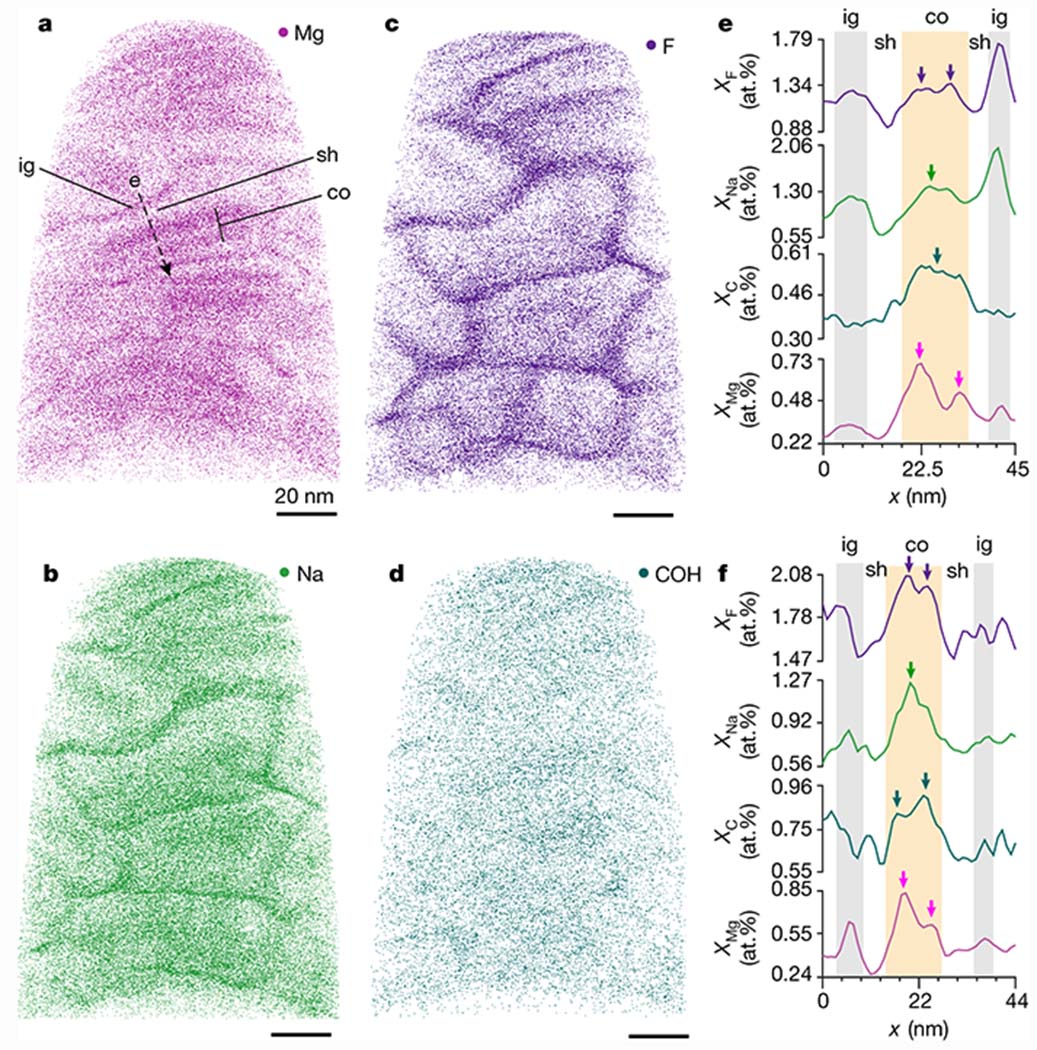
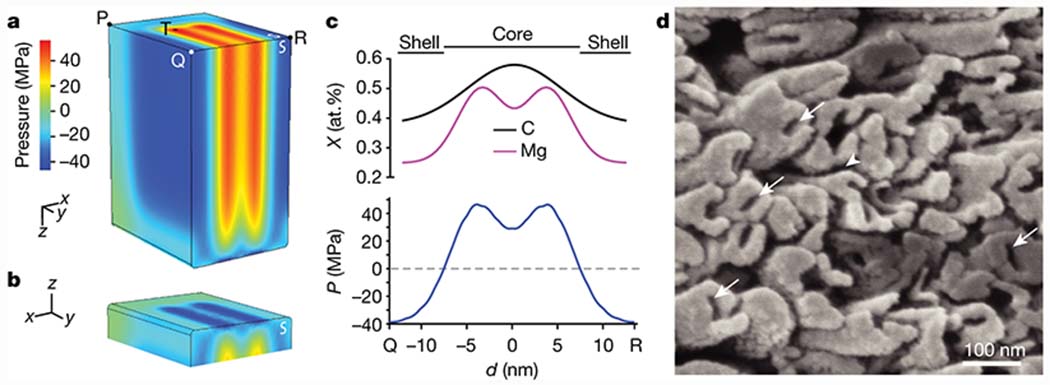
Dental enamel is a principal component of teeth, and has evolved to bear large chewing forces, resist mechanical fatigue and withstand wear over decades. Functional impairment and loss of dental enamel, caused by developmental defects or tooth decay (caries), affect health and quality of life, with associated costs to society. Although the past decade has seen progress in our understanding of enamel formation (amelogenesis) and the functional properties of mature enamel, attempts to repair lesions in this material or to synthesize it in vitro have had limited success. This is partly due to the highly hierarchical structure of enamel and additional complexities arising from chemical gradients. Here we show, using atomic-scale quantitative imaging and correlative spectroscopies, that the nanoscale crystallites of hydroxylapatite (Ca(PO)(OH)), which are the fundamental building blocks of enamel, comprise two nanometric layers enriched in magnesium flanking a core rich in sodium, fluoride and carbonate ions; this sandwich core is surrounded by a shell with lower concentration of substitutional defects. A mechanical model based on density functional theory calculations and X-ray diffraction data predicts that residual stresses arise because of the chemical gradients, in agreement with preferential dissolution of the crystallite core in acidic media. Furthermore, stresses may affect the mechanical resilience of enamel. The two additional layers of hierarchy suggest a possible new model for biological control over crystal growth during amelogenesis, and hint at implications for the preservation of biomarkers during tooth development.
牙釉质是牙齿的主要成分,它经过进化可以承受大的咀嚼力,抵抗机械疲劳,并在几十年的时间里经受磨损。由于发育缺陷或龋齿(蛀牙)导致的牙釉质功能障碍和丧失,会影响健康和生活质量,并给社会带来相关成本。尽管在过去的十年中,我们对牙釉质形成(成釉作用)和成熟牙釉质的功能特性的理解已经取得了进展,但试图修复这种材料的损伤或在体外合成它的尝试收效甚微。这部分是由于牙釉质的高度层次结构以及化学梯度带来的额外复杂性所致。在这里,我们使用原子尺度定量成像和相关光谱学技术表明,羟基磷灰石(Ca(PO)(OH))的纳米级微晶,是牙釉质的基本组成部分,由两个富含镁的纳米层组成,夹在富含钠、氟和碳酸根离子的核心层两侧;这种夹心核心被取代缺陷浓度较低的壳层包围。基于密度泛函理论计算和 X 射线衍射数据的力学模型预测,由于化学梯度的存在会产生残余应力,这与在酸性介质中优先溶解晶核的情况一致。此外,应力可能会影响牙釉质的机械弹性。这两个额外的层次结构表明,在成釉作用过程中,生物控制晶体生长可能存在一种新的模型,并暗示了在牙齿发育过程中保存生物标志物的意义。