Bhattarai Hitesh Kumar, Shrestha Shreya, Rokka Kabita, Shakya Rosy
Department of Biotechnology, Kathmandu University, Dhulikhel, Nepal.
J Osteoporos. 2020 Jun 17;2020:9324505. doi: 10.1155/2020/9324505. eCollection 2020.
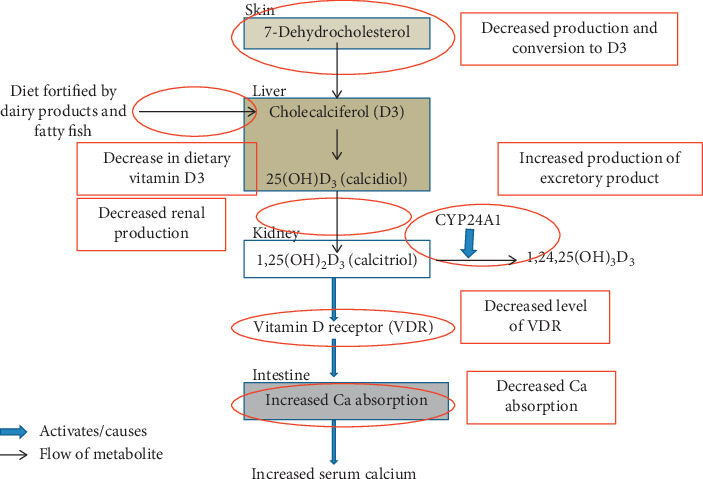
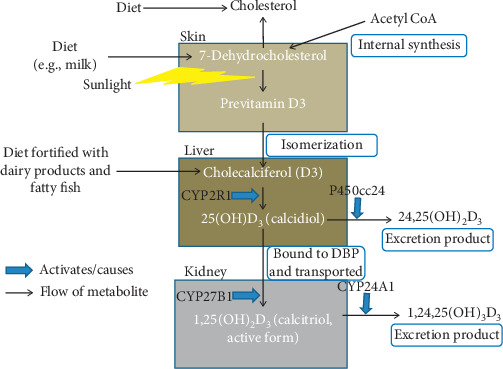
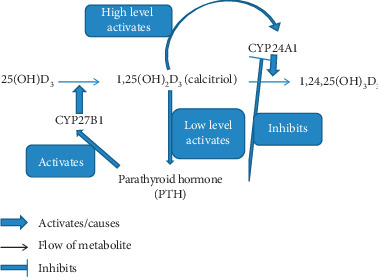
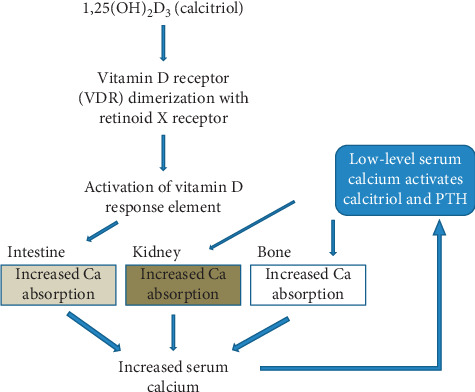
Bone health of the elderly is a major global health concern, since about 1 in 3 women and 1 in 5 men suffer from bone loss and fractures, often called osteoporosis, in old age. Bone health is a complex issue affected by multiple hormones and minerals. Among all the hormones involved in bone health, calcitriol (also vitamin D), parathyroid, and sex hormones (especially estrogen) have been discussed in this review paper. We have discussed the metabolism of these hormones and their effects on bone health. Vitamin D can be obtained from diet or formed from 7-dehydrocholesterol found under the skin in the presence of sunlight. The active form, calcitriol, causes dimerization of vitamin D receptor and acts on the bones, intestine, and kidney to regulate the level of calcium in blood. Similarly, parathyroid hormone is secreted when the serum level of calcium is low. It helps regulate the level of blood calcium through calcitriol. Sex hormones regulate bone modeling at an early age and remodeling later in life. Loss of ovarian function and a decrement in the level of production of estrogen are marked by bone loss in elderly women. In the elderly, various changes in the calcium and vitamin D metabolism, such as decrease in the production of vitamin D, decrease in dietary vitamin D, decreased renal production, increased production of excretory products, decrease in the level of VDR, and decreased calcium absorption by the intestines, can lead to bone loss. When the elderly are diagnosed with osteoporosis, medications that directly target bone such as bisphosphonates, RANK ligand inhibitors, estrogen and estrogen analogues, estrogen receptor modulators, and parathyroid hormone receptor agonists are used. Additionally, calcium and vitamin D supplements are prescribed.
老年人的骨骼健康是全球主要的健康问题,因为大约三分之一的女性和五分之一的男性在老年时会遭受骨质流失和骨折,通常称为骨质疏松症。骨骼健康是一个受多种激素和矿物质影响的复杂问题。在所有与骨骼健康相关的激素中,本综述论文讨论了骨化三醇(也称为维生素D)、甲状旁腺激素和性激素(尤其是雌激素)。我们讨论了这些激素的代谢及其对骨骼健康的影响。维生素D可以从饮食中获取,也可以在阳光照射下由皮肤下的7-脱氢胆固醇形成。活性形式的骨化三醇会导致维生素D受体二聚化,并作用于骨骼、肠道和肾脏以调节血液中的钙水平。同样,当血清钙水平较低时,甲状旁腺激素会分泌。它通过骨化三醇帮助调节血钙水平。性激素在早年调节骨骼塑形,在晚年调节骨骼重塑。老年女性卵巢功能丧失和雌激素分泌水平下降的特征是骨质流失。在老年人中,钙和维生素D代谢的各种变化,如维生素D生成减少、饮食中维生素D减少、肾脏生成减少、排泄产物生成增加、维生素D受体水平降低以及肠道钙吸收减少,都可能导致骨质流失。当老年人被诊断出患有骨质疏松症时,会使用直接作用于骨骼的药物,如双膦酸盐、RANK配体抑制剂、雌激素和雌激素类似物、雌激素受体调节剂以及甲状旁腺激素受体激动剂。此外,还会开钙和维生素D补充剂。