Wu Yingyang, Guo Xian, Jiang Airui, Bai Jianying, Nie Xubiao
Department of Gastroenterology, The Second Affiliated Hospital of Army Medical University, Chongqing, China.
Sci Rep. 2025 May 8;15(1):16053. doi: 10.1038/s41598-025-00605-2.
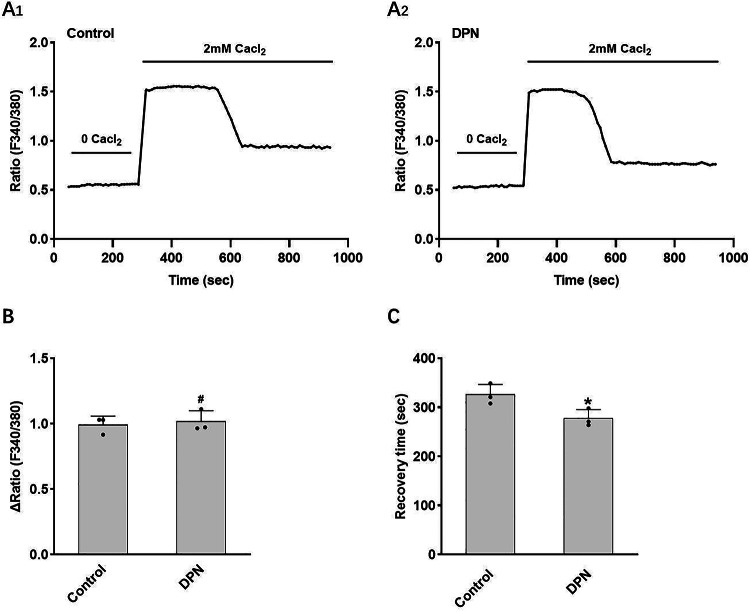
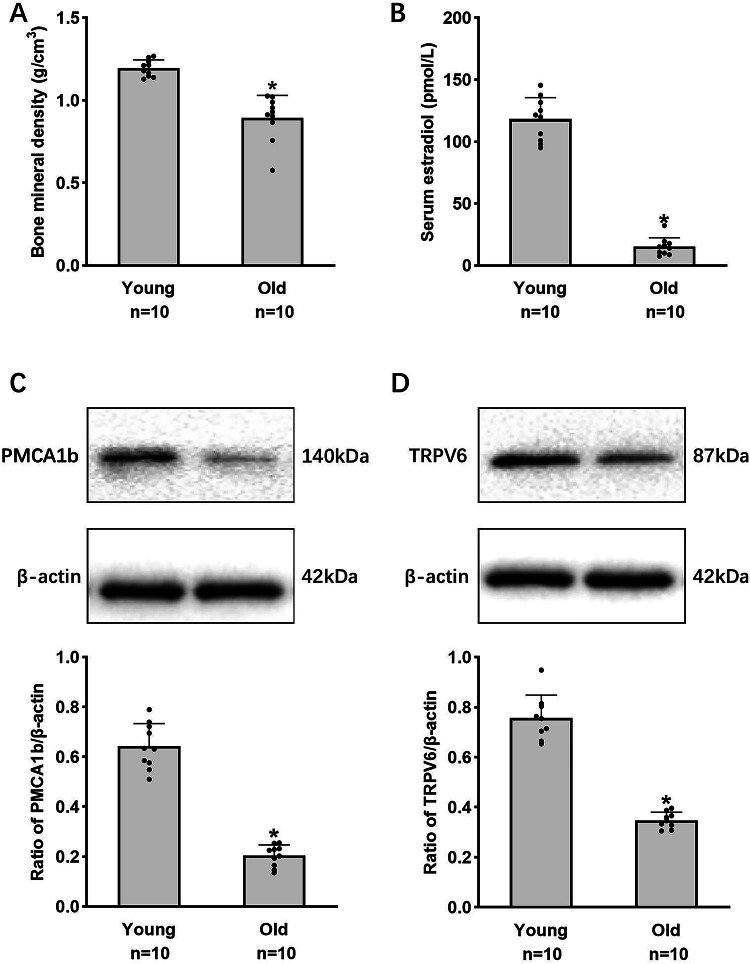
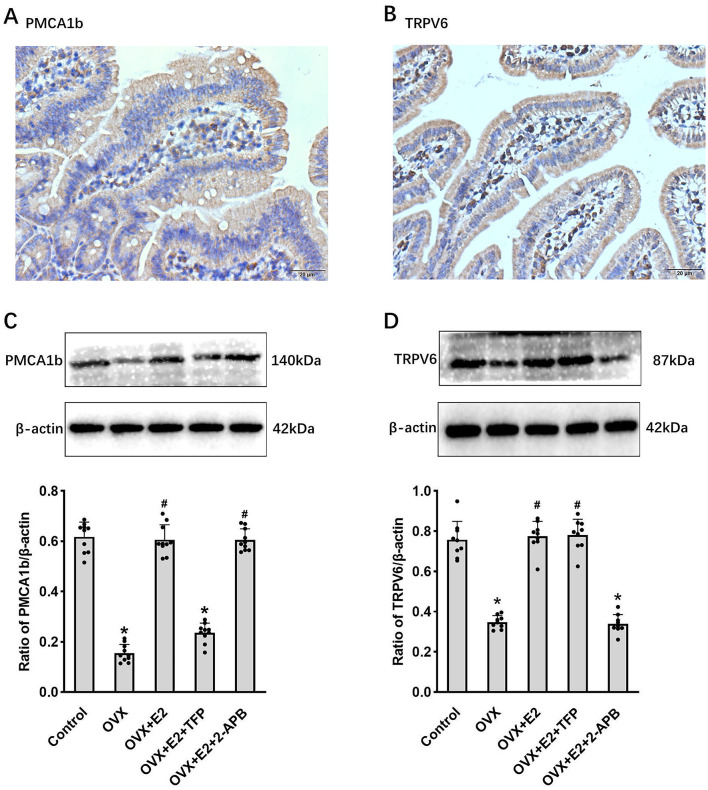
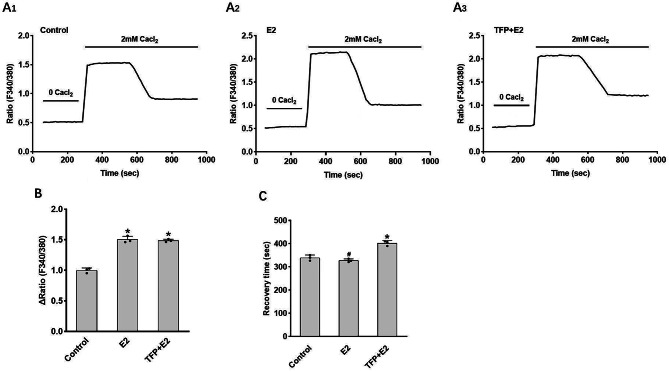
Dietary calcium supplements can prevent osteoporosis, and our previous investigation demonstrated a notable increase in duodenal calcium absorption due to the impact of estrogen. The decrease of estrogen level in postmenopausal women is significantly associated with an increased incidence of osteoporosis. In this study, we further investigated the role of estrogen regulating duodenal calcium absorption in osteoporosis and elucidated its underlying molecular mechanism. We recruited ten young women in the prefollicular stage and ten menopausal women for the study. Furthermore, we performed trials on mice, as well as human duodenal epithelial cells and SCBN cells. The measurement of calcium absorption in the duodenum of mice was conducted through single-pass perfusion in vivo. We used a calcium imaging system to evaluate calcium absorption in SCBN cells. The bone mineral density was measured using small animal computed tomography and a bone densitometer. Furthermore, The expression levels of calcium transport proteins, namely plasma membrane calcium pump (PMCA1b) and transient receptor potential cation channel (TRPV6), were evaluated using western blot analysis. Compared to young women, postmenopausal women exhibited significant reductions in estrogen levels, bone mineral density, and the expression of PMCA1b and TRPV6 in duodenal mucosal tissues (P < 0.05). A positive correlation was also observed between estrogen levels, the expression of PMCA1b and TRPV6, and bone mineral density (P < 0.05). The estrogen levels, the expression of PMCA1b and TRPV6 in the duodenal mucosa, calcium absorptions, and bone mineral density were observed to be decreased in ovariectomized mice based on in vivo animal experiments (P < 0.05). However, estrogen upplementation can enhance duodenal calcium absorptions and ameliorate osteoporosis in ovariectomized mice, with its primary mechanism of action being the regulation of PMCA1b expression and function (P < 0.05). The findings from SCBN cells further confirm that estrogen enhances duodenal calcium absorption through the effect of ERβ on PMCA1b. Estrogen enhances the expression and functionality of PMCA1b in duodenal mucosal cells via ERβ, promoting duodenal calcium absorption and ameliorating postmenopausal osteoporosis.
膳食钙补充剂可以预防骨质疏松症,我们之前的研究表明,由于雌激素的影响,十二指肠钙吸收显著增加。绝经后女性雌激素水平的降低与骨质疏松症发病率的增加显著相关。在本研究中,我们进一步探讨了雌激素在骨质疏松症中调节十二指肠钙吸收的作用,并阐明其潜在的分子机制。我们招募了10名卵泡期前的年轻女性和10名绝经后女性参与研究。此外,我们还对小鼠以及人十二指肠上皮细胞和SCBN细胞进行了试验。通过体内单通道灌注法测量小鼠十二指肠的钙吸收。我们使用钙成像系统评估SCBN细胞中的钙吸收。使用小动物计算机断层扫描和骨密度仪测量骨矿物质密度。此外,使用蛋白质免疫印迹分析评估钙转运蛋白,即质膜钙泵(PMCA1b)和瞬时受体电位阳离子通道(TRPV6)的表达水平。与年轻女性相比,绝经后女性的雌激素水平、骨矿物质密度以及十二指肠黏膜组织中PMCA1b和TRPV6的表达均显著降低(P<0.05)。雌激素水平、PMCA1b和TRPV6的表达与骨矿物质密度之间也存在正相关(P<0.05)。基于体内动物实验,观察到去卵巢小鼠十二指肠黏膜中的雌激素水平、PMCA1b和TRPV6的表达、钙吸收以及骨矿物质密度均降低(P<0.05)。然而,补充雌激素可以增强去卵巢小鼠的十二指肠钙吸收并改善骨质疏松症,其主要作用机制是调节PMCA1b的表达和功能(P<0.05)。SCBN细胞的研究结果进一步证实,雌激素通过ERβ对PMCA1b的作用增强十二指肠钙吸收。雌激素通过ERβ增强十二指肠黏膜细胞中PMCA1b的表达和功能,促进十二指肠钙吸收并改善绝经后骨质疏松症。