Kampa Marilena, Notas George, Stathopoulos Efstathios N, Tsapis Andreas, Castanas Elias
Laboratory of Experimental Endocrinology, School of Medicine, University of Crete, Heraklon, Greece.
Laboratory of Pathology, School of Medicine, University of Crete, Heraklion, Greece.
Front Oncol. 2020 Jun 16;10:827. doi: 10.3389/fonc.2020.00827. eCollection 2020.
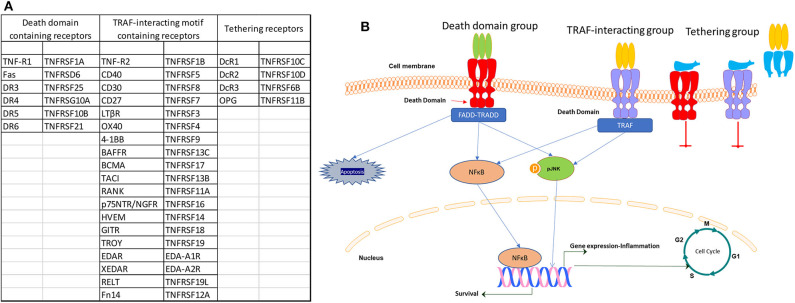
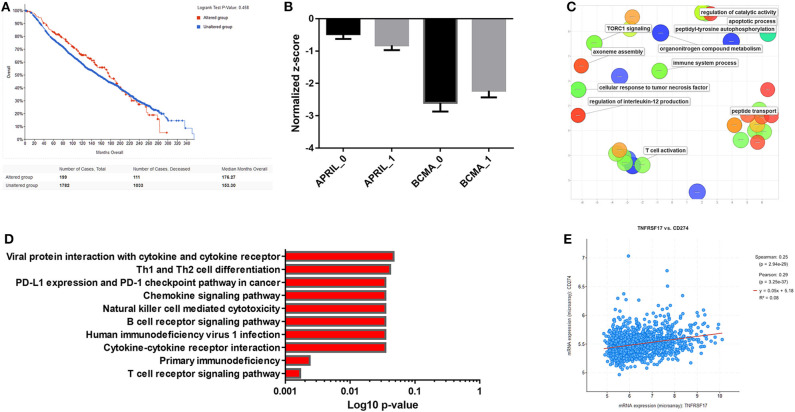
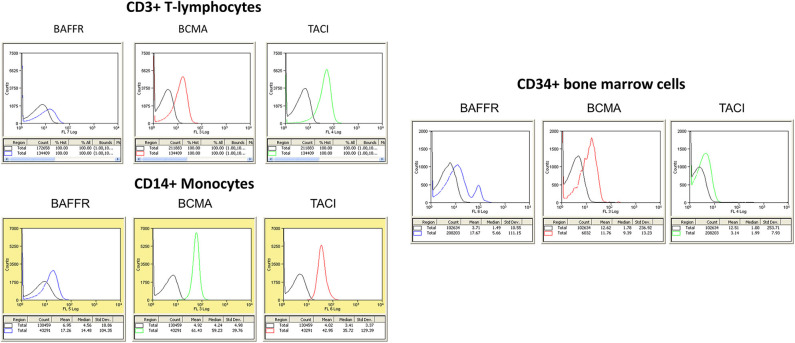
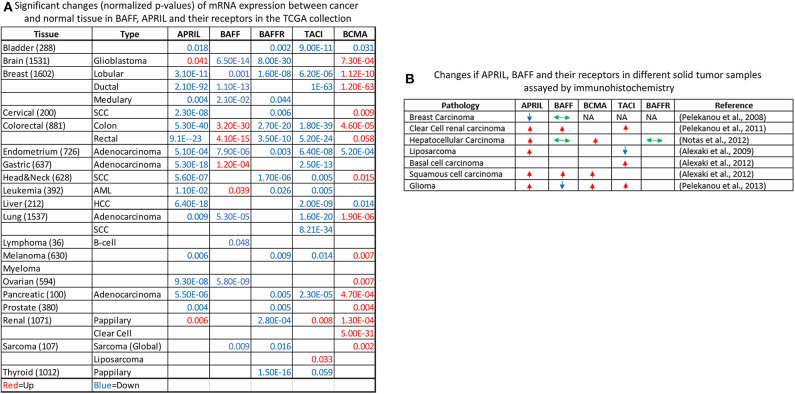
Tumor necrosis factor (TNF) superfamily consists of 19 ligands and 29 receptors and is related to multiple cellular events from proliferation and differentiation to apoptosis and tumor reduction. In this review, we overview the whole system, and we focus on A proliferation-inducing ligand (APRIL, TNFSF13) and B cell-activating factor (BAFF, TNFSF13B) and their receptors transmembrane activator and Ca modulator (CAML) interactor (TACI, TNFRSF13B), B cell maturation antigen (BCMA, TNFRSF17), and BAFF receptor (BAFFR, TNFRSF13C). We explore their role in cancer and novel biological therapies introduced for multiple myeloma and further focus on breast cancer, in which the modulation of this system seems to be of potential interest, as a novel therapeutic target. Finally, we discuss some precautions which should be taken into consideration, while targeting the APRIL-BAFF system.
肿瘤坏死因子(TNF)超家族由19种配体和29种受体组成,与从增殖、分化到凋亡和肿瘤消退的多种细胞事件相关。在本综述中,我们概述了整个系统,并重点关注增殖诱导配体(APRIL,TNFSF13)和B细胞激活因子(BAFF,TNFSF13B)及其受体跨膜激活剂和钙调节剂(CAML)相互作用分子(TACI,TNFRSF13B)、B细胞成熟抗原(BCMA,TNFRSF17)和BAFF受体(BAFFR,TNFRSF13C)。我们探讨它们在癌症中的作用以及针对多发性骨髓瘤引入的新型生物疗法,并进一步关注乳腺癌,在乳腺癌中该系统的调节似乎作为一种新型治疗靶点具有潜在意义。最后,我们讨论了靶向APRIL-BAFF系统时应考虑的一些注意事项。