Division of Immunobiology, Cincinnati Children's Hospital Medical Center, Cincinnati, OH, United States.
University of Cincinnati, Cincinnati, OH, United States.
Front Immunol. 2023 Jul 3;14:1219907. doi: 10.3389/fimmu.2023.1219907. eCollection 2023.
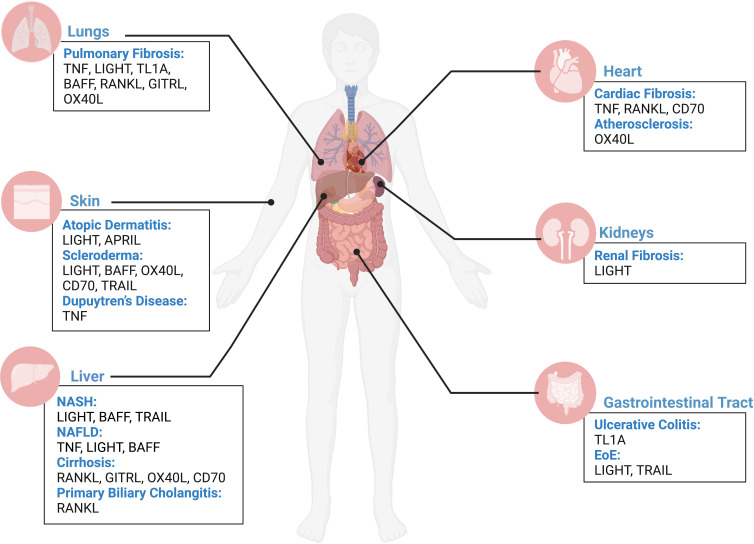
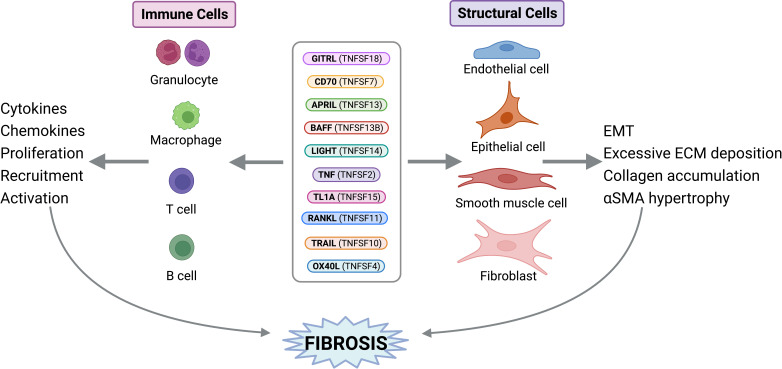
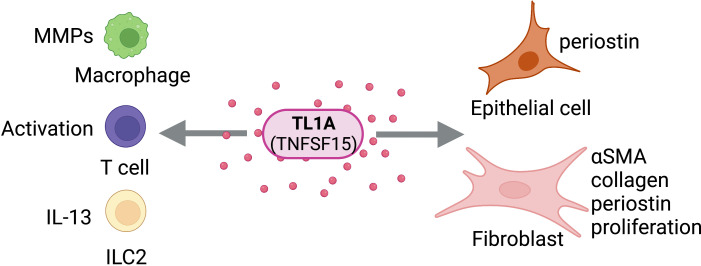
Fibrosis is the result of extracellular matrix protein deposition and remains a leading cause of death in USA. Despite major advances in recent years, there remains an unmet need to develop therapeutic options that can effectively degrade or reverse fibrosis. The tumor necrosis super family (TNFSF) members, previously studied for their roles in inflammation and cell death, now represent attractive therapeutic targets for fibrotic diseases. In this review, we will summarize select TNFSF and their involvement in fibrosis of the lungs, the heart, the skin, the gastrointestinal tract, the kidney, and the liver. We will emphasize their direct activity on epithelial cells, fibroblasts, and smooth muscle cells. We will further report on major clinical trials targeting these ligands. Whether in isolation or in combination with other anti-TNFSF member or treatment, targeting this superfamily remains key to improve efficacy and selectivity of currently available therapies for fibrosis.
纤维化是细胞外基质蛋白沉积的结果,仍然是美国的主要死亡原因。尽管近年来取得了重大进展,但仍需要开发能够有效降解或逆转纤维化的治疗选择。肿瘤坏死超家族(TNFSF)成员以前因其在炎症和细胞死亡中的作用而受到研究,现在代表了纤维化疾病有吸引力的治疗靶点。在这篇综述中,我们将总结选择的 TNFSF 及其在肺部、心脏、皮肤、胃肠道、肾脏和肝脏纤维化中的作用。我们将强调它们对上皮细胞、成纤维细胞和平滑肌细胞的直接作用。我们还将报告针对这些配体的主要临床试验。无论单独使用还是与其他抗 TNFSF 成员或治疗方法联合使用,针对这个超家族仍然是提高现有纤维化治疗方法的疗效和选择性的关键。