Lopaschuk Gary D, Verma Subodh
Cardiovascular Research Centre, University of Alberta, Edmonton, Alberta, Canada.
Division of Cardiac Surgery, Li Ka Shing Knowledge Institute of St. Michael's Hospital, University of Toronto, Toronto, Ontario, Canada.
JACC Basic Transl Sci. 2020 Jun 22;5(6):632-644. doi: 10.1016/j.jacbts.2020.02.004. eCollection 2020 Jun.
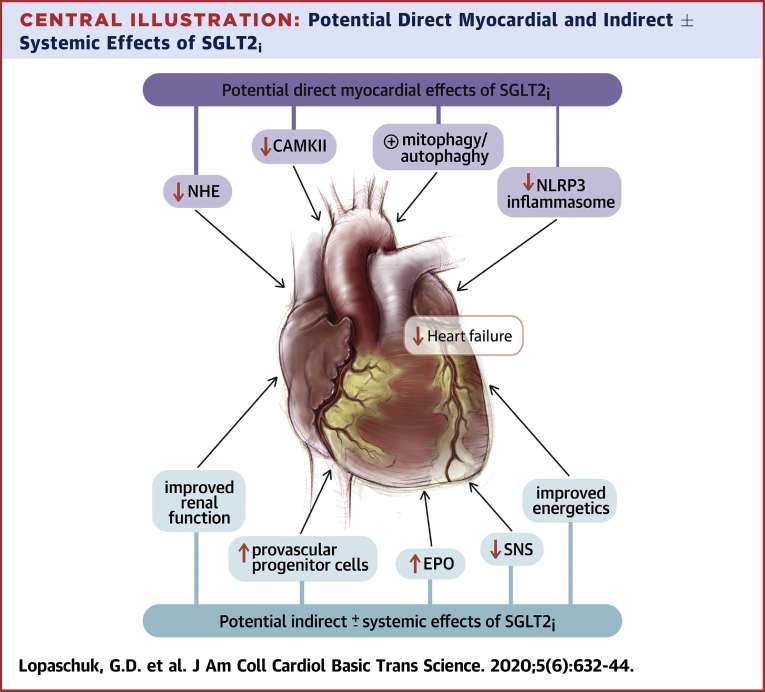
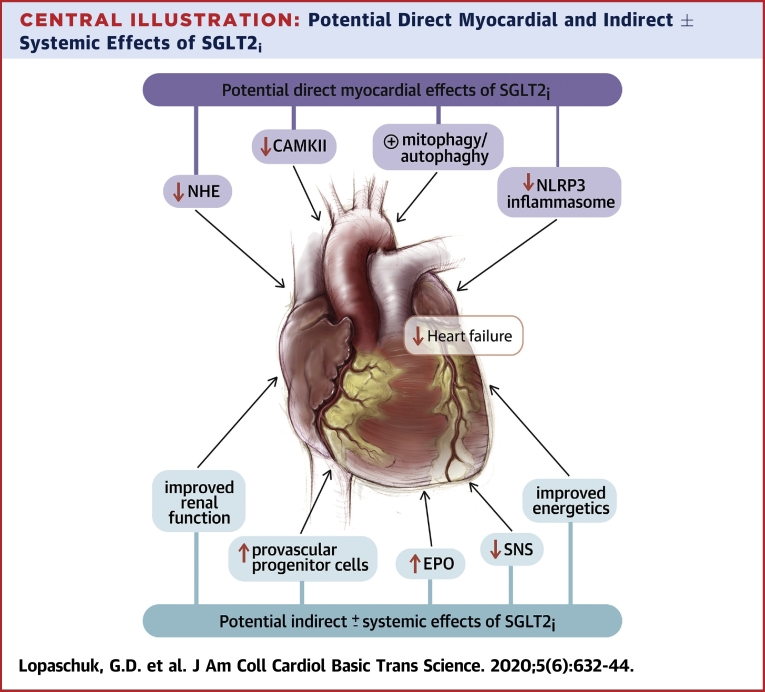
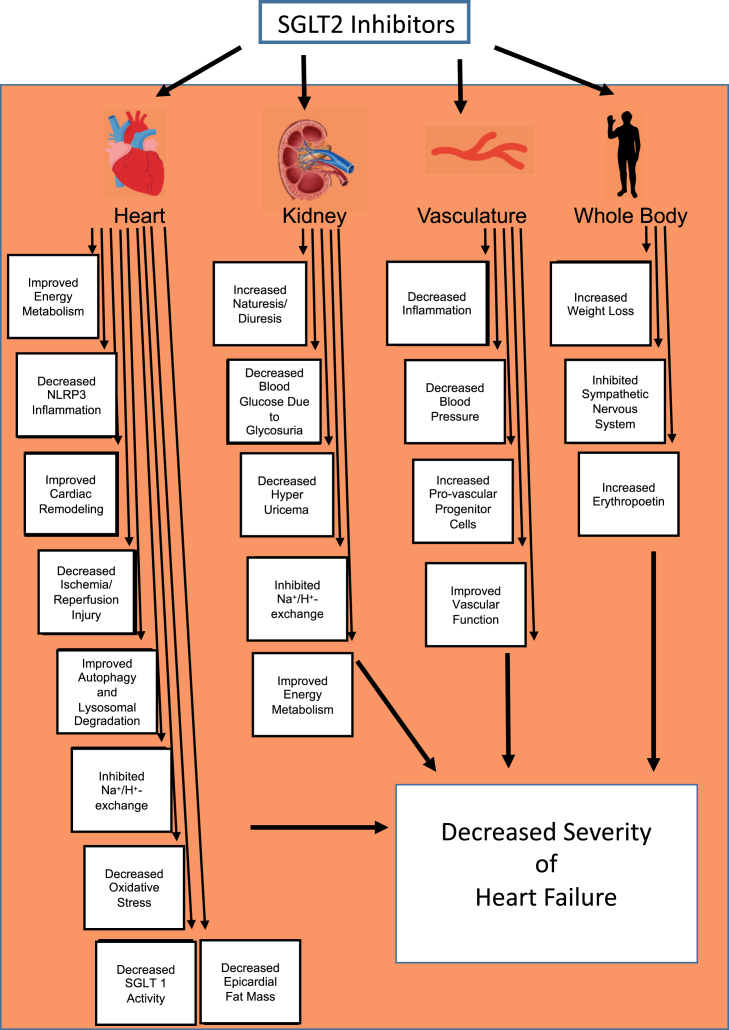
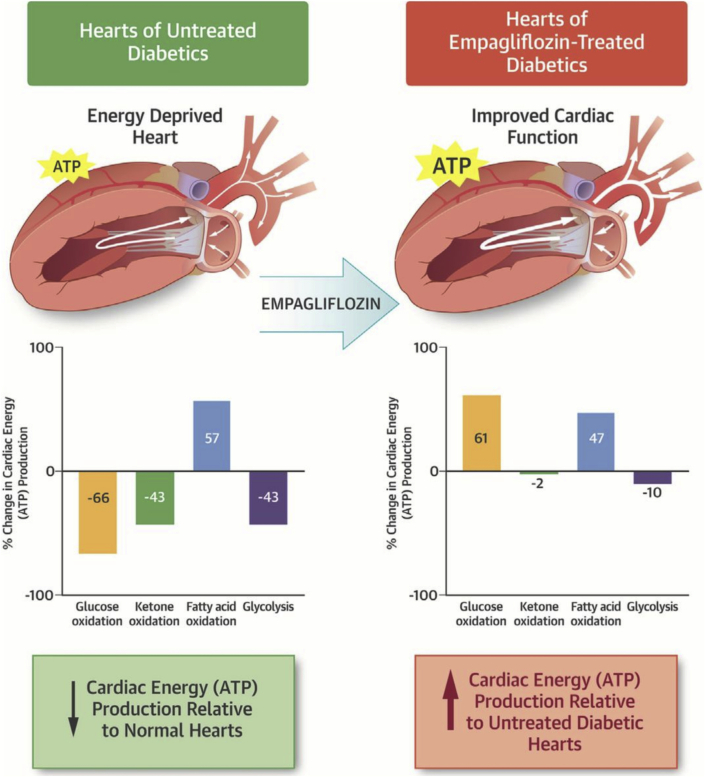
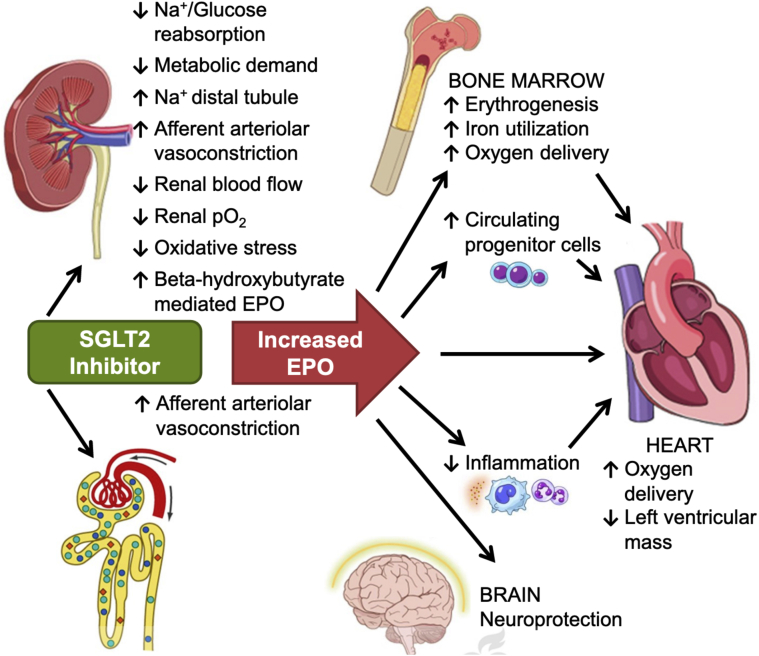
Recent clinical trials have shown that sodium glucose co-transport 2 (SGLT2) inhibitors have dramatic beneficial cardiovascular outcomes. These include a reduced incidence of cardiovascular death and heart failure hospitalization in people with and without diabetes, and those with and without prevalent heart failure. The actual mechanism(s) responsible for these beneficial effects are not completely clear. Several potential theses have been proposed to explain the cardioprotective effects of SGLT2 inhibition, which include diuresis/natriuresis, blood pressure reduction, erythropoiesis, improved cardiac energy metabolism, inflammation reduction, inhibition of the sympathetic nervous system, prevention of adverse cardiac remodeling, prevention of ischemia/reperfusion injury, inhibition of the Na/H-exchanger, inhibition of SGLT1, reduction in hyperuricemia, increasing autophagy and lysosomal degradation, decreasing epicardial fat mass, increasing erythropoietin levels, increasing circulating pro-vascular progenitor cells, decreasing oxidative stress, and improving vascular function. The strengths and weaknesses of these proposed mechanisms are reviewed in an effort to try to synthesize and prioritize the mechanisms as they relate to clinical event reduction.
近期临床试验表明,钠-葡萄糖协同转运蛋白2(SGLT2)抑制剂具有显著的心血管有益结局。这些结局包括降低有糖尿病和无糖尿病者以及有和无既往心力衰竭者的心血管死亡和心力衰竭住院发生率。导致这些有益作用的实际机制尚不完全清楚。已提出了几种潜在的理论来解释SGLT2抑制的心脏保护作用,其中包括利尿/利钠、降低血压、促红细胞生成、改善心脏能量代谢、减轻炎症、抑制交感神经系统、预防不良心脏重塑、预防缺血/再灌注损伤、抑制钠/氢交换体、抑制SGLT1、降低高尿酸血症、增加自噬和溶酶体降解、减少心外膜脂肪量、提高促红细胞生成素水平、增加循环中的血管前体细胞、降低氧化应激以及改善血管功能。本文对这些提出的机制的优缺点进行了综述,以期综合这些机制并按与临床事件减少的相关性对其进行排序。