Institut für Molekulare Medizin, Universität zu Lübeck and UKSH, Lübeck, Germany.
Graduate School for Computing in Medicine & Life Sciences, Universität zu Lübeck, Lübeck, Germany.
PLoS One. 2020 Jul 2;15(7):e0229193. doi: 10.1371/journal.pone.0229193. eCollection 2020.
Urine-based diagnostics indicated involvement of oncoprotein 18 (OP18) in bladder cancer. In cell culture models we investigated the role of OP18 for malignant cell growth.
We analyzed 113 urine samples and investigated two human BCa cell lines as a dual model: RT-4 and ECV-304, which represented differentiated (G1) and poorly differentiated (G3) BCa. We designed specific siRNA for down-regulation of OP18 in both cell lines. Phenotypes were characterized by cell viability, proliferation, and expression of apoptosis-related genes. Besides, sensitivity to cisplatin treatment was evaluated.
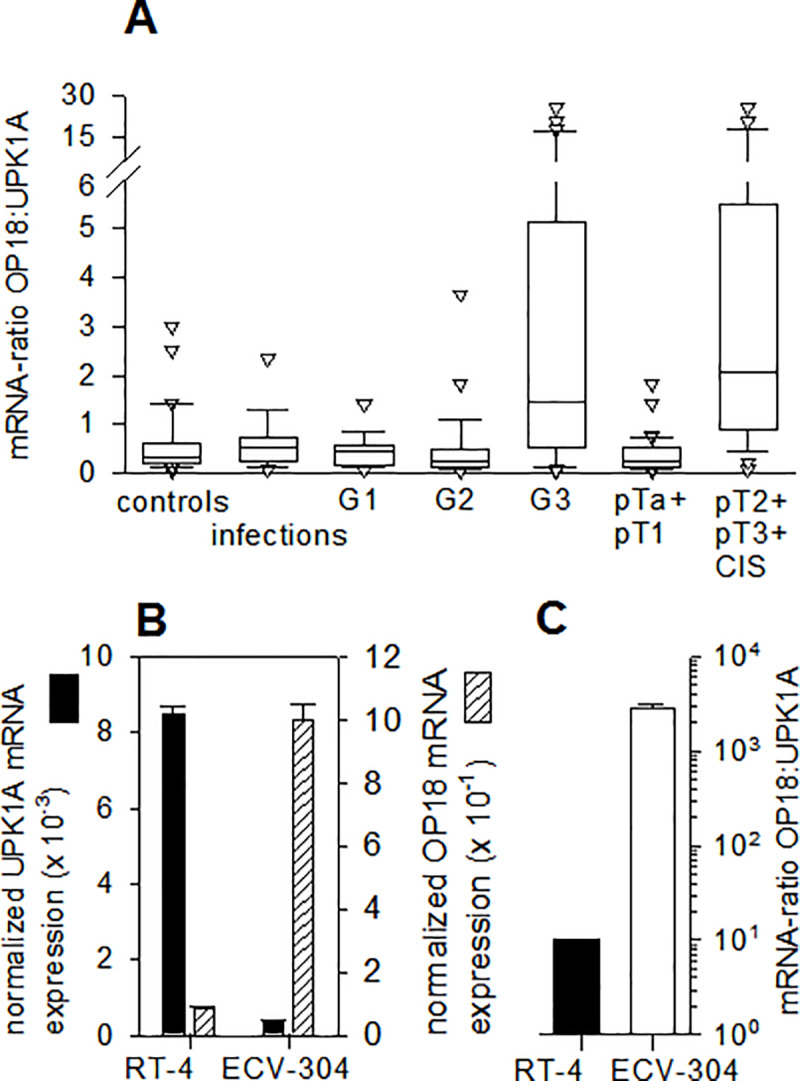
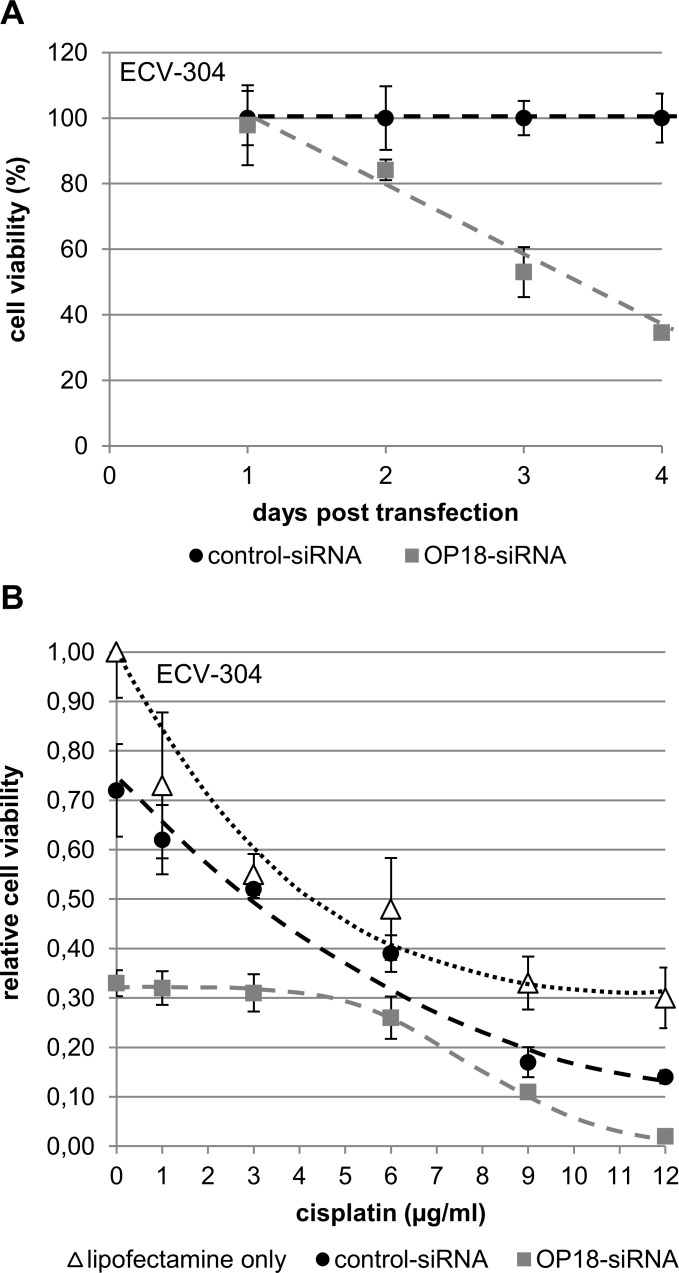
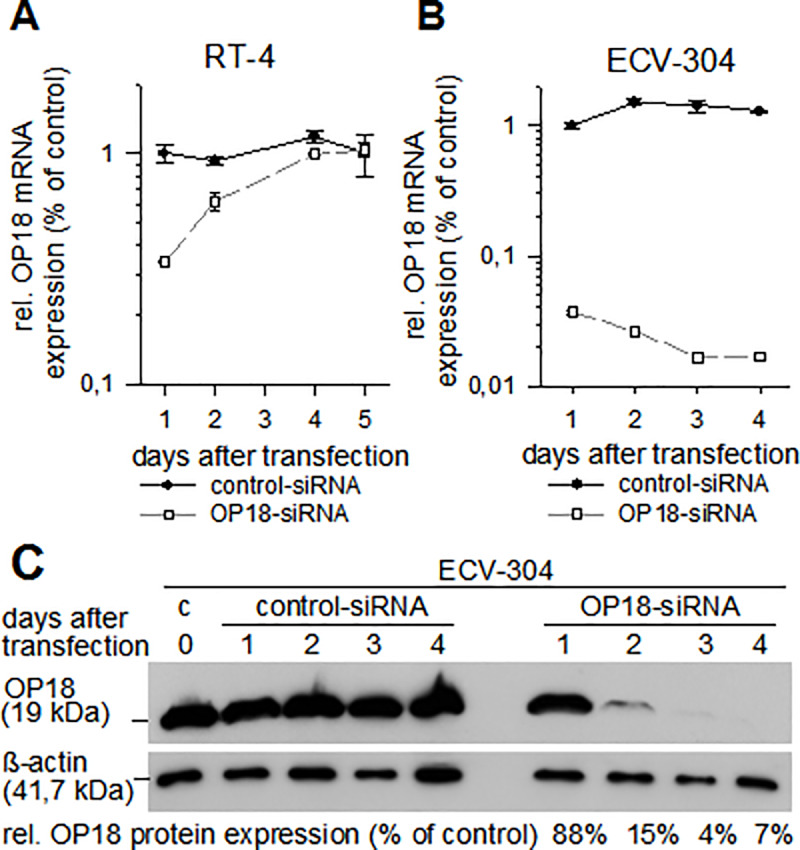
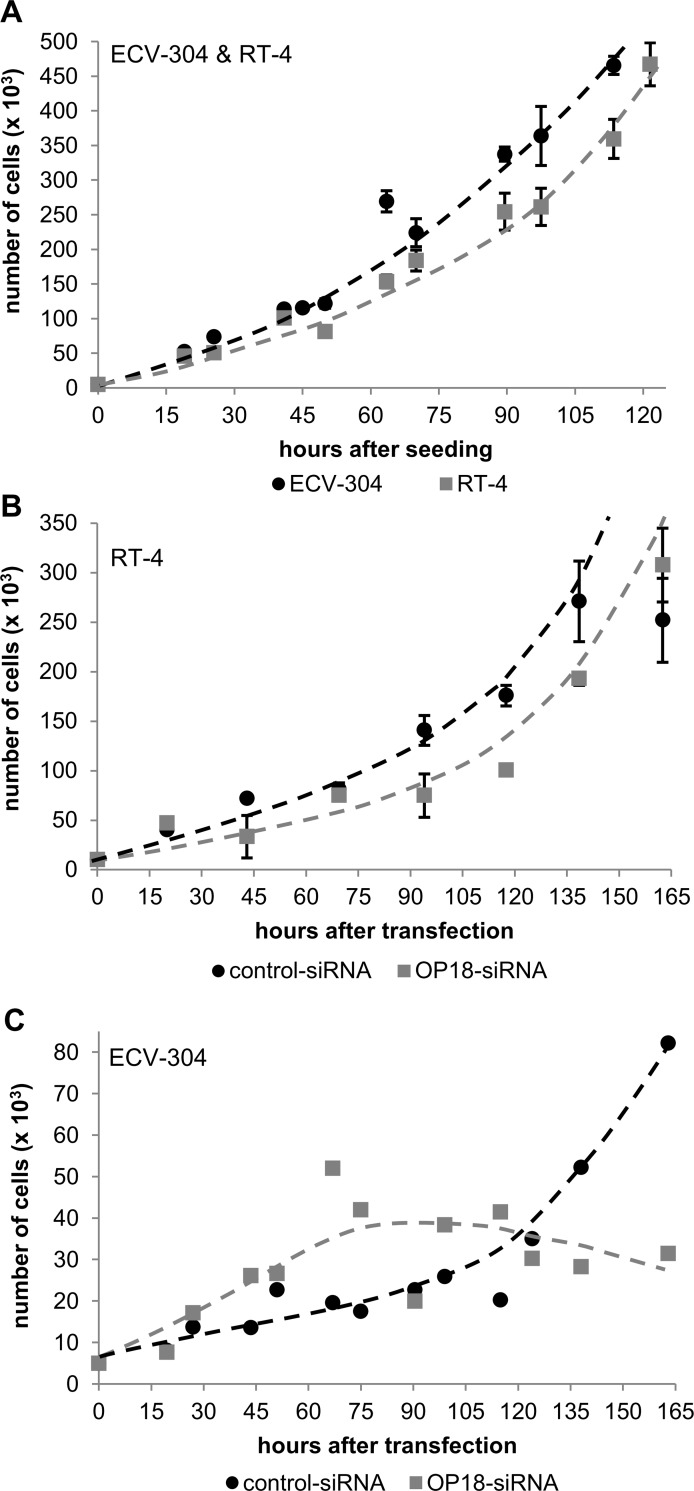
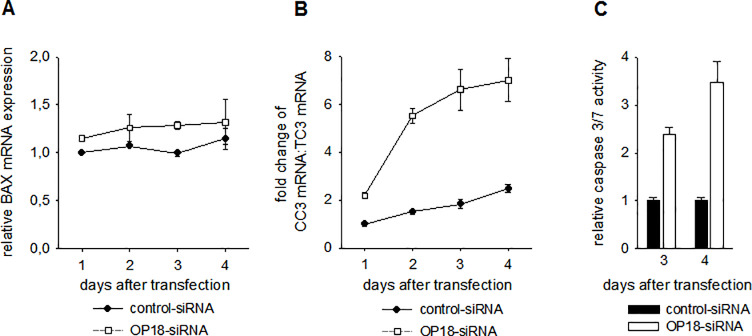
Analysis of urine samples from patients with urothelial BCa revealed a significant correlation of the RNA-ratio OP18:uroplakin 1A with bladder cancer. High urinary ratios were mainly found in moderately to poorly differentiated tumors (grade G2-3) that were muscle invasive (stage T2-3), whereas samples from patients with more differentiated non-invasive BCa (G1) showed low OP18:UPK1A RNA ratios. Down-regulation of OP18 expression in ECV-304 shifted its phenotype towards G1 state. Further, OP18-directed siRNA induced apoptosis and increased chemo-sensitivity to cisplatin.
This study provides conclusive experimental evidence for the link between OP18-derived RNA as a diagnostic marker for molecular staging of BCa in non-invasive urine-based diagnostics and the patho-mechanistic role of OP18 suggesting this gene as a therapeutic target.
尿液诊断学表明癌蛋白 18(OP18)参与膀胱癌。在细胞培养模型中,我们研究了 OP18 对恶性细胞生长的作用。
我们分析了 113 份尿液样本,并以双重模型研究了两种人膀胱癌细胞系:RT-4 和 ECV-304,它们代表分化(G1)和低分化(G3)膀胱癌。我们设计了特异性 siRNA 以下调两种细胞系中的 OP18。通过细胞活力、增殖和凋亡相关基因的表达来表征表型。此外,还评估了对顺铂治疗的敏感性。
对患有尿路上皮膀胱癌患者的尿液样本进行分析,发现 OP18:uroplakin 1A 的 RNA 比值与膀胱癌有显著相关性。高尿比值主要见于中至低分化肿瘤(G2-3 级),这些肿瘤具有肌肉浸润性(T2-3 期),而来自分化程度更高、非侵袭性膀胱癌(G1)患者的样本则显示出低 OP18:UPK1A RNA 比值。ECV-304 中 OP18 表达的下调使其表型向 G1 状态转变。此外,OP18 靶向 siRNA 诱导细胞凋亡并增加顺铂的化疗敏感性。
本研究为非侵入性尿液诊断学中 OP18 衍生 RNA 作为膀胱癌分子分期的诊断标志物与 OP18 的病理机制作用之间的联系提供了确凿的实验证据,这表明该基因是一个治疗靶点。