• 文献检索
  • 文档翻译
  • 深度研究
  • 学术资讯
  • Suppr Zotero 插件Zotero 插件
  • 邀请有礼
  • 套餐&价格
  • 历史记录
应用&插件
Suppr Zotero 插件Zotero 插件浏览器插件Mac 客户端Windows 客户端微信小程序
定价
高级版会员购买积分包购买API积分包
服务
文献检索文档翻译深度研究API 文档MCP 服务
关于我们
关于 Suppr公司介绍联系我们用户协议隐私条款
关注我们

Suppr 超能文献

核心技术专利:CN118964589B侵权必究
粤ICP备2023148730 号-1Suppr @ 2026

文献检索

告别复杂PubMed语法,用中文像聊天一样搜索,搜遍4000万医学文献。AI智能推荐,让科研检索更轻松。

立即免费搜索

文件翻译

保留排版,准确专业,支持PDF/Word/PPT等文件格式,支持 12+语言互译。

免费翻译文档

深度研究

AI帮你快速写综述,25分钟生成高质量综述,智能提取关键信息,辅助科研写作。

立即免费体验

使用无人机(UAV)对小型鲸类的呼气微生物组进行采样。

The use of Unmanned Aerial Vehicles (UAVs) to sample the blow microbiome of small cetaceans.

机构信息

Department of Comparative Biomedicine and Food Science, University of Padua, Padua, Italy.

Tethys Research Institute, Milan, Italy.

出版信息

PLoS One. 2020 Jul 2;15(7):e0235537. doi: 10.1371/journal.pone.0235537. eCollection 2020.

DOI:10.1371/journal.pone.0235537
PMID:32614926
原文链接:https://pmc.ncbi.nlm.nih.gov/articles/PMC7332044/
Abstract

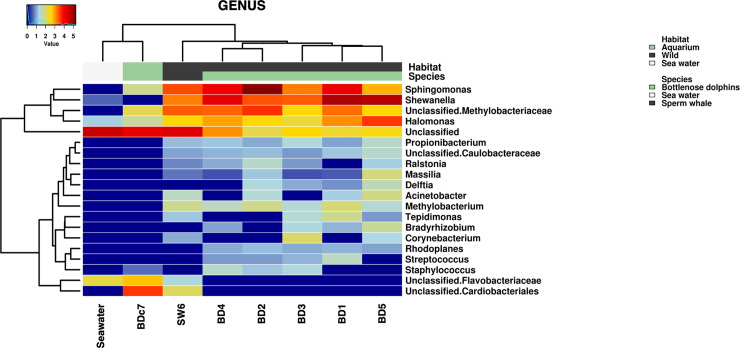
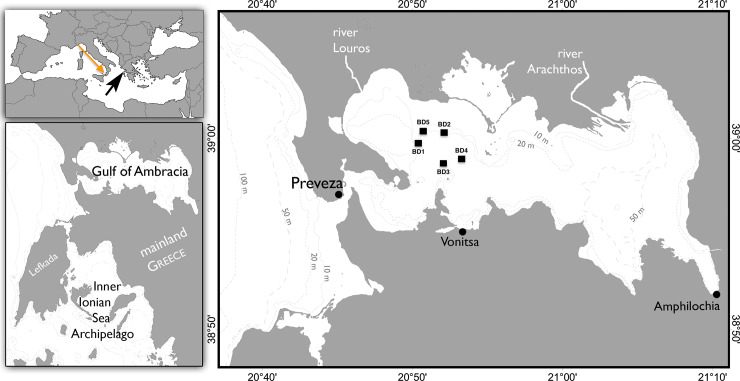
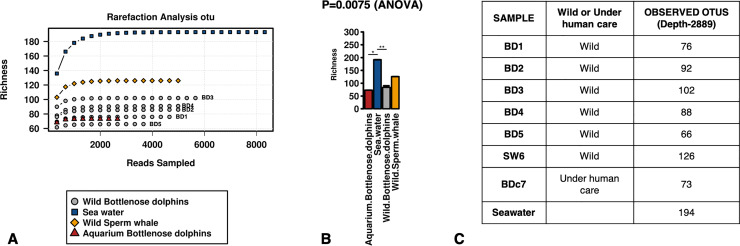
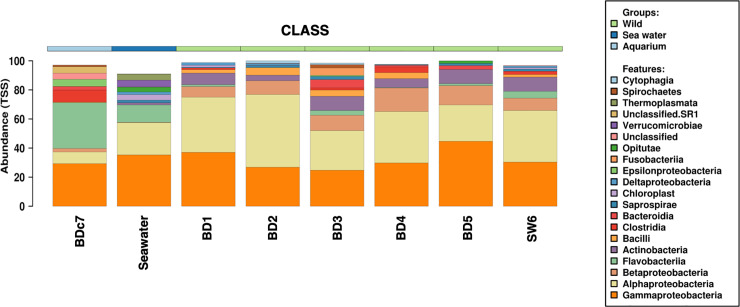
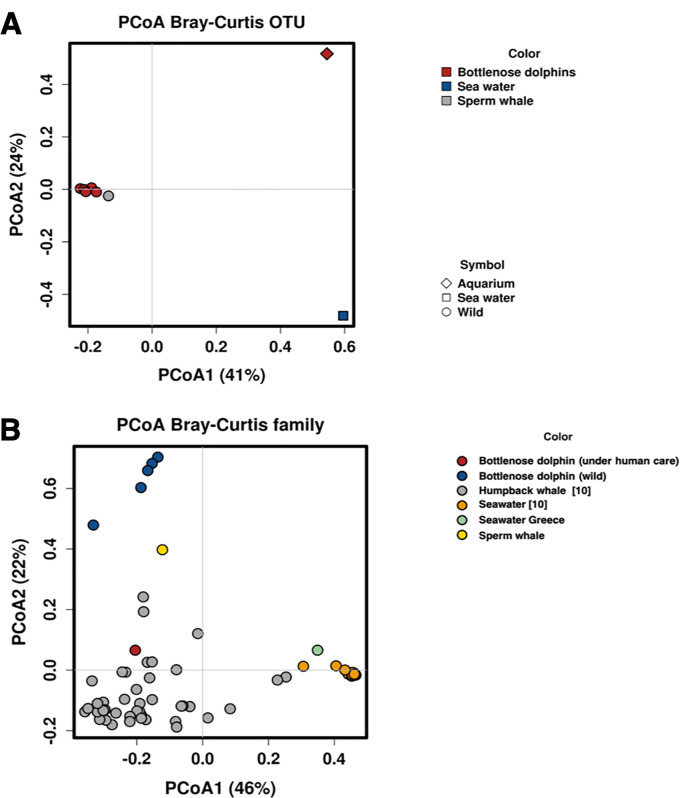
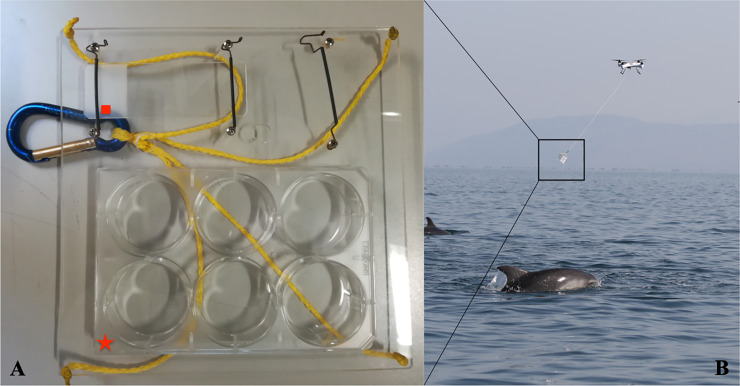
Recent studies describe the use of UAVs in collecting blow samples from large whales to analyze the microbial and viral community in exhaled air. Unfortunately, attempts to collect blow from small cetaceans have not been successful due to their swimming and diving behavior. In order to overcome these limitations, in this study we investigated the application of a specific sampling tool attached to a UAV to analyze the blow from small cetaceans and their respiratory microbiome. Preliminary trials to set up the sampling tool were conducted on a group of 6 bottlenose dolphins (Tursiops truncatus) under human care, housed at Acquario di Genova, with approximately 1 meter distance between the blowing animal and the tool to obtain suitable samples. The same sampling kit, suspended via a 2 meter rope assembled on a waterproof UAV, flying 3 meters above the animals, was used to sample the blows of 5 wild bottlenose dolphins in the Gulf of Ambracia (Greece) and a sperm whale (Physeter macrocephalus) in the southern Tyrrhenian Sea (Italy), to investigate whether this experimental assembly also works for large whale sampling. In order to distinguish between blow-associated microbes and seawater microbes, we pooled 5 seawater samples from the same area where blow samples' collection were carried out. The the respiratory microbiota was assessed by using the V3-V4 region of the 16S rRNA gene via Illumina Amplicon Sequencing. The pooled water samples contained more bacterial taxa than the blow samples of both wild animals and the sequenced dolphin maintained under human care. The composition of the bacterial community differed between the water samples and between the blow samples of wild cetaceans and that under human care, but these differences may have been mediated by different microbial communities between seawater and aquarium water. The sperm whale's respiratory microbiome was more similar to the results obtained from wild bottlenose dolphins. Although the number of samples used in this study was limited and sampling and analyses were impaired by several limitations, the results are rather encouraging, as shown by the evident microbial differences between seawater and blow samples, confirmed also by the meta-analysis carried out comparing our results with those obtained in previous studies. Collecting exhaled air from small cetaceans using drones is a challenging process, both logistically and technically. The success in obtaining samples from small cetacean blow in this study in comparison to previous studies is likely due to the distance the sampling kit is suspended from the drone, which reduced the likelihood that the turbulence of the drone propeller interfered with successfully sampling blow, suggested as a factor leading to poor success in previous studies.

摘要

最近的研究描述了使用无人机从大型鲸鱼身上采集吹气样本,以分析呼出空气中的微生物和病毒群落。不幸的是,由于小型鲸类的游泳和潜水行为,尝试从它们身上采集吹气样本的尝试并未成功。为了克服这些限制,在本研究中,我们调查了一种特殊采样工具的应用,该工具附接到无人机上,以分析小型鲸类及其呼吸微生物组的吹气样本。在 Acquario di Genova 饲养的一组 6 只宽吻海豚(Tursiops truncatus)中进行了初步试验,以设置采样工具,吹气动物和工具之间的距离约为 1 米,以获得合适的样本。使用相同的采样套件,通过组装在防水无人机上的 2 米长绳索悬挂,在动物上方 3 米处飞行,用于采样 5 只野生宽吻海豚在 Ambracia 湾(希腊)和一只抹香鲸(Physeter macrocephalus)在南第勒尼安海(意大利)的吹气样本,以调查这种实验组件是否也适用于大型鲸鱼的采样。为了区分与吹气相关的微生物和海水微生物,我们从吹气样本采集的同一区域汇集了 5 个海水样本。通过 Illumina 扩增子测序,使用 16S rRNA 基因的 V3-V4 区域评估呼吸微生物组。汇集的水样中含有的细菌分类群多于野生动物和人类饲养的海豚的吹气样本。水样和野生鲸类的吹气样本之间以及人类饲养的海豚的吹气样本之间的细菌群落组成不同,但这些差异可能是由海水和水族馆水之间不同的微生物群落介导的。抹香鲸的呼吸微生物组与从野生宽吻海豚获得的结果更为相似。尽管本研究中使用的样本数量有限,并且采样和分析受到多种限制的影响,但结果相当令人鼓舞,因为海水和吹气样本之间的微生物差异明显,通过与以前的研究结果进行的荟萃分析也得到了证实。使用无人机从小型鲸类中收集呼气空气是一个具有挑战性的过程,无论是在后勤方面还是在技术方面。与以前的研究相比,本研究成功地从小型鲸类的吹气样本中获得样本,这可能是由于采样工具从无人机上悬挂的距离较远,从而降低了无人机螺旋桨的湍流干扰成功采样吹气的可能性,这被认为是以前的研究中成功率低的一个因素。
https://cdn.ncbi.nlm.nih.gov/pmc/blobs/5600/7332044/d375a5645f66/pone.0235537.g007.jpg
https://cdn.ncbi.nlm.nih.gov/pmc/blobs/5600/7332044/e8b9cd3a4817/pone.0235537.g001.jpg
https://cdn.ncbi.nlm.nih.gov/pmc/blobs/5600/7332044/a15dfdc72850/pone.0235537.g002.jpg
https://cdn.ncbi.nlm.nih.gov/pmc/blobs/5600/7332044/9d54d15916e7/pone.0235537.g003.jpg
https://cdn.ncbi.nlm.nih.gov/pmc/blobs/5600/7332044/0fb4314d6b3c/pone.0235537.g004.jpg
https://cdn.ncbi.nlm.nih.gov/pmc/blobs/5600/7332044/98616284c0ff/pone.0235537.g005.jpg
https://cdn.ncbi.nlm.nih.gov/pmc/blobs/5600/7332044/dc8c342e5fdd/pone.0235537.g006.jpg
https://cdn.ncbi.nlm.nih.gov/pmc/blobs/5600/7332044/d375a5645f66/pone.0235537.g007.jpg
https://cdn.ncbi.nlm.nih.gov/pmc/blobs/5600/7332044/e8b9cd3a4817/pone.0235537.g001.jpg
https://cdn.ncbi.nlm.nih.gov/pmc/blobs/5600/7332044/a15dfdc72850/pone.0235537.g002.jpg
https://cdn.ncbi.nlm.nih.gov/pmc/blobs/5600/7332044/9d54d15916e7/pone.0235537.g003.jpg
https://cdn.ncbi.nlm.nih.gov/pmc/blobs/5600/7332044/0fb4314d6b3c/pone.0235537.g004.jpg
https://cdn.ncbi.nlm.nih.gov/pmc/blobs/5600/7332044/98616284c0ff/pone.0235537.g005.jpg
https://cdn.ncbi.nlm.nih.gov/pmc/blobs/5600/7332044/dc8c342e5fdd/pone.0235537.g006.jpg
https://cdn.ncbi.nlm.nih.gov/pmc/blobs/5600/7332044/d375a5645f66/pone.0235537.g007.jpg

相似文献

1
The use of Unmanned Aerial Vehicles (UAVs) to sample the blow microbiome of small cetaceans.使用无人机(UAV)对小型鲸类的呼气微生物组进行采样。
PLoS One. 2020 Jul 2;15(7):e0235537. doi: 10.1371/journal.pone.0235537. eCollection 2020.
2
Highly abundant core taxa in the blow within and across captive bottlenose dolphins provide evidence for a temporally stable airway microbiota.高丰度核心分类群存在于圈养宽吻海豚的气道内和气道间,为气道微生物群具有时间稳定性提供了证据。
BMC Microbiol. 2021 Jan 9;21(1):20. doi: 10.1186/s12866-020-02076-z.
3
Does sociality drive diversity and composition of airway microbiota in cetaceans?社会性是否驱动了鲸目动物气道微生物组的多样性和组成?
Environ Microbiol Rep. 2020 Jun;12(3):324-333. doi: 10.1111/1758-2229.12835. Epub 2020 Mar 31.
4
Extensive Core Microbiome in Drone-Captured Whale Blow Supports a Framework for Health Monitoring.无人机采集的鲸呼气中的广泛核心微生物群为健康监测提供了一个框架。
mSystems. 2017 Oct 10;2(5). doi: 10.1128/mSystems.00119-17. eCollection 2017 Sep-Oct.
5
Interannual comparison of core taxa and community composition of the blow microbiota from East Australian humpback whales.东澳大利亚座头鲸喷气孔微生物组核心分类群和群落组成的年际比较。
FEMS Microbiol Ecol. 2019 Aug 1;95(8). doi: 10.1093/femsec/fiz102.
6
Thar she blows! A novel method for DNA collection from cetacean blow.它喷出来了!从鲸类喷孔采集 DNA 的新方法。
PLoS One. 2010 Aug 25;5(8):e12299. doi: 10.1371/journal.pone.0012299.
7
Comparison of the gut microbiota of captive common bottlenose dolphins Tursiops truncatus in three aquaria.比较三个水族馆中圈养的宽吻海豚(Tursiops truncatus)的肠道微生物群。
J Appl Microbiol. 2019 Jan;126(1):31-39. doi: 10.1111/jam.14109. Epub 2018 Oct 29.
8
Captive bottlenose dolphins and killer whales harbor a species-specific skin microbiota that varies among individuals. captivity 驯养的,人工饲养的 bottlenose dolphins 宽吻海豚 killer whales 虎鲸 harbor 栖息,拥有 species-specific 物种特异性的 microbiota 微生物群 varies 变化 among 在…之间 individuals 个体
Sci Rep. 2017 Nov 10;7(1):15269. doi: 10.1038/s41598-017-15220-z.
9
Evaluation of respiratory vapour and blubber samples for use in endocrine assessments of bottlenose dolphins (Tursiops spp.).用于宽吻海豚(瓶鼻海豚属)内分泌评估的呼吸蒸气和鲸脂样本的评估。
Gen Comp Endocrinol. 2019 Apr 1;274:37-49. doi: 10.1016/j.ygcen.2018.12.015. Epub 2018 Dec 31.
10
Behaviour reactions of bottlenose dolphins (Tursiops truncatus) to multirotor Unmanned Aerial Vehicles (UAVs).宽吻海豚(Tursiops truncatus)对多旋翼无人机(UAVs)的行为反应。
Sci Rep. 2019 Jun 12;9(1):8558. doi: 10.1038/s41598-019-44976-9.

引用本文的文献

1
Closing the air gap: the use of drones for studying wildlife ecophysiology.缩小差距:利用无人机研究野生动物生态生理学。
Biol Rev Camb Philos Soc. 2025 Jun;100(3):1206-1228. doi: 10.1111/brv.13181. Epub 2025 Jan 17.
2
Comparison between Sampling Techniques for Virological Molecular Analyses: Dolphin Morbillivirus and Herpesvirus Detection from FTA Card and Frozen Tissue.病毒学分子分析采样技术比较:从 FTA 卡和冷冻组织中检测海豚麻疹病毒和疱疹病毒。
Viruses. 2023 Dec 13;15(12):2422. doi: 10.3390/v15122422.
3
Evaluating beluga () blow samples as a potential diagnostic for immune function gene expression within the respiratory system.

本文引用的文献

1
The microbiome of the upper respiratory tract in health and disease.上呼吸道微生物组与健康和疾病。
BMC Biol. 2019 Nov 7;17(1):87. doi: 10.1186/s12915-019-0703-z.
2
The influence of the microbiome on respiratory health.微生物组对呼吸健康的影响。
Nat Immunol. 2019 Oct;20(10):1279-1290. doi: 10.1038/s41590-019-0451-9. Epub 2019 Sep 9.
3
Behaviour reactions of bottlenose dolphins (Tursiops truncatus) to multirotor Unmanned Aerial Vehicles (UAVs).宽吻海豚(Tursiops truncatus)对多旋翼无人机(UAVs)的行为反应。
评估白鲸呼气样本作为呼吸系统内免疫功能基因表达潜在诊断方法的可能性。
Conserv Physiol. 2022 Jul 3;10(1):coac045. doi: 10.1093/conphys/coac045. eCollection 2022.
4
First Unmanned Aerial Vehicle Observation of Epimeletic Behavior in Indo-Pacific Humpback Dolphins.首次对印太驼背豚护理行为的无人机观察
Animals (Basel). 2022 Jun 5;12(11):1463. doi: 10.3390/ani12111463.
5
Is Harbor Porpoise () Exhaled Breath Sampling Suitable for Hormonal Assessments?港湾鼠海豚()呼气采样是否适用于激素评估?
Animals (Basel). 2021 Mar 22;11(3):907. doi: 10.3390/ani11030907.
6
Correction: The use of Unmanned Aerial Vehicles (UAVs) to sample the blow microbiome of small cetaceans.更正:使用无人机对小型鲸类动物的呼气微生物群进行采样。
PLoS One. 2021 Jan 22;16(1):e0246177. doi: 10.1371/journal.pone.0246177. eCollection 2021.
7
Remotely Piloted Aircraft System (RPAS)-Based Wildlife Detection: A Review and Case Studies in Maritime Antarctica.基于遥控飞机系统(RPAS)的野生动物探测:南极洲海洋地区的综述与案例研究
Animals (Basel). 2020 Dec 14;10(12):2387. doi: 10.3390/ani10122387.
Sci Rep. 2019 Jun 12;9(1):8558. doi: 10.1038/s41598-019-44976-9.
4
The effect of 16S rRNA region choice on bacterial community metabarcoding results.16S rRNA 区域选择对细菌群落宏条形码结果的影响。
Sci Data. 2019 Feb 5;6:190007. doi: 10.1038/sdata.2019.7.
5
Comparison of the gut microbiota of captive common bottlenose dolphins Tursiops truncatus in three aquaria.比较三个水族馆中圈养的宽吻海豚(Tursiops truncatus)的肠道微生物群。
J Appl Microbiol. 2019 Jan;126(1):31-39. doi: 10.1111/jam.14109. Epub 2018 Oct 29.
6
Quantifying hormones in exhaled breath for physiological assessment of large whales at sea.量化呼气中激素以评估海洋中大型鲸类的生理状况。
Sci Rep. 2018 Jul 17;8(1):10031. doi: 10.1038/s41598-018-28200-8.
7
Virological Sampling of Inaccessible Wildlife with Drones.用无人机对难以接近的野生动物进行病毒学采样。
Viruses. 2018 Jun 2;10(6):300. doi: 10.3390/v10060300.
8
Optimizing taxonomic classification of marker-gene amplicon sequences with QIIME 2's q2-feature-classifier plugin.利用 QIIME 2 的 q2-feature-classifier 插件优化标记基因扩增子序列的分类学分类。
Microbiome. 2018 May 17;6(1):90. doi: 10.1186/s40168-018-0470-z.
9
Composition and variation of respiratory microbiota in healthy military personnel.健康军人的呼吸微生物群的组成和变化。
PLoS One. 2017 Dec 7;12(12):e0188461. doi: 10.1371/journal.pone.0188461. eCollection 2017.
10
Captive bottlenose dolphins and killer whales harbor a species-specific skin microbiota that varies among individuals. captivity 驯养的,人工饲养的 bottlenose dolphins 宽吻海豚 killer whales 虎鲸 harbor 栖息,拥有 species-specific 物种特异性的 microbiota 微生物群 varies 变化 among 在…之间 individuals 个体
Sci Rep. 2017 Nov 10;7(1):15269. doi: 10.1038/s41598-017-15220-z.