College of Environment, Sichuan Agricultural University, Chengdu, 611130, China.
College of Veterinary Medicine, Sichuan Agricultural University, Chengdu, 611130, Sichuan, China.
Sci Rep. 2020 Jul 2;10(1):10843. doi: 10.1038/s41598-020-67705-z.
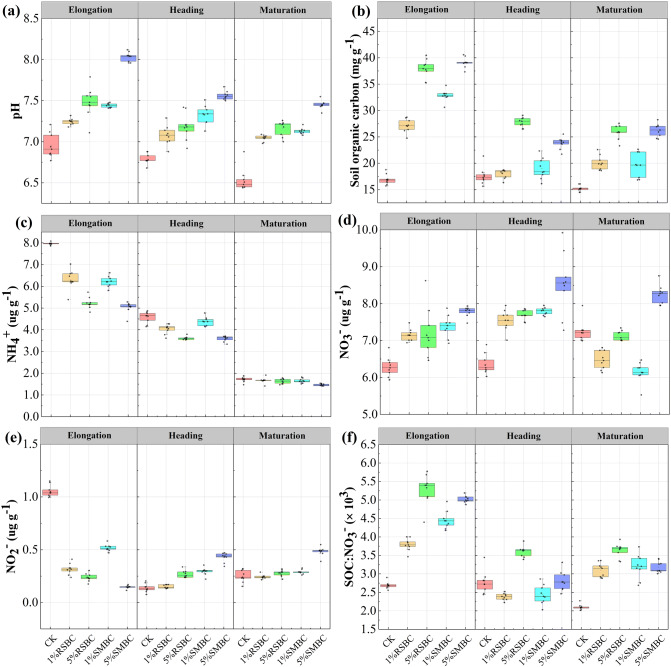
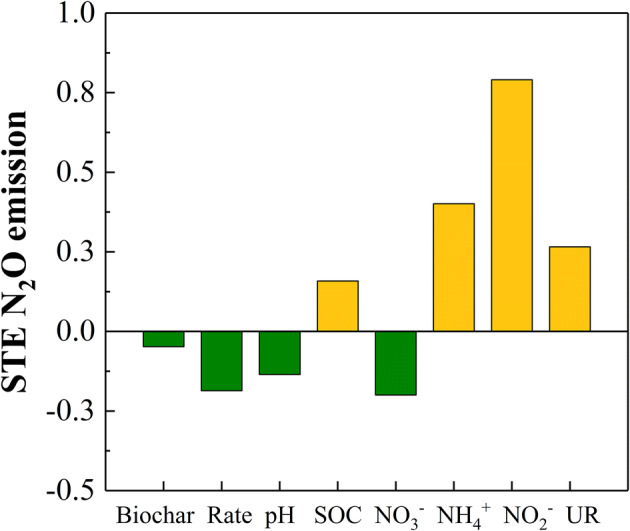
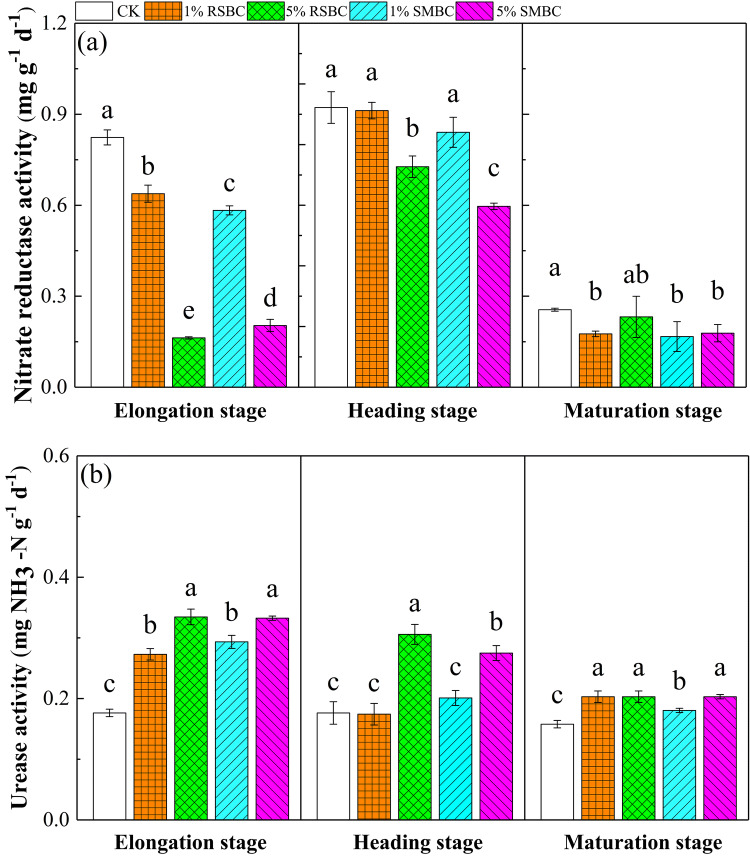
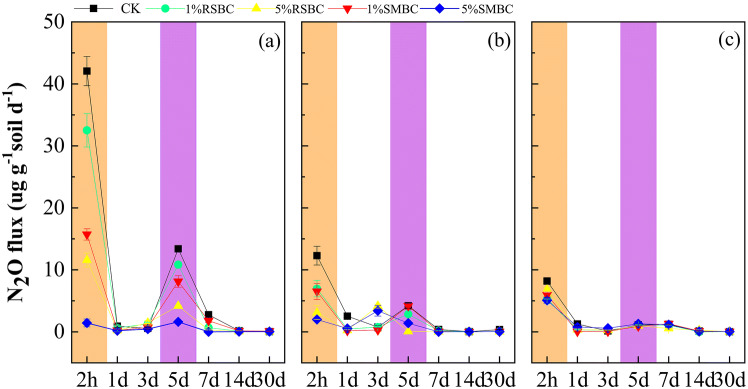
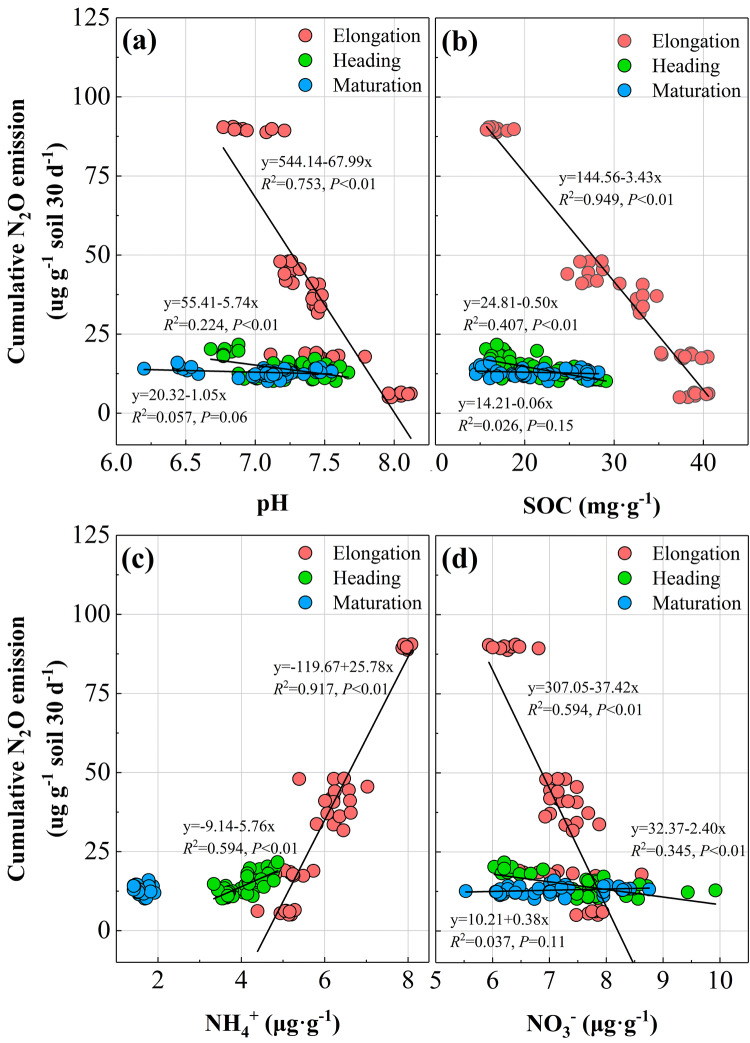
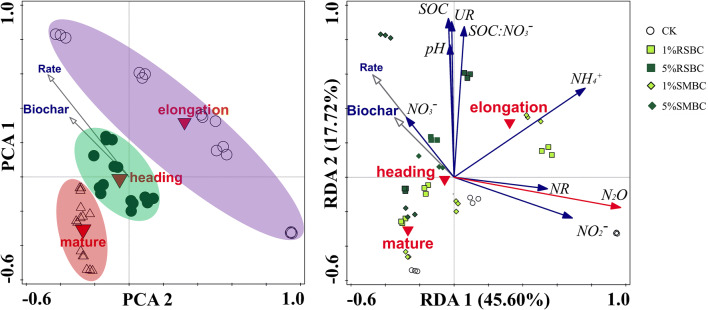
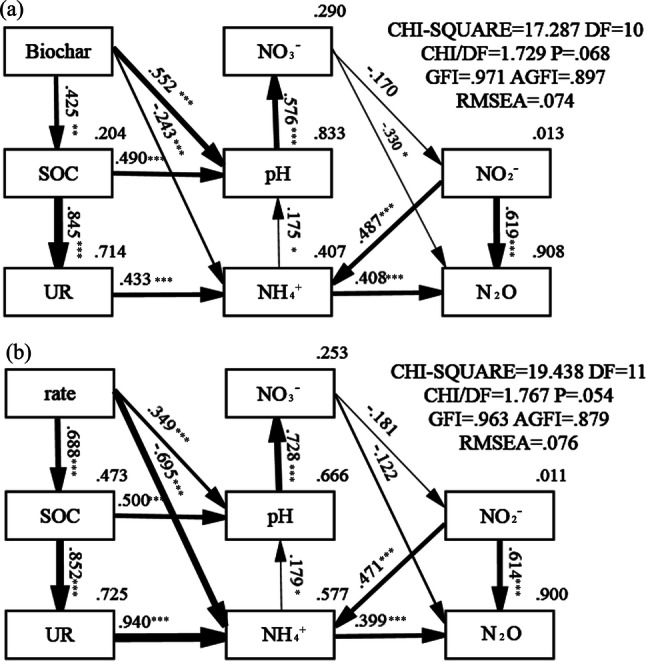
We analyzed the effects of rice straw biochar (RSBC) and swine manure biochar (SMBC) on NO emission from paddy soil. The biochars were added to soil at the rates of 1% and 5% (w/w), and NO emission, soil properties and soil enzyme activities were determined at the elongation, heading and maturation stages of rice growth. The NO flux started within 2 h of adding the biochar, and decreased significantly thereafter during the three growth stages. The cumulative NO emission was suppressed by 45.14-73.96% following biochar application, and 5% SMBC resulted in the lowest cumulative emission. In addition, biochar application significantly increased soil pH, soil organic carbon (SOC), NO levels and urease activity, and decreased soil NH and nitrate reductase activity. Regression analysis indicated that cumulative NO emission was correlated positively to NH, and negatively to soil pH, SOC and NO. SEM further revealed that biochar application weakened the denitrification process, and the NH level had the most significant impact on NO emission. Taken together, RSBC and SMBC regulated the nitrogen cycle in paddy soil and mitigated NO emission by increasing soil pH, decreasing nitrate reductase activity and NH content.
我们分析了稻草生物炭(RSBC)和猪粪生物炭(SMBC)对稻田氮氧化物排放的影响。生物炭以 1%和 5%(w/w)的比例添加到土壤中,在水稻生长的拔节期、抽穗期和成熟期测定氮氧化物排放、土壤性质和土壤酶活性。添加生物炭后 2 小时内开始产生氮氧化物通量,此后在三个生长阶段显著降低。生物炭的应用抑制了 45.14-73.96%的累积氮氧化物排放,5% SMBC 的累积排放量最低。此外,生物炭的应用显著增加了土壤 pH 值、土壤有机碳(SOC)、NO 水平和脲酶活性,降低了土壤 NH 和硝酸盐还原酶活性。回归分析表明,累积氮氧化物排放量与 NH 呈正相关,与土壤 pH 值、SOC 和 NO 呈负相关。SEM 进一步表明,生物炭的应用削弱了反硝化过程,NH 水平对氮氧化物排放的影响最大。综上所述,RSBC 和 SMBC 通过增加土壤 pH 值、降低硝酸盐还原酶活性和 NH 含量来调节稻田氮素循环,从而减少氮氧化物排放。