Matthews Jaya K, Ridley Amanda, Kaplin Beth A, Grueter Cyril C
School of Human Sciences, The University of Western Australia, Crawley, WA 6009, Australia.
UWA Africa Research & Engagement Centre, The University of Western Australia, Crawley, WA 6009, Australia.
Curr Zool. 2020 Aug;66(4):333-343. doi: 10.1093/cz/zoz058. Epub 2019 Nov 26.
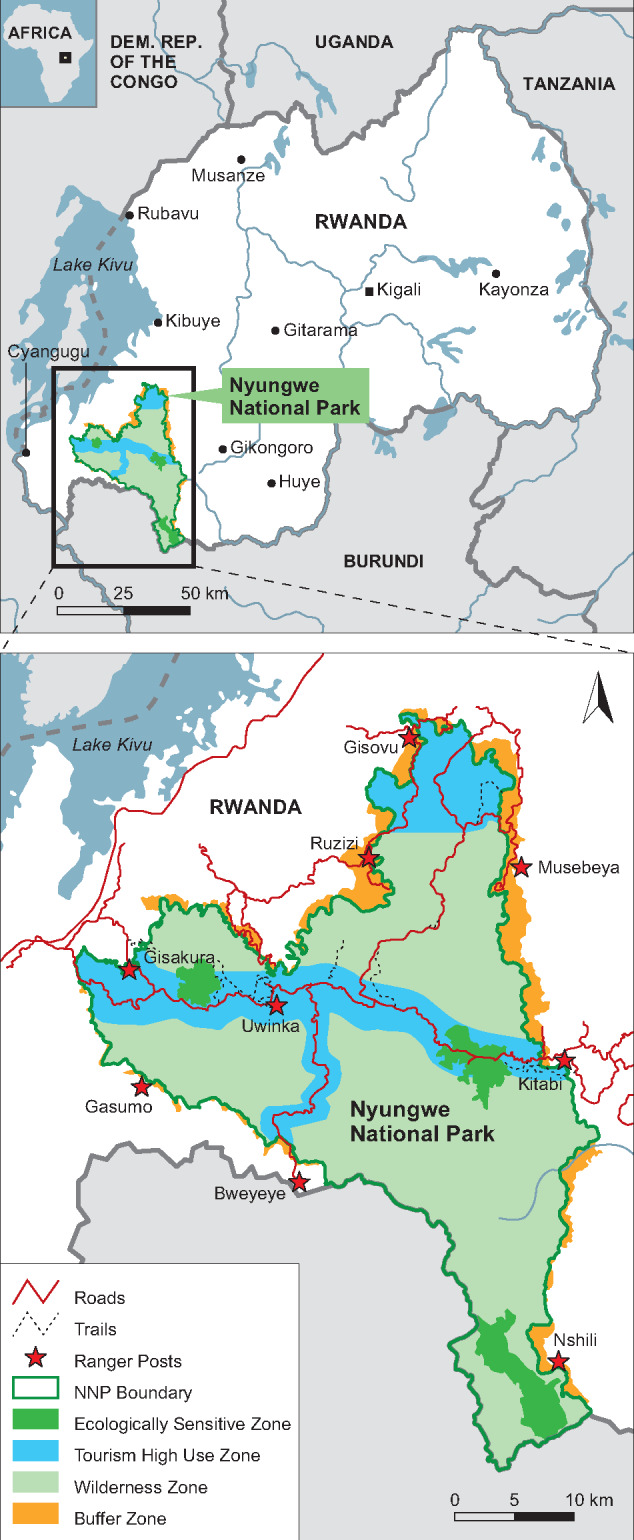
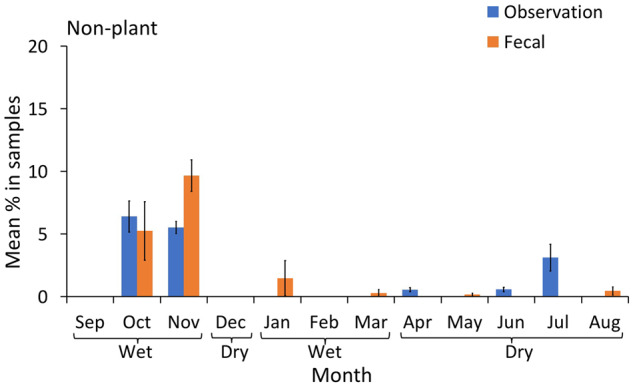
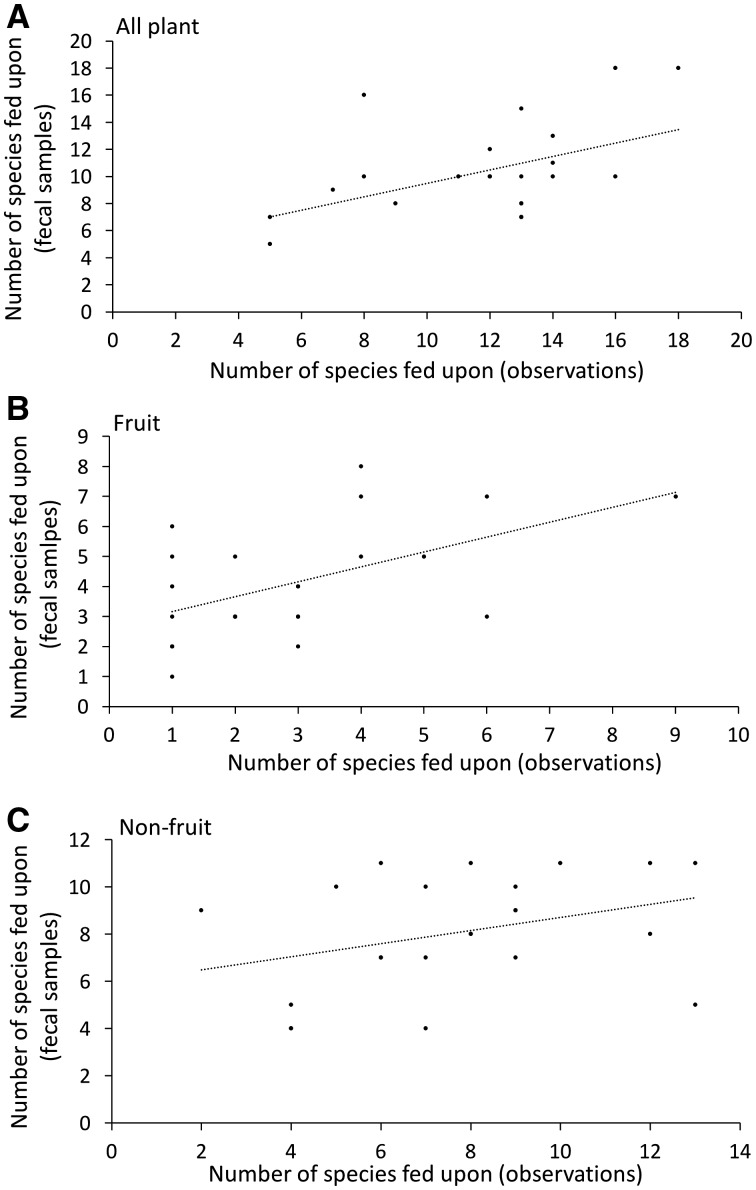
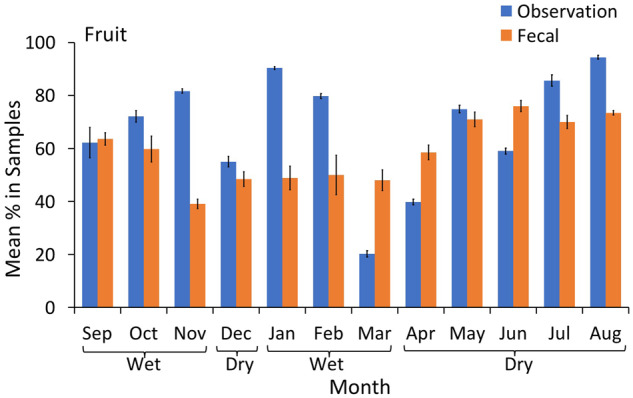
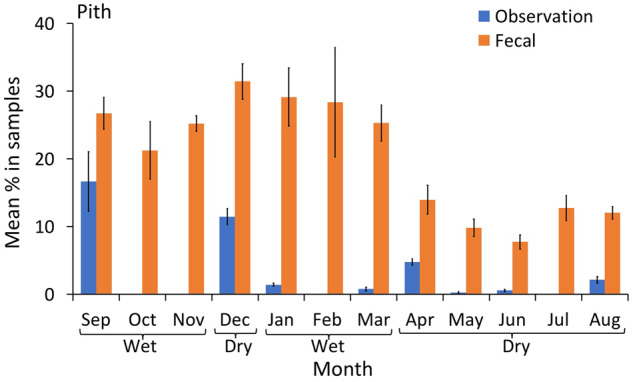
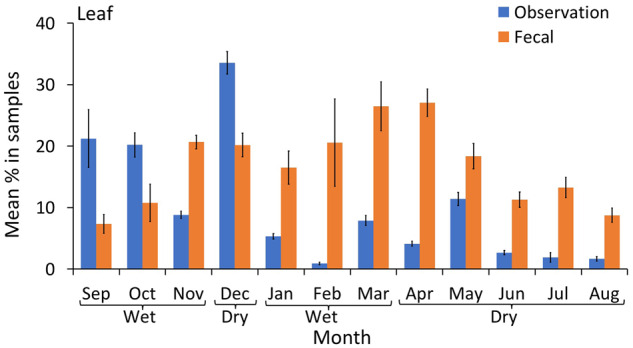
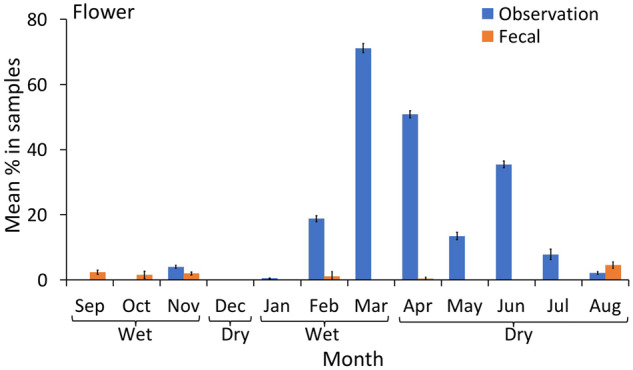
Both observational and indirect evidence are widely used to determine the diets of wild animals. Direct observations are often assumed to provide the most comprehensive reflection of diet, but many wild animals are logistically challenging to observe. Despite the regular use of observational and indirect methods for inferring diet in wild animals, they have rarely been compared in detail for the same study population. Over 12 months this study assessed the congruence of methods in estimating the diet of a montane community of eastern chimpanzees in Nyungwe National Park, Rwanda using observational scan samples and macroscopic fecal inspection. The assessment of the number of food species consumed each month was comparable between methods, but the estimation of the composition of items in the diet differed significantly. Most notably, the fecal samples significantly underestimated the consumption of flowers, and certain fruit species, which based on direct behavioral observations were seasonally consumed at very high rates. Conversely, direct observations underestimated the consumption of leaves and pith in comparison to results present in the fecal samples. These results suggest that combining methods where possible is most useful for accurate monitoring of dietary trends, particularly for species that experience significant seasonal shifts in their diet.
观察证据和间接证据都被广泛用于确定野生动物的饮食。人们通常认为直接观察能最全面地反映饮食情况,但许多野生动物在实际观察中存在困难。尽管观察法和间接法经常被用于推断野生动物的饮食,但很少针对同一研究群体对它们进行详细比较。在12个月的时间里,本研究在卢旺达的纽恩威国家公园,使用观察扫描样本和宏观粪便检查,评估了两种方法在估计山地黑猩猩群落饮食方面的一致性。两种方法对每月食用食物种类数量的评估具有可比性,但对饮食中食物成分的估计却有显著差异。最值得注意的是,粪便样本显著低估了花朵和某些水果种类的消耗量,而根据直接行为观察,这些食物在特定季节的消耗量非常大。相反,与粪便样本中的结果相比,直接观察低估了树叶和髓的消耗量。这些结果表明,尽可能结合多种方法对于准确监测饮食趋势最为有用,特别是对于饮食有显著季节性变化的物种。